







Introduction:Explore the charm of small-bean coffee from Baoshan and Lincang in Yunnan, delve into the unique flavor profile of the Typica variety, and master the medium roast pour over technique for Lincang sun-dried Typica. This article takes you step by step through regional terroir, varietal evolution, and practical brewing parameters to help you experience the delicate layers and aromatic nuances of Yunnan specialty coffee.
In recent years, Yunnan coffee has gradually emerged on the international stage, with producing regions such as Baoshan, Lincang, Pu'er, and Dehong each offering their own distinctive characteristics. This article will focus on the planting distribution and varietal development of Yunnan’s small-bean coffee, with special attention to the sun-dried Typica beans grown at a proprietary estate established by a certain brand in Lincang. These beans are processed using traditional sun-drying methods, showcasing intense dried fruit sweetness, gentle plum acidity, and nutty undertones, with a lingering finish reminiscent of brown sugar and black tea. Below, we not only analyze its flavor characteristics but also provide complete Hario V60 pour over parameters and practical tips to guide you in deeply experiencing the unique allure of Yunnan specialty coffee.
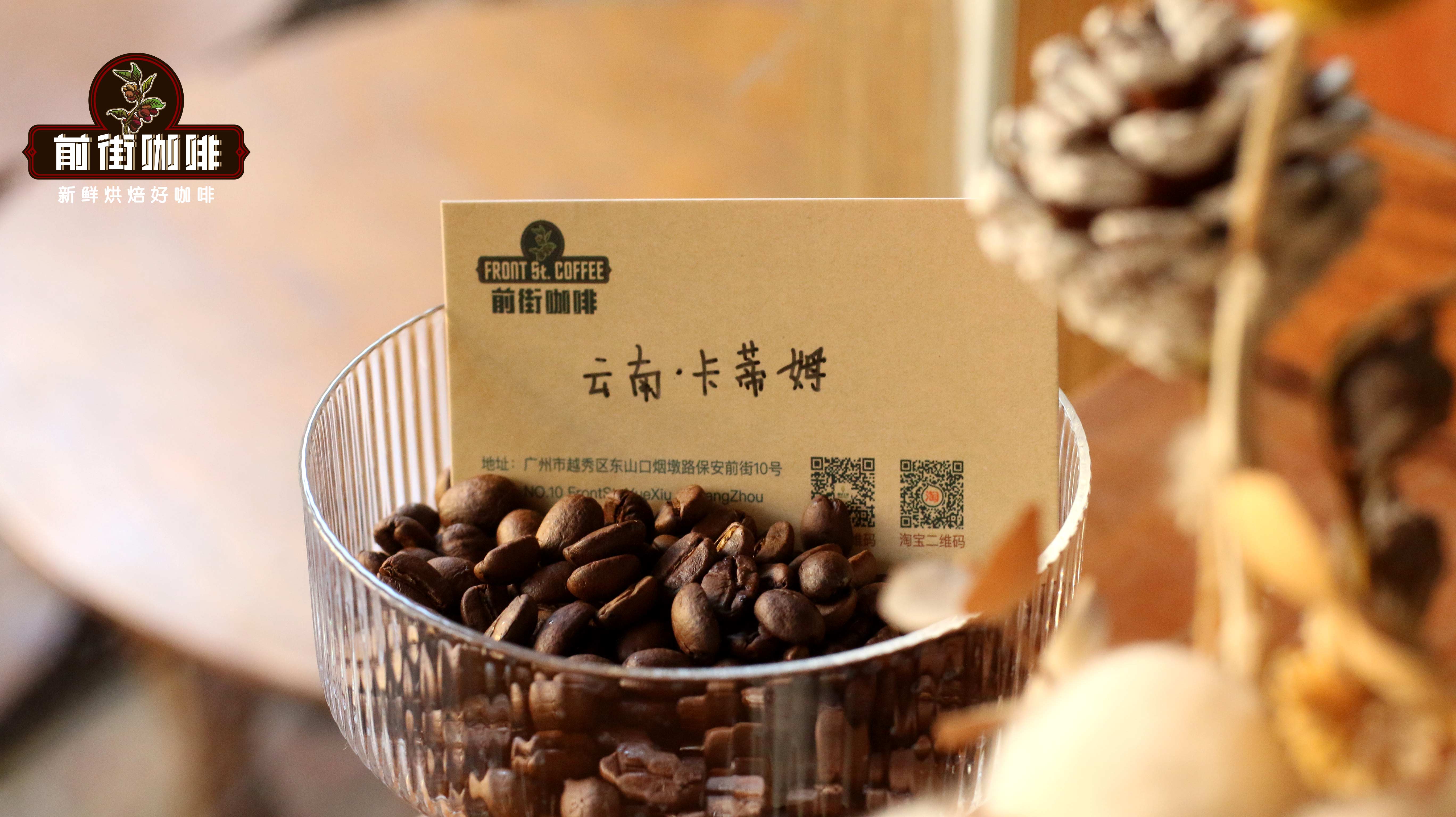
When it comes to coffee, many people might recall the Blue Mountain coffee often featured in Hong Kong dramas from the last century. That unforgettable aroma and the satisfied expressions of their elders left a lasting impression. The shift from initially favoring imported beans to now appreciating China’s Yunnan specialty coffee reflects the rise of Yunnan coffee on the global stage. Whether it’s Pu’er’s reputation as a tea region or Baoshan’s small-bean coffee exported worldwide, these producing areas are increasingly becoming focal points for coffee enthusiasts.
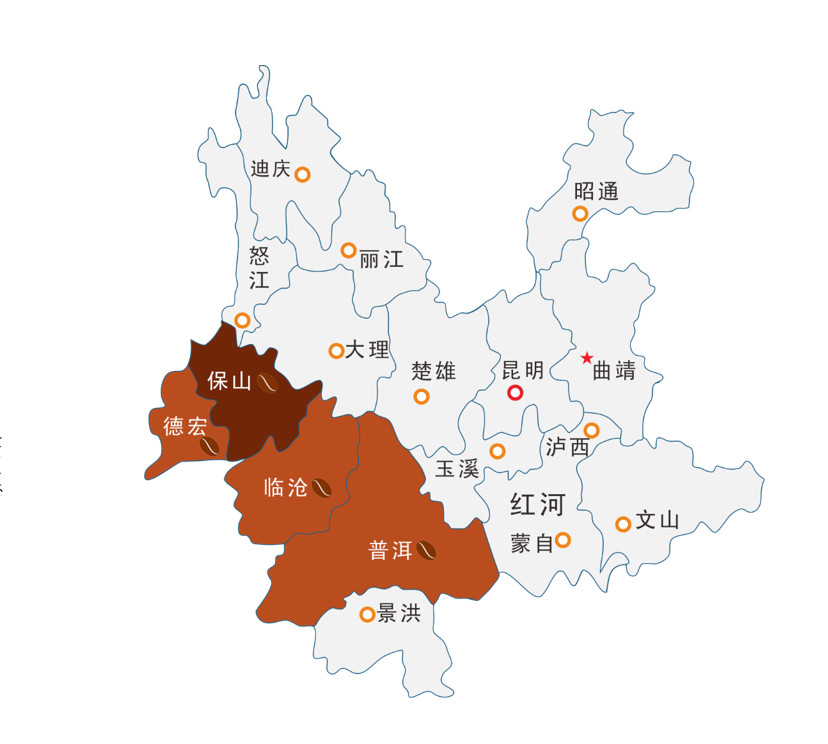
Yunnan boasts high forest coverage, fertile soil, abundant rainfall, and diverse terrain. Coupled with its location near the Tropic of Cancer, moderate altitude, and mild climate, it is an ideal place for coffee cultivation within China. Beyond the well-known Pu’er and Baoshan, Dehong and Lincang also offer superior growing conditions, with each region's coffee exhibiting subtle flavor differences.
[Pu’er Producing Region]Encompassing nine counties and districts including Simao, Ning'er, and Mojiang, with planting altitudes ranging from 700 to 1,600 meters and an average annual temperature of about 17–20°C.
[Baoshan Producing Region]Including Longyang, Longling, Shidian, Changning, and Tengchong, with planting altitudes reaching 1,000 to 1,500 meters and an average annual temperature of 21°C. It’s worth mentioning that the coffee from Baoshan’s Luguang region received a Grade 1 evaluation in the London market as early as the late 1950s.
[Dehong Producing Region]As one of the first regions in China to introduce coffee, it began large-scale commercial cultivation in 1953 after small-bean coffee was introduced from Myanmar in 1914. The area features significant diurnal temperature variations, fertile soil, and ample rainfall, all of which help coffee cherries accumulate proteins, sugars, and caffeine, giving Dehong coffee a fuller flavor.
[Lincang Producing Region]Located in the southwestern part of Yunnan, bordering Myanmar, coffee is grown in counties such as Gengma, Zhenkang, Yunxian, Cangyuan, and Yongde. With its superior climate, notable diurnal temperature variation, abundant rainfall, and mild average temperatures, the area has become a focal point for many coffee companies.
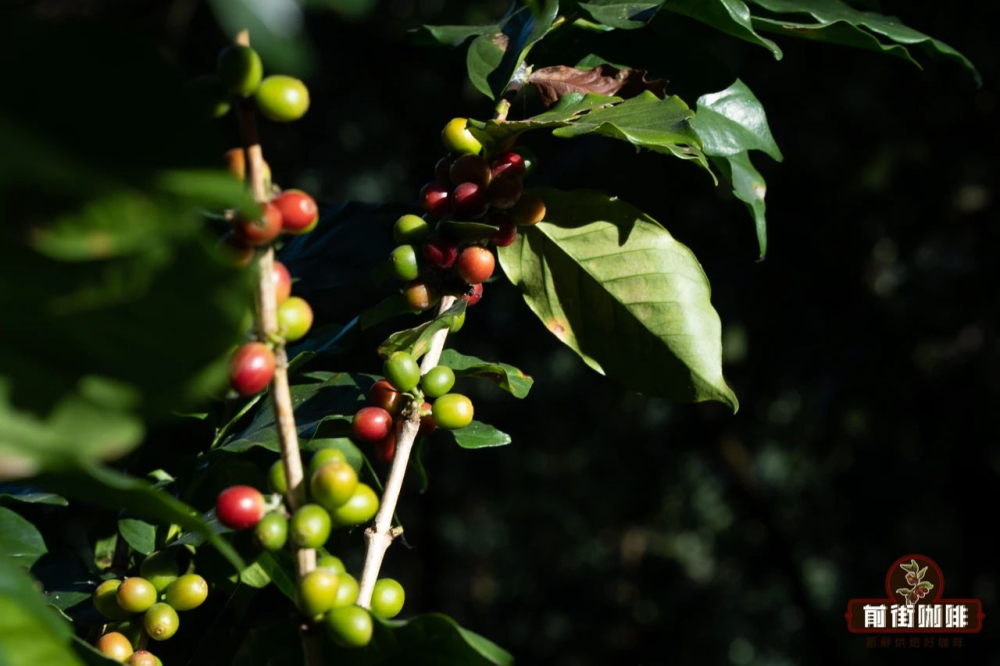
Currently, most Yunnan coffee beans on the market are of the Catimor variety. However, in earlier years, Yunnan did not grow Catimor but rather Typica, the most original Arabica variety. With the advancement of reform and opening-up, international brands promoted the cultivation of Catimor—which contains Robusta genes—for higher yields and disease resistance. While this variety is resistant to leaf rust and produces three times the yield of Typica, the Robusta genes result in a more pronounced bitter aftertaste, sacrificing some of the finer flavor nuances. Many farmers, concerned about profits, chose to cut down the more elegant yet lower-yielding Typica trees and instead planted Catimor.
This brand has been deeply involved in roasting for a decade, and its engagement in coffee cultivation dates back even earlier. Initially planning to grow coffee in Guangdong’s Dazhen, they realized during the seedling stage the critical impact of varietal choice, altitude, and processing methods on flavor. They then turned to Yunnan to find ideal land. Committed to high-standard cultivation practices, the brand especially emphasizes ecological diversity in managing Typica to accommodate its sensitivity to prolonged sun exposure. From seedling to harvest takes three to four years, and now the brand’s coffee estate has entered its second harvest season, dedicated to presenting the purest flavors of Yunnan specialty coffee.
The latest batch of coffee beans from this brand is processed using the traditional sun-drying method—fully ripe red coffee cherries are evenly spread on sun-drying beds and dried under prolonged sunlight. This process requires frequent turning to prevent over-fermentation. Though time-consuming, it preserves rich fruity sweetness and sweetness. The brand’s Lincang sun-dried Typica comes from an estate at 1,300 meters altitude. By combining the Typica variety with the sun-drying process, it presents dried fruit sweetness, plum acidity, and nutty notes, with a smooth finish reminiscent of brown sugar and black tea.
To fully experience the unique flavors of this coffee, it is recommended to brew with freshly roasted beans. The beans shipped by the brand are roasted within five days to ensure optimal flavor. The coffee beans have an ideal resting period of about four to seven days, when the flavor is most balanced. It is recommended to use a Hario V60 filter, with a water temperature of 90°C, 15 grams of coffee, and a 1:15 coffee-to-water ratio. The grind size should be approximately 75% extraction through a Chinese standard No. 20 sieve. The specific brewing steps are as follows: pour 30 grams of water for a 30-second bloom, then pour with a thin stream in a circular motion from the center out to 125 grams. When the water level is about to expose the coffee bed, continue pouring up to 225 grams, with a total extraction time of about two minutes.
Some coffee enthusiasts may have concerns about the performance of home grinders. The brand offers a grinding service, but please note that faster gas release from pre-ground coffee can lead to quicker loss of flavor compounds. Therefore, grinding fresh just before brewing better preserves the full aroma and complexity.
The above content is compiled by CoffeeHunters, a coffee news website.


