







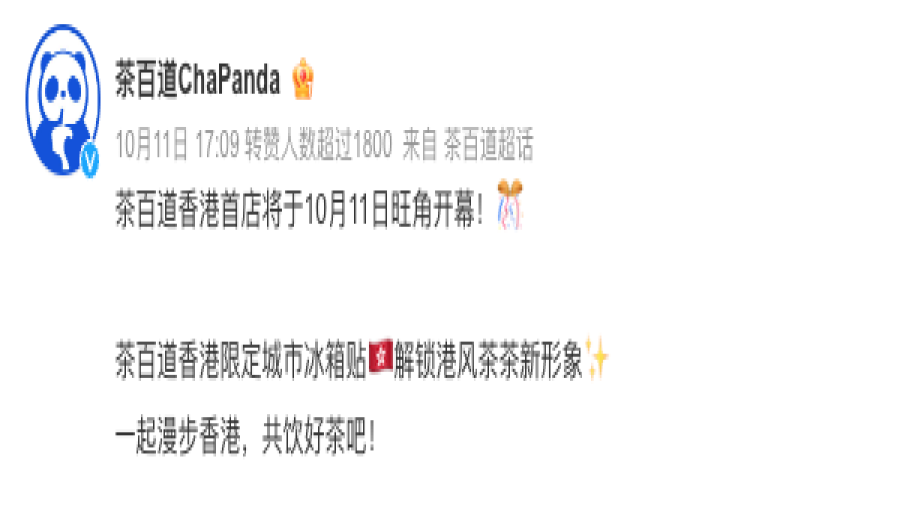
Introduction:The well-known mainland Chinese tea beverage brand Cha Bai Dao officially entered the Hong Kong market on October 11, opening its first store on Sai Yeung Choi Street South in Mong Kok. This article provides an in-depth analysis of the store’s location strategy, product pricing, promotional activities, and price differences compared to the mainland, helping readers understand how this emerging tea brand is making its mark in Hong Kong’s highly competitive market.
Mainland Chinese tea beverage brands are actively expanding their presence in Hong Kong. On October 11, Cha Bai Dao officially opened its first Hong Kong store at G/F, Grandview Building, Sai Yeung Choi Street South, Mong Kok. It is reported that the monthly rent for the storefront is around HK$200,000. Unlike Heytea, which focuses on leisure spaces within shopping malls, Cha Bai Dao has opted for a street-side grab-and-go format, with no seating inside the store, allowing customers to quickly take away their drinks.
The store is located near the Mong Kok MTR station, just a three-minute walk away, offering both convenient transportation and high foot traffic. As one of the core streets in Mong Kok, Sai Yeung Choi Street South is not only popular among local residents but also a key spot for tourists to experience Hong Kong’s everyday food culture. This commercial district choice helps Cha Bai Dao quickly build exposure and attract crowds.

Cha Bai Dao’s first Hong Kong store offers around 20 beverages, covering popular series such as fresh fruit specials, real milk specials, and milkshakes. These include the mainland bestsellers like Mango Pomelo Sago, Green Grape Jasmine, Mega Cup Fruit Tea, Soybean Milk Jade Qilin, and the signature Taro Balls. Beverage prices range from HK$25 to HK$32, significantly higher than those on the mainland. For example, a medium-sized Mango Pomelo Sago is priced at RMB 17 on the mainland, but HK$32 (approximately RMB 29) in Hong Kong, representing a price increase of aboutseventy percent.
In the lead-up to the official opening, Cha Bai Dao began a trial operation period starting September 30, offering a 20% discount on selected products and giving away Hong Kong-exclusive merchandise such as city-themed fridge magnets, limited-edition wrist bags, and summer cool sachets. This successfully attracted many consumers to try the brand early. On the official opening day, October 11, the store launched multiple promotional activities, including a “buy one get one free” offer on six classic tea beverages, as well as a “lucky scratch card” with every purchase (excluding add-ons). Prizes included limited-edition gold notes, mystery tea boxes, mugs, limited wrist bags, and free milk tea vouchers, all aimed at boosting on-site sales enthusiasm.
The store’s interior design is also thoughtfully crafted. The exterior glass wall features a large installation shaped like a traditional Chinese teacup, with a hollowed-out design that displays the brand’s mascot—a baby panda—traveling to various iconic landmarks in Hong Kong. This cleverly combines brand identity with local elements, catching the eye of passersby.
On the opening day, Cha Bai Dao also invited several popular TVB celebrities, such as Bosco Wong, to appear at the event. The venue was packed with crowds, and many customers waited in line for over half an hour just to try the classic Mango Pomelo Sago. One Hong Kong resident said, “When I traveled to Chengdu before, I drank Cha Bai Dao’s Mango Pomelo Sago every day. I’ve missed it since coming back to Hong Kong, and now I can finally buy it locally.” Other consumers felt that the entry of mainland tea beverage brands into Hong Kong helps expand drink options and brings new flavor experiences to locals.
According to official information, since its establishment in Chengdu in 2008, Cha Bai Dao has grown rapidly. As of June this year, the total number of global stores has exceeded 8,000, successfully expanding into overseas markets such as South Korea, Thailand, and Australia. However, regarding future expansion plans in Hong Kong, the brand has not yet publicly disclosed further details.
The above content is compiled by CoffeeHunters, a coffee news website.


