








Introduction:Panama Geisha coffee is renowned for its rarity and high price, with its unique floral-fruity aroma and tea-like layered profile deeply cherished by specialty coffee enthusiasts. This article begins with the development history of coffee in Panama, analyzes the geographical and climatic conditions of core regions such as Boquete, introduces how the Best of Panama (BOP) competition has driven regional advancement, and details the flavor profile of Geisha along with the characteristics of washed processing. Finally, it offers practical pour over brewing suggestions to help you better understand the precious qualities of this legendary coffee.
When it comes to specialty coffee, Panama is definitely on the map, especially a coffee variety called Geisha, which has become an industry legend for its extremely high value and distinctive flavor. But did you know? Panama actually has a relatively short history of coffee cultivation, and the factors behind its rapid rise to prominence in the world of specialty coffee are quite significant.
Looking back at history, coffee first arrived in Panama in 1742 aboard a ship from the French Caribbean, but it wasn’t until the 1780s that there are records of attempts to grow it locally. Early planting efforts included locations such as Portobelo, but due to climate and soil limitations, results were modest. It wasn’t until the 1820s that coffee gradually took root in other parts of Panama, even replacing chocolate as the mainstream beverage. Additionally, Panama is uniquely situated between the Caribbean Sea and Pacific Ocean currents, and its location in a volcanic zone means high-altitude regions like the Boquete Valley boast rich microclimates and nutrient-rich volcanic soils, creating ideal conditions for cultivating high-quality coffee.
Beyond its naturally gifted environment, the rapid rise of Panamanian coffee is also tied to the involvement of American elite in the late 20th century. With the construction and operation of the Panama Canal, many professionals from fields such as finance and engineering relocated here, bringing modern management thinking to coffee cultivation. They subdivided planting areas by altitude, insisted on manual harvesting and refined processing, gradually steering Panamanian coffee toward the path of specialty production.
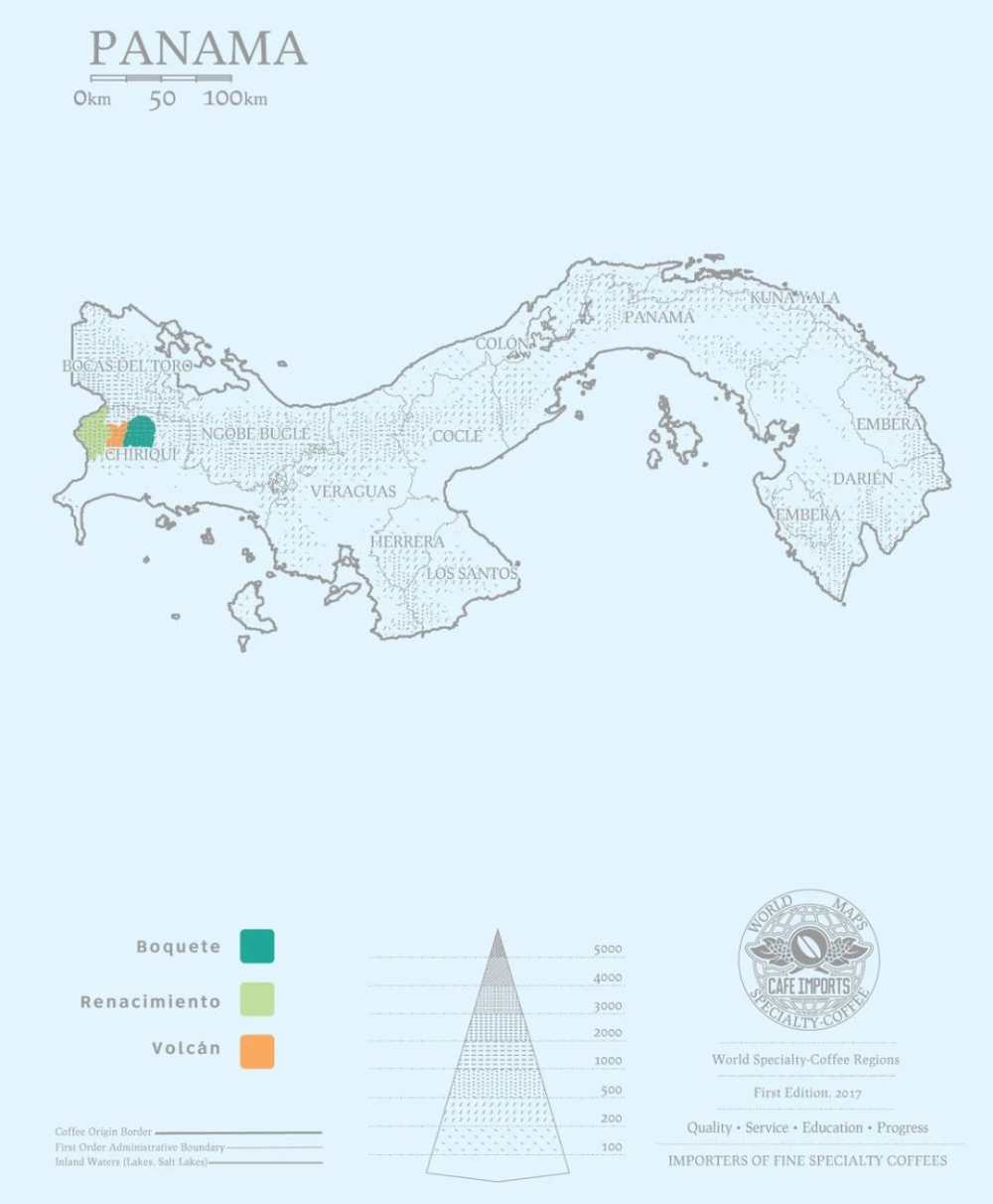
Currently, Panama’s coffee cultivation covers an area of over 20,000 hectares, with more than 16,000 hectares dedicated to Arabica varieties. The main coffee-growing regions are concentrated in the western Chiriquí Province, particularly the three key areas bordering Costa Rica: Boquete, Volcán, and Renacimiento. These regions are not only near the active Barú Volcano, with elevations generally above 1,600 meters, but also benefit from suitable day-night temperature variations and year-round thin mist, allowing coffee cherries to ripen slowly and accumulate rich aromas and acidity.
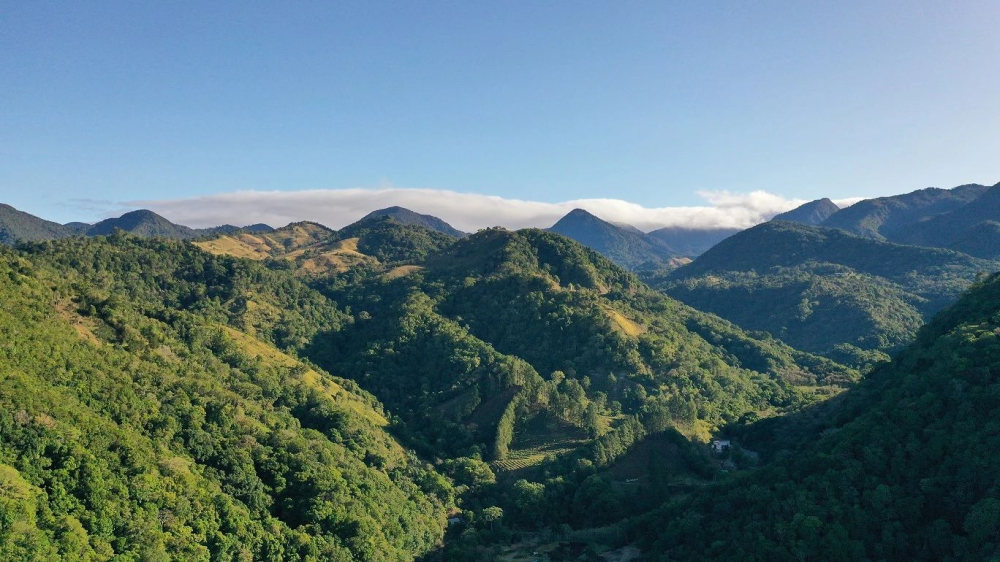
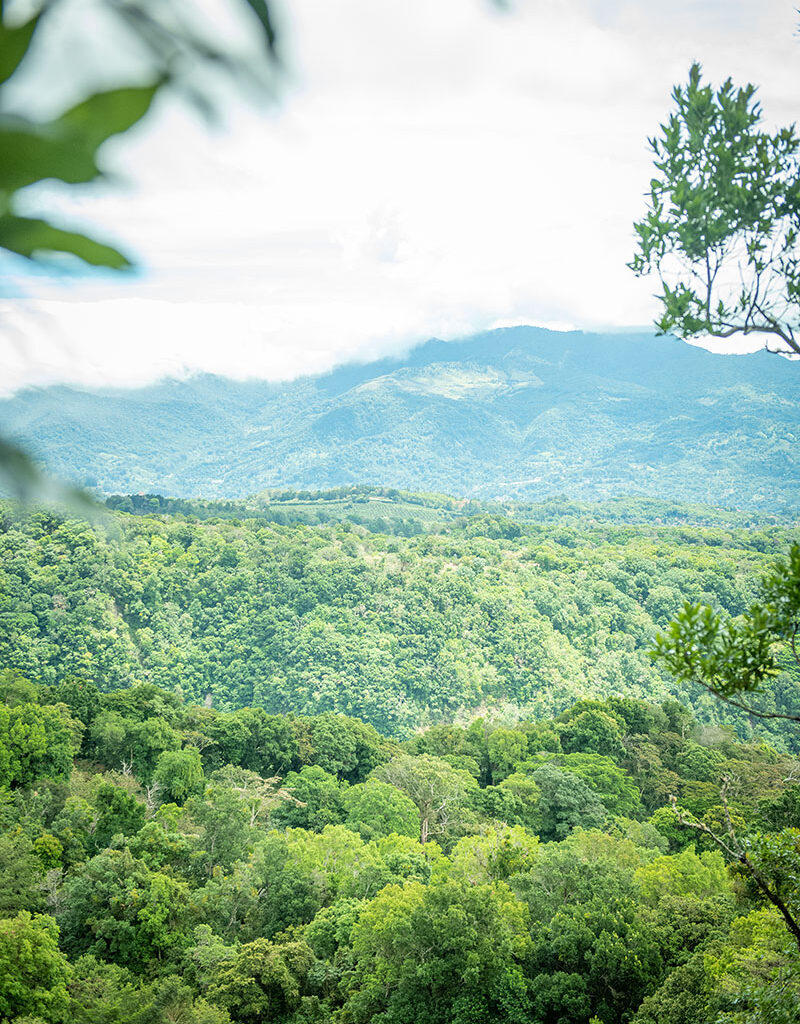
Among them, Boquete is considered the cradle of Panamanian coffee, having attracted European immigrants for cultivation as early as the late 19th century. The area hosts around 50 to 75 coffee farms and 15 processing mills, with planting elevations mostly around 1,600 meters. Coupled with the natural nutrients provided by volcanic soils, the resulting coffee often features noticeable medium to high acidity and complex aromas. The harvest season runs annually from September to December, with many indigenous Guaymíes also participating in picking. Their skilled manual techniques, while raising labor costs, ensure stable bean quality.
However, the Panamanian coffee industry has also experienced downturns. In 1989, the International Coffee Agreement, which once regulated global coffee prices, collapsed, leading to a sharp drop in green bean prices and survival crises for many coffee farmers. To break the impasse, in 1996, seven Panamanian coffee estates jointly established the ‘Panama Specialty Coffee Association (SCAP)’ and held the first coffee bean competition and online auction, aiming to promote high-quality beans through bidding. This initiative later evolved into the world-famous ‘Best of Panama (BOP)’ competition, one of the earliest specialty coffee bean auctions globally.
The BOP competition divides entrant beans into Geisha and non-Geisha categories, then further subcategorizes them by processing method into natural and washed groups. An international panel of judges conducts blind tastings and scoring, with the highest-scoring batches ultimately winning. In recent years, auction prices have repeatedly hit new highs: in 2022, the natural Geisha from Guava Estate won with 95.96 points, while the washed Geisha from Aurora Estate set a high score record for the washed category at 96.15 points, fully demonstrating the esteemed status of the Geisha variety among judges.
When it comes to Geisha coffee, what’s most unforgettable is its richly layered floral notes, citrus tones, and unique tea-like aftertaste. Generally, Geisha coffee is processed using the washed method—by removing the pulp and mucilage, then undergoing washing and drying processes to retain a cleaner, brighter flavor profile. The specific process includes: after removing the skin and pulp, the mucilage-covered beans are fermented in water for about 24 hours, then washed and the parchment removed, followed by moderate drying to reduce moisture content to around 12%.
This processing method highlights the delicate white floral notes, citrus and lemon-like bright acidity of Geisha, along with a hint of green-tea-like fresh finish. The overall profile is both refreshing and layered. To fully showcase these traits, a common approach is to use medium-light roasting, paired with fine grinding and hot water extraction, enhanced with a V60 filter to improve flow rate and contact time, thereby boosting flavor clarity and layering.
In practice, it’s recommended to use a V60 filter, with 15 grams of coffee grounds and a 1:15 coffee-to-water ratio, keeping the water temperature at 91–92°C, and grinding to about 80% through a #20 sieve (similar to granulated sugar size). Use a three-stage extraction: start with 30 grams of water for a 30-second bloom, then pour 120 grams of water at a slightly higher flow rate, and finally pour 90 grams at a slower rate to complete the extraction, with a total dripping time of about 2 minutes and 10 seconds. Such parameters help balance sweetness and body, avoiding over-extraction or under-extraction.
The final brewed Geisha pour over coffee delivers bright, clear acidity of citrus, lemon, and bergamot upon entry, a creamy smooth mouthfeel in the mid-palate, and a honey and green tea-like gentle sweetness in the aftertaste. This flavor profile is one of the reasons why Panama Geisha stands out and commands its premium pricing.
The above content is compiled by CoffeeHunters, a coffee news website.


