







Introduction:Have you ever seen both the "Emerald Red Label" and "Gesha Village Gold Label" — two top-tier Geisha coffees — at a specialty coffee shop but been unsure of the difference between them? This article offers an in-depth comparison of these two highly acclaimed Geisha beans, covering everything from their varietal origins, growing region characteristics, processing methods, to actual pour over flavor profiles. We’ll help you understand what makes each unique, and provide tested extraction parameters to assist you in choosing the premium bean that best suits your taste.
In the world of specialty coffee, Geisha is undoubtedly a dream variety for many coffee enthusiasts. But when you stand at the counter of a specialty coffee shop and see both the "Emerald Red Label" and the "Gesha Village Gold Label" — two premium Geisha beans — have you ever wondered what sets them apart? Although both belong to the Geisha family, they differ subtly yet significantly in varietal background, terroir, processing method, and ultimately, cup performance.
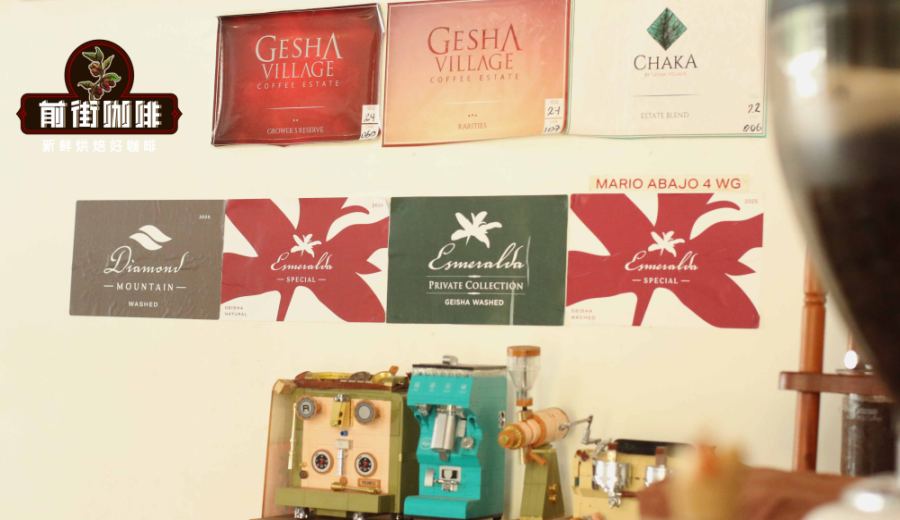
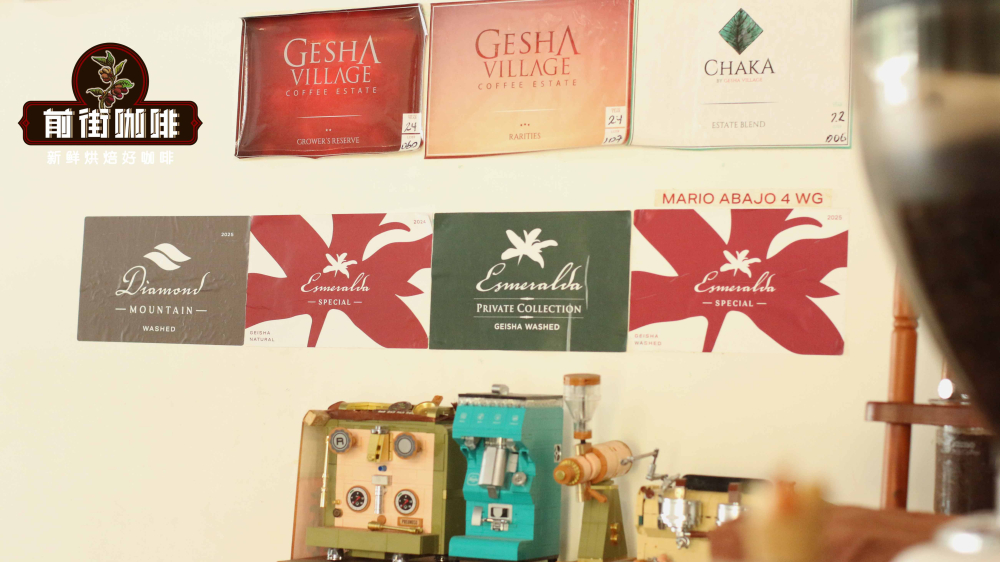
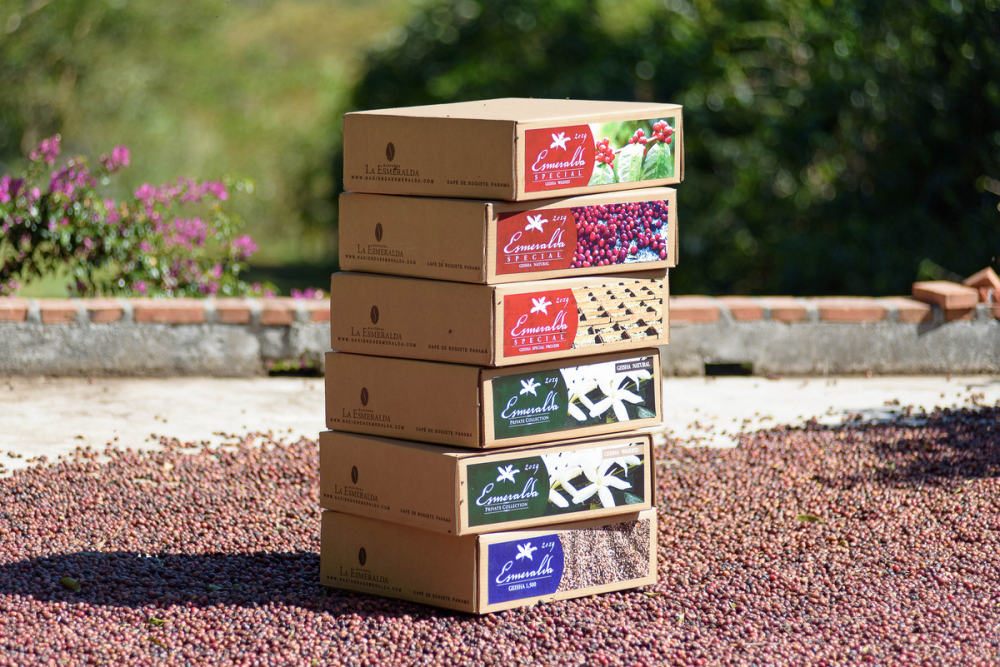
Let’s first clarify the meaning of these “labels.” In Chinese market practice, “Red Label” and “Gold Label” are used to distinguish the top-tier grades of Geisha beans from various farms. Take Emerald Estate as an example: its “Red Label” is officially named “Esmeralda Special,” or Emerald Special Selection, representing the very finest batches of Geisha from this estate. These lots require a cupping score of 91 or above, and each batch comes with detailed information about origin and processing. The “red” in its name originates from the base color of the product’s packaging trademark, mainly for easier consumer recognition. On the other hand, Gesha Village’s “Gold Label,” known in English as “Rarities,” meaning “rare treasures,” refers to the highest-quality Geisha beans from the estate, aside from auction lots, accounting for about 10% of total production. The “gold” here also comes from the main color tone of the packaging, and each batch indicates the specific plot where it was grown, helping consumers better understand the beans’ origin.
Although these Chinese “label” names are easy to remember, they are limited to the Chinese-speaking market and have no direct equivalents internationally. As a result, if you only look at the English names, it may be difficult to immediately determine which grade is higher. Also worth mentioning is that both estates have their own Red Label and Green Label tiers, which can be confusing. It is advisable to confirm with the shop whether the coffee is from Emerald Estate or Gesha Village when ordering or purchasing, to avoid misunderstanding.
Now let’s look at the varietal aspect. When it comes to Geisha, most people know it originated in Ethiopia. In fact, the Geisha that famously won the Best of Panama (BOP) competition in 2004 was genetically identified as the “T2722” variety from the Gesha Zone in southwestern Ethiopia’s Kaffa Forest. It was later cataloged by Costa Rica’s CATIE agricultural research institute as a disease-resistant variety. Gesha Village’s “Gesha 1931,” on the other hand, is a special variety. Led by Willem Boot, a former BOP judge, a breeding program selected varieties based on the appearance and flavor characteristics of Panamanian Geisha. After extensive searching in the Kaffa region, they identified a variety with flavor similar to that of the winning Geisha and named it “Gesha 1931” in homage to the year Geisha was first discovered. However, this variety cannot be definitively confirmed to share the same lineage as Panama’s T2722, and can only be described as a “distant relative” with similar flavor expression.
The difference in growing regions is also a key factor influencing the flavor profiles of these two Geisha coffees. Emerald Estate is located in the Boquete region of Chiriquí Province, Panama, known for its high altitude, fertile volcanic soil, and stable microclimate — providing ideal growing conditions for Geisha. These conditions allow the beans to fully express delicate floral notes, honey-like sweetness, as well as rich creaminess and nutty tones. In contrast, Gesha Village is situated in Ethiopia’s southern Bench Maji (Bench Maji) region, adjacent to ancient forests, with terrain mostly consisting of forested areas, and minimum altitudes exceeding 1900 meters. The high altitude allows coffee cherries to ripen slowly in a cool environment, helping accumulate more complex flavor compounds, resulting in unique fruity notes and layered complexity.
If you have the chance to taste both of these top-tier sun-dried Geisha coffees side by side, you can discern their differences through the dry fragrance after roasting and the flavors during brewing. Recommended tested pour over parameters are as follows: 15 grams of coffee grounds, using an EK43 grinder set to 10 on the scale, sieved with a #20 sieve to 80% fineness, a 1:15 coffee-to-water ratio, water temperature controlled at 92°C, using a three-pour technique and brewed with a V60 filter cone, which can fully highlight their nuances.
In terms of dry fragrance, the Gesha Village Gold Label emits bright and refreshing citrus fruit aromas, particularly reminiscent of fresh orange peel — very appealing. Meanwhile, the Emerald Red Label features a sweet aroma profile dominated by rose, dried fruit, and apricot, accompanied by subtle notes of nuts and toffee, giving an overall more mellow and rounded flavor direction.
Moving into the flavor stage, freshly brewed Gesha Village Gold Label presents layers of blueberry, sweet cherry, honeydew melon, and magnolia, with bright and clear acidity, a clean and elegant mouthfeel, and a lingering finish reminiscent of a hint of young citrus — truly memorable. In comparison, the Emerald Red Label offers a richer experience: tropical fruit aromas hit the nose immediately, followed by intense fruit flavors such as mango and cranberry upon tasting, along with jasmine floral notes and a candy-like fruity finish. The cup is full-bodied with distinct layers, a round and smooth finish without astringency, making it extremely pleasant to drink. Overall, in terms of flavor complexity and layering, the Emerald Red Label has a slight edge, but both beans have their unique merits and are best chosen based on individual taste preferences.
In conclusion, whether you choose the Emerald Red Label from the highlands of Boquete or the Gesha Village Gold Label from the mountainous region of Bench Maji, both of these premium Geisha coffees deliver an extraordinary tasting experience. Understanding their differences can help you make a more informed choice that suits your palate when faced with a dazzling array of Geisha options.
The above content is compiled by CoffeeHunters, a coffee news website.


