







Introduction:Robusta is often seen as the "everyman" of the coffee world. Although its flavor is not as delicate as that of Arabica, it plays a crucial role in the global coffee supply chain. This article delves into the origins of Robusta, its cultivation advantages, and flavor characteristics, analyzing why it remains widely used in instant and dark roast coffees, and comparing its key differences with Arabica. Understanding these aspects can help you choose the coffee beans that best suit your taste.
Among the many coffee varieties, Arabica has long dominated the market with its elegant flavor and high-quality image. However, there is one often overlooked variety—Robusta—that holds an irreplaceable position in the global coffee industry. Although it is often less favored by specialty coffee enthusiasts due to its stronger flavor, its robust vitality and commercial value make it a key base for instant coffee and certain dark roast blends.
Robusta belongs to the Coffea canephora species, also known as Congo coffee or medium coffee. Compared to the well-known Arabica (Coffea arabica), there are fewer Robusta varieties, with only the Robusta type being commercially cultivated on a large scale, which is why it is often regarded as the representative of the Canephora species. In addition, hybrid varieties such as Timor and Catimor, which result from crosses between Robusta and Arabica, are gradually being used in agricultural cultivation but are still classified under the Arabica system.
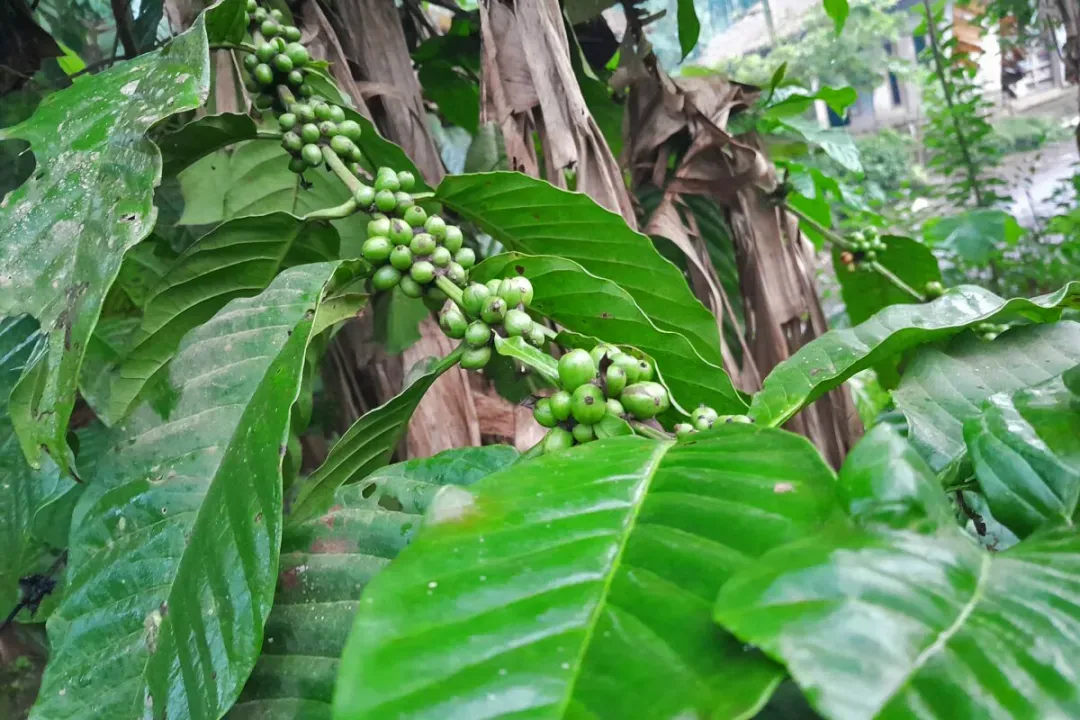
When it comes to Robusta’s greatest advantage, its remarkable adaptability is undoubtedly it. This coffee tree can withstand a variety of extreme conditions such as high temperatures, cold, drought, and humidity, making it easier to grow in low-altitude regions compared to Arabica. Generally, Robusta can be cultivated at altitudes of 200 to 800 meters, whereas Arabica usually requires higher altitudes (above 1000 meters) to display its optimal flavor. Moreover, Robusta has a relatively higher caffeine content, approximately 1.7% to 3.0%, nearly double that of Arabica. This high caffeine content acts as a natural insect repellent for the plant, significantly reducing pest and disease infestation.
Not only that, but Robusta also outperforms Arabica in terms of yield per plant. Although its fruits are smaller and slightly rounder, each tree produces more cherries, and the beans are flatter and rounder with a straight central groove. During planting and harvesting, Robusta can be processed in large quantities mechanically, greatly reducing labor and management costs. As a result, its price is typically only half or even less than that of Arabica. For example, in regions like Hainan in China, the majority of coffee beans grown are of the Robusta variety.
However, despite these many advantages, Robusta is generally not accepted by the high-end market, primarily because of its flavor profile. Robusta has a higher content of chlorogenic acid and a lower proportion of sucrose (sugar compounds), which often results in a pronounced bitterness and astringency after brewing, low acidity, and frequently earthy, nutty (such as peanut or hazelnut), barley tea-like, or rubbery off-flavors. If not processed properly, these negative flavors become even more prominent, leading it to often be described as having a strong “Robusta taste.” For instance, the Catimor variety commonly grown in China’s Yunnan region, which contains 25% Robusta genetics, often faces similar criticism for its flavor.
Nevertheless, Robusta also has its unique highlights, particularly in the case of dark roasting. With high-temperature roasting, Robusta releases a large amount of carbon dioxide, which can produce rich Crema (the coffee’s crema layer) during espresso preparation while imparting a more intense and full-bodied taste. This explains why Robusta is still widely used in instant coffee, three-in-one blends, and dark roast formulations in espresso. In fact, the base of many traditional Italian-style espressos often includes Robusta to create a bold and hearty drinking experience.
For those who wish to replicate café-quality flavors at home, choosing the right blend is also an art. Some commercial blends incorporate a small amount of Robusta to enhance the Crema layer and overall body. For example, a common blend might consist of 30% washed Colombian beans, 60% Brazilian pulped natural beans, and 10% Robusta. With a medium-dark roast, this combination can deliver nutty and caramel aromas while forming a beautiful golden crema during extraction. Such blends are not only suitable for espresso but also pair perfectly with milk, making latte art patterns clearer and offering a smooth mouthfeel with a lingering chocolatey and subtle roasted finish.
In summary, although Robusta may not match Arabica in flavor delicacy, its strong environmental adaptability, disease resistance, and high yield make it an indispensable part of the global coffee supply. For general consumers, especially those who prefer a bold taste or frequently drink instant coffee, understanding the characteristics of Robusta can help you better select coffee products that suit your preferences and gain a deeper appreciation for the unique roles different varieties play in the world of coffee.
The above content is compiled by CoffeeHunters, a coffee news website.


