







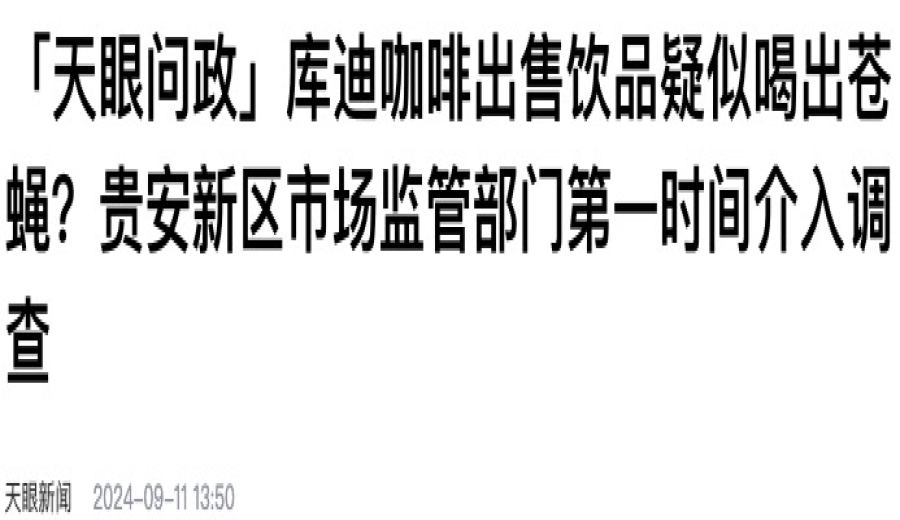
Introduction:Recently, issues with beverage hygiene at Luckin Coffee have been frequently reported. A consumer found what appeared to be a fly in their matcha latte, sparking concerns about quality control. This article compiles 77 complaint cases from the past 30 days on the Black Cat Complaints platform, analyzes possible sources of foreign objects, and provides advice and preventive measures for consumer rights protection to help readers avoid similar problems.
Luckin Coffee has once again become embroiled in a hygiene controversy. A customer in the Gui'an New Area discovered what looked like a fly in their matcha latte after purchase, quickly drawing heated discussion on social media. It is understood that the consumer, surnamed Zhang, bought the takeout coffee near Huaxi University Town on the afternoon of September 9th. Upon arriving home, they noticed something unusual. After trying to communicate with the store, they were not given a satisfactory response.
The materials provided by Ms. Zhang include the order details and a photo of the foreign object in the cup, showing that she purchased the matcha-flavored latte at a discounted price of 9.9 yuan. That same evening, she returned to the store to raise the issue, but the staff’s response did not resolve her concerns. Later, someone claiming to be the store manager promised to handle it via WeChat, but the problem remains unresolved to this day.
Discussions about foreign objects in Luckin Coffee beverages are very active on social platforms. Searching for "Luckin Coffee drink" yields auto-matched topics such as "#LuckinCoffeeDrankAFly: 1087+ notes" and "#LuckinCoffeeDrankABugCompensation: 1661+ notes." Many netizens have shared their own experiences, such as "Luckin Coffee, drank a third, found a huge fly" or "Thanks to Luckin Coffee for the fly gift this morning," highlighting consumers’ lack of trust in the brand's beverage hygiene.
According to statistics from the Black Cat Complaints platform, there have been 77 complaints about Luckin Coffee in the past 30 days, all of which have received replies, with 24 marked as resolved. Among these, 24 explicitly mention “foreign objects in Luckin Coffee,” with 19 of them including the keyword “fly in Luckin Coffee.” Consumer demands mainly focus on refunds and compensation, while some also hope the brand can provide reasonable explanations and improve service quality.
Black Cat Complaints is a service platform under Sina, aiming to assist consumers in lodging complaints against merchants for misconduct and providing corporate reputation ratings as a reference for consumption.
Industry insiders analyze that the presence of flies and other foreign objects in beverages may be related to the open-lid design of cups. During the process of adding milk and pouring coffee, if pest prevention measures in the environment are inadequate, flies can easily fall in. Additionally, ingredients like syrup and milk, due to their sweetness, tend to attract flying insects. Even with mosquito traps in place and enhanced cleaning, it is still difficult to completely prevent such issues. However, experts also point out that if a foreign object is discovered during the preparation process, staff usually will not serve the drink. Therefore, if consumers suspect contamination, they can request the business to review surveillance footage to clarify responsibility.
Faced with the continuous influx of complaints, Luckin Coffee’s official customer service often asks consumers to provide order information for follow-up. However, some consumers complain that the brand only contacts them via text messages and lacks proactive phone communication, giving the impression of a passive handling attitude.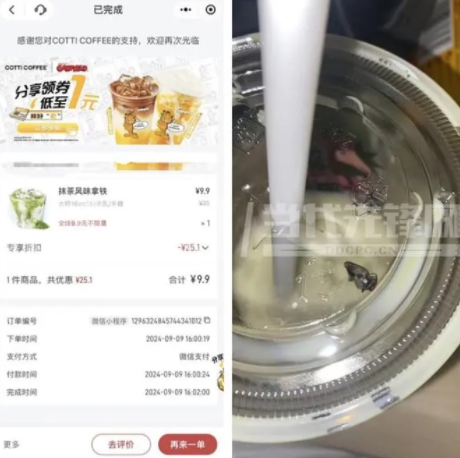
Market regulatory authorities remind consumers that if they encounter food safety concerns, they should properly preserve relevant consumption vouchers and can immediately call 12315 to lodge a complaint. The relevant departments will intervene promptly to safeguard the basic line of food safety. For coffee enthusiasts, choosing brands with a good reputation and stable quality control is also a wise move to reduce risk.
The above content is compiled by CoffeeHunters, a coffee news website.


