







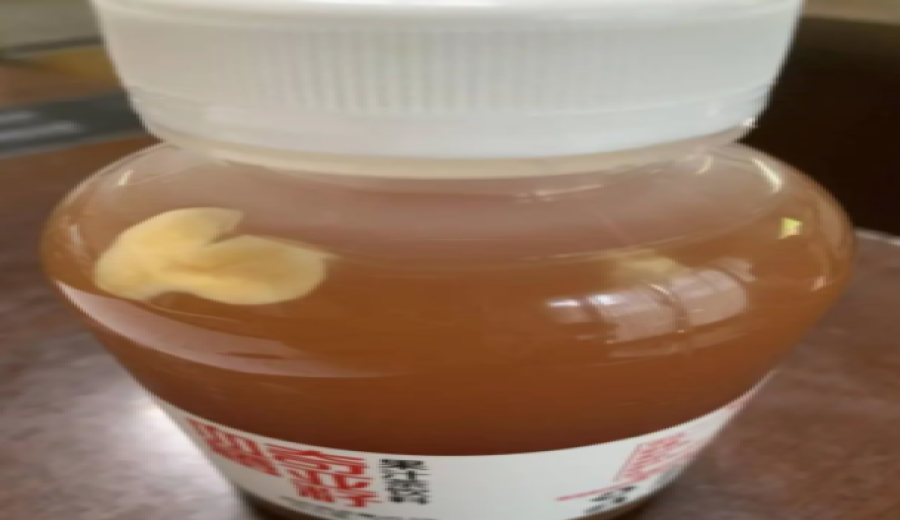
Introduction:Recently, an unopened blood orange chia seed juice tea drink sold at Sam’s Club in Nanjing was found to contain moldy foreign objects, yet the customer service only offered coupon compensation, sparking consumer doubts. This article delves into the handling process of the incident, reviews past food safety controversies involving Sam’s Club, and compiles data from the Black Cat Complaint Platform to help readers understand key points for safeguarding their rights and precautions for purchasing.
A consumer in Nanjing recently purchased a whole box of blood orange chia seed juice beverage from Sam’s Club. Upon drinking the third bottle, they discovered obvious foreign objects inside an unopened bottle — a residue resembling melon rind and a small contaminated spot that appeared to be a black mold patch. The production date of the bottled drink was May 1, 2024, with a shelf life of 180 days, meaning it was still within the normal selling period.
According to Ms. Kong, a resident of Zhenjiang, she and her family bought this batch of drinks from the Sam’s Club store at Yuhuatai, Nanjing on September 1. The abnormalities were only noticed when they opened the bottles to drink. She emphasized: “It was really bad luck. Thankfully, I took an extra look before drinking.” Visual inspection showed that the larger foreign object resembled fruit peel residue, while the smaller one was difficult to identify due to the bottle’s obstruction, but its dark color suggested signs of spoilage.
After discovering the issue, Ms. Kong first tried to contact the Sam’s Club Nanjing store via the phone number on the receipt (025-84××6316), but no one answered. Eventually, she called Sam’s Club’s national customer service hotline (4006336868), and it wasn’t until noon on the 3rd that a customer service representative responded. After communication and negotiation, Sam’s Club only agreed to offer store coupons equivalent in value to the drink as compensation.
This incident is not the first time Sam’s Club has been involved in a food safety controversy. Previously, German imported full-fat pure milk sold at Sam’s Club in Qianhai, Shenzhen, was found by consumers to have a moist outer packaging and was covered with numerous black insect eggs. The topic even trended on Weibo. Although the involved store later promised to remove the same batch of products and conduct a self-inspection, it still raised concerns among consumers about quality control management.
Similarly, there was also a case at Sam’s Club in Changzhou where a fresh meat mooncake was found to contain what appeared to be a tooth. According to a video uploaded by a netizen, a consumer held up a suspiciously shaped object wrapped in tissue paper, claiming to have found it while eating a fresh meat mooncake purchased from Sam’s Club. Although the video uploader noted that Sam’s Club did not handle the matter proactively, after media exposure, the Changzhou store stated that management had stepped in to investigate.
Complaints about food issues at Sam’s Club on social platforms are countless. Data from the Black Cat Complaint Platform shows that in September 2024 alone, Sam’s Club supermarkets received 70 complaints, most of which involved food safety items, including durian thousand-layer cakes, wild mushroom dishes, and sushi platters. To date, the total number of complaints against Sam’s Club has exceeded 6,000, with over 5,000 resolved, achieving a resolution rate of about 84%.
As a high-end membership-based retail brand under Walmart Group, Sam’s Club has over 5 million paying members globally, with an average annual spending of 13,000 RMB per person. As of the end of August 2024, it has expanded to 49 stores in mainland China, located in first-tier and new first-tier cities such as Beijing, Shanghai, Shenzhen, and Guangzhou, including regional hubs like Fuzhou, Dalian, and Hangzhou.
The above content is compiled by CoffeeHunters, a coffee news website.


