







Introduction:Want to explore the origins of world coffee? Ethiopia is not only the birthplace of coffee but also the soul of global specialty coffee. This article takes you on an in-depth journey into the coffee culture of this highland nation—from the legend of the shepherd to modern regional grading—focusing especially on the unique flavors and processing characteristics of two renowned specialty regions, Yirgacheffe and Sidamo, to help you find your recommended coffee beans and further master the bean selection and brewing tips for pour over coffee.
Ethiopia, a highland region located in East Africa, is recognized globally as the birthplace of coffee thanks to its exceptional climate and geographical conditions. The year-round mild temperatures and varied altitudes make it a natural cradle for numerous coffee varieties. Moreover, Ethiopian coffee culture is deeply embedded in daily life—from ancient coffee ceremonies to today’s specialty coffee regions—every cup carries a wealth of history and terroir.
When it comes to the origin of Ethiopian coffee, none is more famous than the legend of the shepherd Kaldi. It is said that he noticed his goats acting unusually energetic after eating certain wild red berries, and upon trying them himself, he felt invigorated, leading him to bring this discovery back to his village. Although the story is hard to verify, it reflects how deeply coffee has been integrated into the local rhythm of life. Starting the day with a freshly brewed cup of coffee is almost a daily ritual for every Ethiopian family. They roast and grind the beans in traditional ways, often adding spices or sugar for flavor, and enjoy them with local bread, showcasing the most genuine and pure coffee culture.
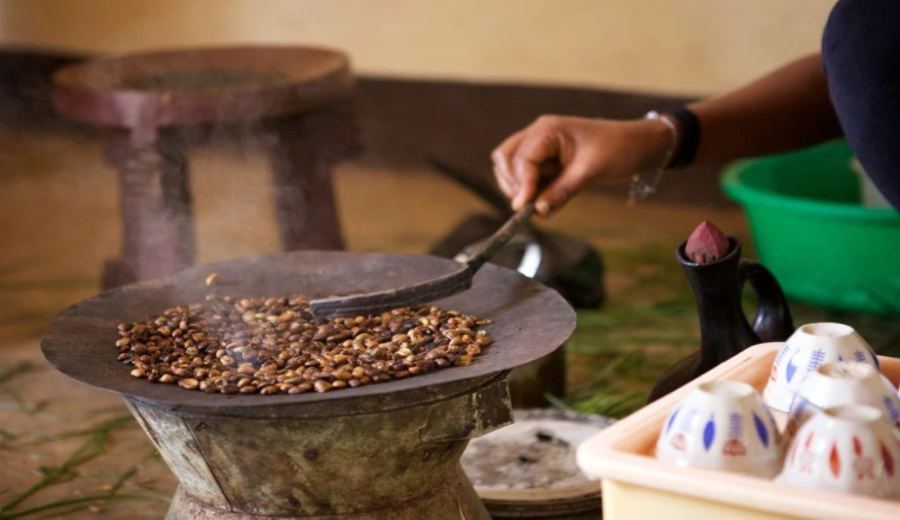
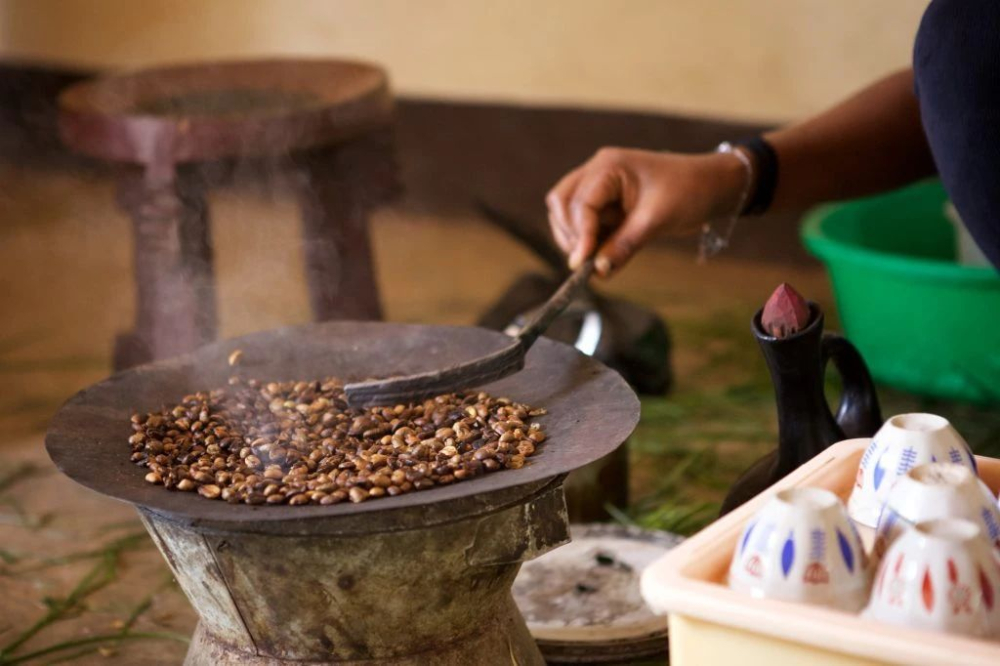
One of the most representative traditions is the centuries-old coffee ceremony. This ceremony is typically divided into three stages, known as Abol, Tona, and Beraka, symbolizing blessing, communication, and joy. During the ceremony, green coffee beans are first roasted on a flat iron pan, then crushed with a mortar and pestle, and finally slow-brewed in a clay pot called a Jebena. As the coffee grounds and hot water brew, rich aromas gradually emerge. This is not just the process of making a beverage, but also a form of social and cultural heritage. Additionally, the word “bunn” or “buna” in Amharic means coffee, while “Kaffa bunn” reveals the deep connection between coffee and Ethiopia’s Kaffa region. Some even say that the English word “coffee” originates from this ancient place name.
Coffee farming in Ethiopia is primarily carried out by smallholders, with over half of the coffee coming from small family farms. These farmers often intercrop coffee with other crops such as bananas, which helps maintain ecological balance and creates a unique green pastoral landscape. Due to limited individual yields, many areas rely on farmer cooperatives for collective processing and sales. For example, one bean listing features the Konga Cooperative, which processes coffee cherries harvested by farmers around the town of Yirgacheffe using the washed method, then refines and exports them under the cooperative’s name to ensure consistent quality and flavor.
When mentioning Ethiopia’s specialty coffee regions, Yirgacheffe and Sidamo are two star destinations that cannot be overlooked. Yirgacheffe is actually a sub-region under the larger Sidamo zone, located in the northwest of the state. In the early days, coffee from here was mostly processed using traditional sun-drying methods, and its flavors were not yet prominent. However, in the 1970s, the introduction of washed coffee techniques and equipment from Central and South America, along with the establishment of the first washed processing station, allowed the citrus, lemon aromas and bright, clean acidity of the coffee to fully shine, thereby laying the foundation for its distinctive flavor profile. Yirgacheffe later separated from Sidamo and became one of the most sought-after specialty regions in the global coffee market.
To protect the regional characteristics and commercial value, the Ethiopian government registered the flavor profiles of three major regions, including Yirgacheffe, as trademarks in 2004, and established the Ethiopian Commodity Exchange (ECX) in 2008. Through a strict grading and classification system, only coffee that meets specific flavor characteristics can be labeled as having a “Yirgacheffe flavor.” Typical flavors include pronounced citrus, lemon, and jasmine floral notes, with bright and layered acidity, and a clean, crisp mouthfeel. In addition to the town of Yirgacheffe, nearby areas such as Wenago, Gimbi, and Kochere also produce coffee that can be categorized under this flavor type.
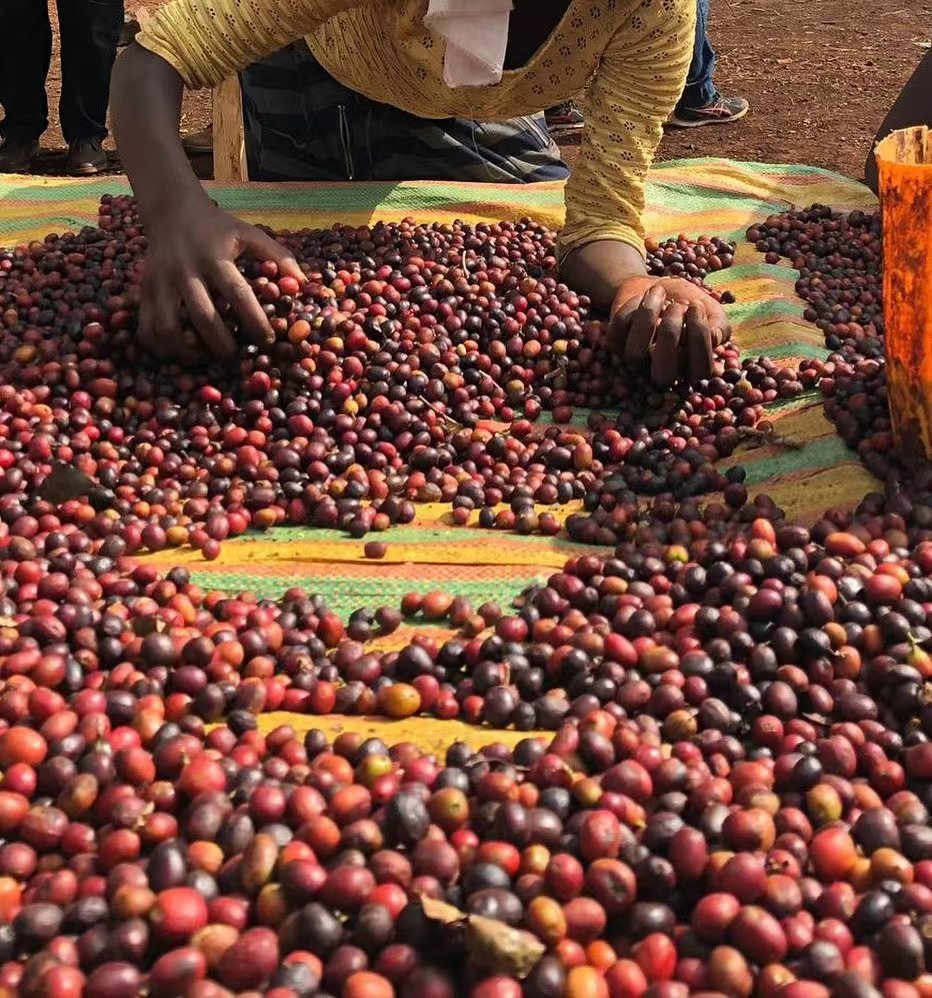
Sidamo, on the other hand, is another region with a long history and rich cultural heritage. Notably, the name of this area was previously often spelled as Sidamo, but it actually originates from the local ethnic group, the Sidama. Therefore, in recent years, more literature and consumers have tended to use the correct pronunciation, Sidama or Sidamo. Traditionally, Sidamo predominantly uses the natural (sun-dried) processing method, allowing for longer natural fermentation that imparts richer floral and tropical fruit aromas—such as the sweetness brought by furan compounds—to the beans, resulting in a full-bodied taste with a long-lasting aftertaste. A well-known coffee bean, the Hamaseh 74158, comes from the Hamaseh processing station at an altitude of 2,250 meters in Sidamo. Processed with fully red cherries using the natural method, it presents an enticing combination of citrus, mango, guava, and delicate floral notes.

In summary, Ethiopia is not only the birthplace of coffee but also an indispensable key player in the global specialty coffee map. From the ancient shepherd legend to modern regional management, from family-run smallholder farming to trademark-protected specialty coffee, every step contains a wealth of cultural meaning and flavor secrets. If you are looking for a pour over coffee bean with a unique personality, delving into the flavor profiles and processing methods of Yirgacheffe and Sidamo will help you find the coffee experience that best suits your taste during sampling and selection.
The above content is compiled by CoffeeHunters, a coffee news website.


