







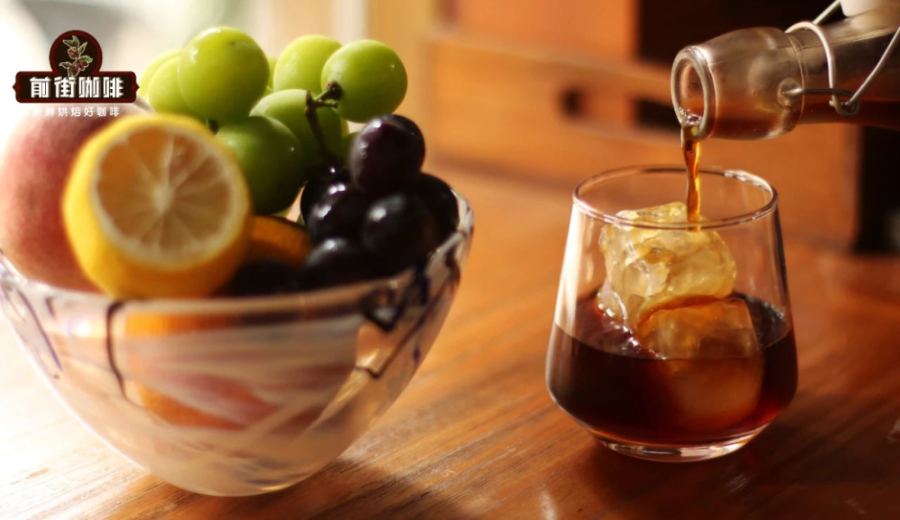
Introduction:To make delicious cold drip or cold brew coffee, the choice of beans is actually more important than technique. This article delves into the fundamental differences between cold brew and regular Americano coffee, takes you through the historical background of cold brew—from its invention by Dutch sailors to its modern popularity—and also shares practical cold brew ratio suggestions and shelf life tips. It further focuses on the semi-washed Red Bourbon from Brazil’s Cerrado region, analyzing its flavor profile in detail to help you determine whether this bean is suitable for making iced coffee.
To achieve satisfying cold brew or cold drip coffee, selecting the right beans is the key. No matter which brewing method you prefer, only by choosing beans that precisely match your personal taste can you enjoy a truly satisfying cup.
So, what’s the real difference between cold brew coffee and regular Americano? The biggest difference lies in the brewing temperature and method. Cold brew is extracted slowly using cold water throughout the entire process, while Americano is typically made by extracting concentrated espresso at high temperatures and then diluting it with ice. Although both are immersion brewing methods, their actual execution, mouthfeel, and flavor profiles are quite distinct.
Americano coffee usually relies on an espresso machine to quickly extract concentrated coffee under high temperature and pressure, then adds a large amount of iced water or ice cubes to cool it down. In contrast, cold brew is much simpler and more casual—it doesn’t require expensive equipment. Just mix ground coffee with cold water, place it in the refrigerator for 8 to 12 hours, and you’re done. This method can be easily done at home, with low cost and minimal barriers to entry.
However, it’s worth noting that although cold brew is convenient, it has a limited shelf life after brewing. It is generally recommended to consume it within 5 to 7 days after completion, otherwise it may develop fermented flavors that affect the overall taste. In most cases,the flavor is most balanced and smooth on the third day, and the overall peak flavor typically occurs on the second or third day after brewing, after which it gradually declines.

Many people first learned about cold brew coffee through Starbucks, but this brewing method was not actually pioneered by Starbucks. It is said that the history of cold brew can be traced back to 17th-century Holland, where sailors, unable to brew hot coffee at sea, tried soaking coffee grounds in cold water and unexpectedly discovered that it could still produce a decent flavor. Over time, this method gradually spread across Western Europe, the Americas, and Asia, and became especially popular for military use.
By the 1960s, a traveler named Todd Simpson, after tasting cold brew coffee in Peru, was deeply inspired and developed the now well-known Toddy cold brew system. Starbucks later adopted this system, bringing cold brew coffee further into the public eye.
If you want to make cold brew at home yourself, it’s recommended to use a wide-mouthed glass bottle or cup with a lid for easy operation and storage. Here’s a simple and practical cold brew ratio suggestion:
1. Place a cold brew-specific coffee bag (or your own ground coffee) into the container. It’s recommended to use a bag with a hanging string for easy removal.
2. Use a 1:10 ratio(for example, 10 grams of coffee grounds to 100 milliliters of cold water), suitable for direct drinking; if you want to add milk or coconut milk for a mixed drink, you can instead use a 1:6 concentrated ratio(10 grams of coffee grounds to 60 milliliters of water).
3. Place it in the refrigerator and let it steep for 8 to 12 hours. You can gently shake it during this time to ensure the coffee grounds and water are fully in contact.
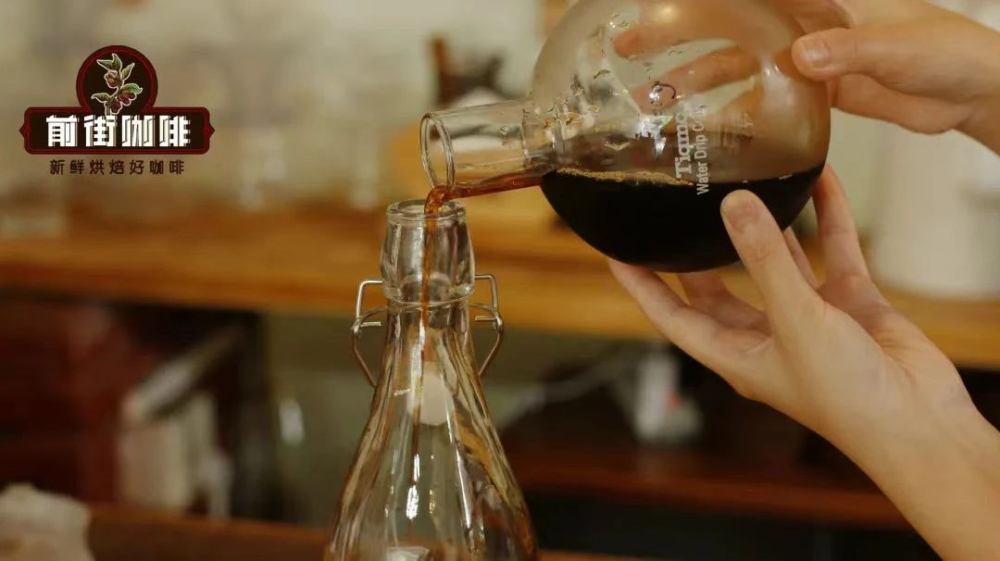
4. After completion, remove the filter bag and pour the coffee liquid into a cup to enjoy.
Although the method for making cold brew is simple, the processing method of the beans and the characteristics of the origin also greatly influence the final flavor. Take the Brazilian Cerrado region as an example—most farms there primarily use the natural (sun-dried) processing method, but some also use the semi-washed method, resulting in different flavor profiles.
Among them, the Cerrado Red Bourbon selected by a certain coffee brand is processed using the semi-washed method, sourced from the South Minas region at an altitude of 700 to 1250 meters. During processing, part of the fruit mucilage layer is retained, giving the final cup a sweeter and more layered flavor.
In actual tasting, this Cerrado Red Bourbon exhibits a distinct sweetness, with a hint of lemon aroma in the beginning, a nutty character in the mid-palate, and a rich dark chocolate note in the aftertaste. The overall mouthfeel is round and balanced, making it very suitable for coffee lovers who enjoy layered flavors with a sweet aroma.

In summary, if you’re looking for a bean suitable for making cold drip or cold brew coffee, the Brazilian Cerrado Red Bourbon—with its semi-washed processing method and prominent sweetness, nutty, and chocolatey notes—is definitely worth trying. However, the final choice ultimately comes down to your personal taste preferences. Through actual tasting, find the bean that best suits your palate.
The above content is compiled by CoffeeHunters, a coffee news website.


