








Introduction:Sumatran Mandheling coffee is renowned for its full-bodied texture and distinctive dark chocolate flavor profile, with its wet-hulled processing method being key to shaping these characteristics. This article delves into the origins of the name "Mandheling," explores the unique features of Indonesia’s major coffee-growing regions, introduces the rigorous selection criteria of PWN Golden Mandheling, and provides expert pour-over parameters and steps—from flavor profiles to brewing details—to help you fully grasp this classic coffee.
When it comes to specialty coffee in Asia, Indonesia is undoubtedly a vital region that cannot be overlooked, and Sumatran Mandheling stands out as one of its crown jewels. This coffee is celebrated for its rich, bold body, with herbal aromas and dark chocolate notes being particularly prominent, making it a favorite among dark roast enthusiasts and seasoned coffee connoisseurs. Starting with its historical background, this article will gradually explore the uniqueness of key producing regions such as Sumatra, Java, and Sulawesi, while focusing on the origins of the name "Mandheling," the selection process of PWN Golden Mandheling, and how the wet-hulled processing method contributes to its distinctive earthy and chocolatey flavors. Finally, practical pour-over recommendations will be provided to help you fully explore this classic from Sumatra.

Indonesia’s coffee cultivation history dates back to the late 17th century. In 1699, the Dutch East India Company introduced Arabica coffee trees to Java, aiming to break the Arab monopoly on global coffee trade. The initial planting areas were concentrated around Jakarta (then known as Batavia), and later expanded to East Java, Central Java, West Java, as well as parts of Sumatra and Sulawesi. Between 1725 and 1780, the Dutch East India Company successfully dominated the coffee trade market. By the 19th century, cultivation extended further to Sumatra, Bali, Sulawesi, and Timor, with the Lake Toba region in Sumatra and the Gayo Highlands in Aceh later becoming key origins for premium Mandheling. However, the coffee leaf rust epidemic of 1876 severely damaged the local Typica variety, prompting the introduction of Robusta in the early 1900s as a substitute in low-altitude areas of East Java.
Currently, over 90% of Indonesia’s coffee production comes from smallholder farmers, with an average farming area of just around one hectare. After independence, state-owned plantations on Java Island regained vitality through new varieties and government programs, and these techniques gradually spread to small-scale farmers. A combination of factors has resulted in the diverse flavor profiles of Indonesian coffee.
As Indonesia’s largest island and the world’s sixth-largest, Sumatra’s northwestern location makes it one of the country’s earliest regions to enter the coffee harvest season, typically from November to March each year. The Mandheling coffee produced here is known for its low acidity and complex layers, often described as representing spices and herbal notes. Its unique flavors stem not only from the fertile volcanic soil but are also closely tied to the widely used wet-hulled processing method. Premium Mandheling is primarily concentrated in the Lintong region of Lake Toba and the Gayo highlands of Aceh. Typical flavor profiles may include toasted bread, nuts, caramel, pine, and herbs, or deeper notes of spices, nuts, dark chocolate, and caramel.
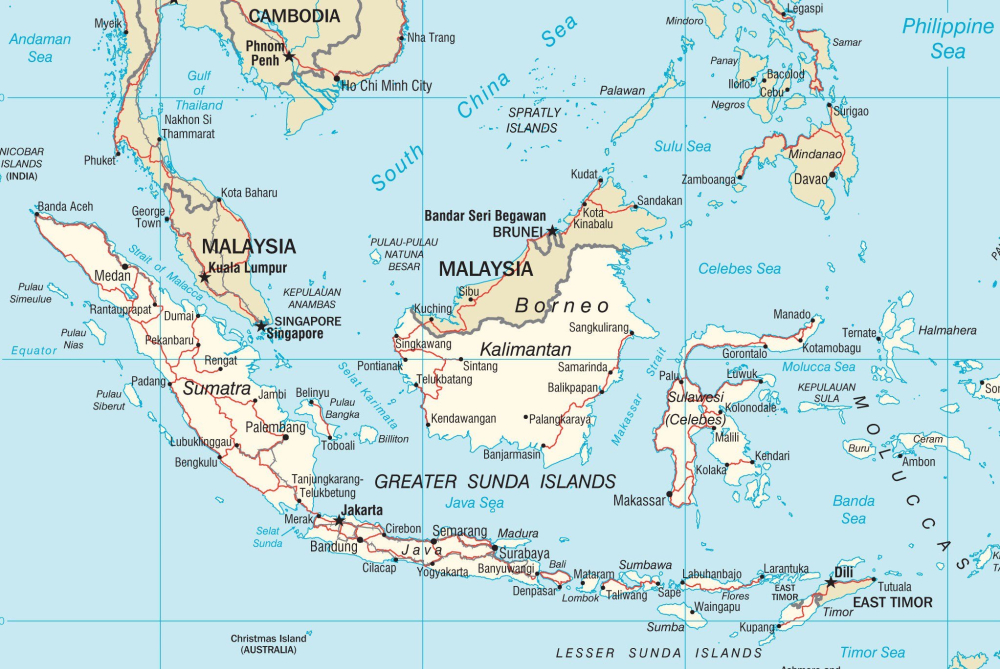
Java Island is not only a major coffee-producing region in Indonesia, but its name was once synonymous with coffee itself. The Dutch East India Company established several government estates here in the early years, such as Blawan, Tugosari, Pancoer, Jampit, and Kayumas. The coffee produced in these areas is mostly washed-processed, with relatively bright and clean flavors showcasing rich notes of molasses, cloves, and figs, along with low acidity and a full body—offering a contrast to Sumatra’s earthy profiles.
Coffee from Sulawesi Island (formerly known as Celebes) is mainly produced in the Toraja Highlands of South Sulawesi, particularly in the small farms of the Tana Toraja region. Compared to other Indonesian regions, Sulawesi coffee tends to have a milder flavor, yet still boasts bright acidity and layered caramel sweetness, with more subdued herbal and spice notes and occasional hints of floral undertones.
Though relatively small in size, Flores Island is known for its rugged terrain and active volcanoes, with the town of Bajawa at elevations of 1,200 to 1,800 meters serving as the main coffee-producing area. The fertile soil formed by volcanic ash, combined with the high-altitude environment, nurtures high-quality coffee with potential for organic certification.
Bali Island is famous as a tourist destination, but its coffee-growing regions are also noteworthy. The Kintamani Highlands, nestled between Mount Batukaru and Mount Agung, produce coffee with unique regional characteristics, representing another facet of Indonesia’s coffee diversity.
As for the origin of the name "Mandheling," it actually has no direct connection to the growing region. Legend has it that during World War II, a Japanese soldier stationed in Sumatra asked locals about the source of the coffee, and they mistakenly thought he was asking about their ethnic group, replying "Mandheling tribe (Mandheling)." After the war, the soldier recalled the uniquely flavored coffee from that time, and the term "Mandheling" gradually gained popularity. In 1968, Japan’s Osaka-based Nomura Trading Company imported 15,000 kilograms of Sumatran Mandheling coffee from Indonesia’s N.V. Pawani Medan company, which received rave reviews in the Japanese market, also bringing fame to Mandheling coffee and the PWN (Pawani) company.
As a well-known green bean buyer in Indonesia, PWN enforces strict selection criteria for Mandheling beans: first, machine sorting removes beans smaller than screen size 18, followed by three rounds of manual hand-picking to eliminate defects, ensuring compliance with Indonesia’s highest grade, G1. To distinguish Mandheling from other regions, PWN registered "Golden Mandheling" as a trademark, with its products bearing certification documents and exclusive sack markings, ensuring consistent quality and outstanding flavor.
When discussing the unique flavors of Sumatran coffee, its traditional wet-hulled processing method (giling basah) cannot be ignored. This method differs significantly from the common washed process, with steps including: first removing the fruit skin and pulp while retaining the parchment and mucilage; then fermenting in water tanks to wash away the mucilage; subsequently sun-drying the beans with parchment for 2–3 days until moisture content drops to 20–24%; then removing the parchment and allowing the green beans to continue drying to 12–13% moisture content before export. Due to the fast processing speed, higher defect rates are common, necessitating secondary (DP) or even tertiary (TP) hand-picking to reduce flaws. The wet-hulled method typically results in flavors of earth, smoke, and chocolate, with low acidity—but PWN Golden Mandheling manages to showcase excellent herbal notes, pronounced caramel sweetness, a full body, and a lingering finish with spicy and sweet layers.
To fully experience the bold flavors of Mandheling, pour-over is an excellent brewing method. It is recommended to use a Kono filter cone, with a water temperature of 88–89°C, 15 grams of coffee grounds, and a 1:15 coffee-to-water ratio, ground to a medium-coarse consistency (70% extraction rate through a Chinese No. 20 standard sieve). The reason for choosing the Kono filter cone lies in its rib design, which is concentrated at the bottom, and the filter paper’s close adherence to the cup walls slows airflow and extends contact time between water and grounds, enhancing extraction efficiency and body. The specific steps are: start with a 30-gram bloom for 30 seconds, then pour in a slow circular motion until reaching 125 grams for the first pour; when the water level is about to expose the coffee bed, continue pouring to 225 grams before stopping; once the dripping finishes, remove the filter cone to complete extraction. The entire process should take around 2 minutes, fully highlighting Mandheling’s rich layers and sweet aftertaste.
The above content is compiled by CoffeeHunters, a coffee news website.


