







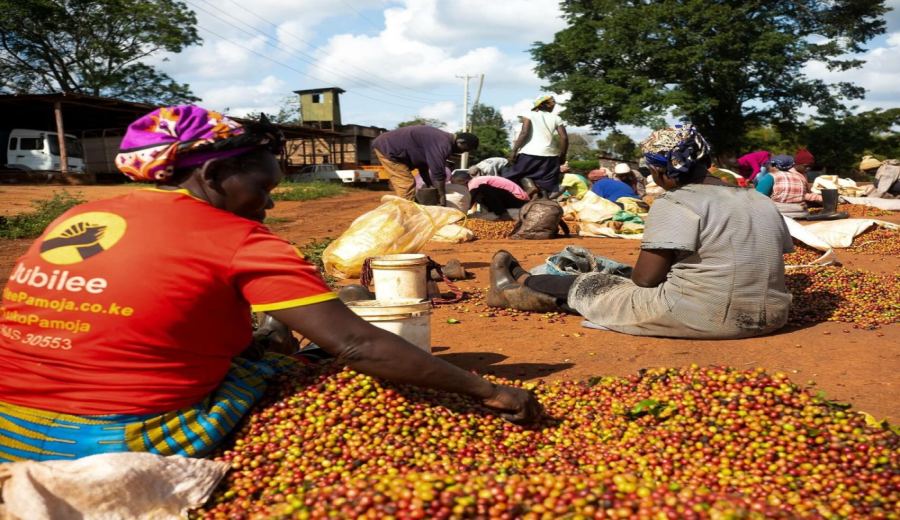
Introduction:Kenyan coffee is renowned for its vibrant berry acidity, but understanding the intricacies of its producing regions is key to truly grasping the diversity of its flavors. This article provides an in-depth look at Kenya’s seven major coffee-growing regions, with a focus on three specialty coffee hubs—Nyeri, Kirinyaga, and Murang’a. By examining factors such as altitude, coffee varieties, and harvest seasons, and through practical cupping comparisons of flavor profiles across regions, it helps you gain a more precise understanding of the characteristics and differences of Kenyan beans.
Kenya is one of Africa’s most iconic coffee-producing countries, known for its intense berry acidity and unique layered flavors, making it a significant contributor to the global specialty coffee market. However, simply referring to “Kenyan beans” as a whole often fails to capture the nuanced differences in their flavors. In reality, Kenya’s multiple producing regions, shaped by varying terrains, altitudes, and microclimates, yield coffees with distinct profiles. This article will take you deep into the heart of Kenya’s seven main coffee-growing regions, with special attention to the three core specialty regions—Nyeri, Kirinyaga, and Murang’a. We’ll explore their uniqueness by analyzing altitude, cultivated varieties, and harvest periods, and compare their flavor performances based on actual cupping experiences, giving you a more informed basis for selecting Kenyan coffee beans.
Kenya’s coffee-growing areas are primarily concentrated in the mountainous regions of the central part of the country, especially the foothills surrounding Mount Kenya and the Aberdare Range. These areas, blessed with fertile volcanic soils and ideal altitudes, provide the perfect environment for growing high-quality coffee. The country’s main coffee-producing regions include Thika, Kirinyaga, the western side of Mount Kenya, Nyeri, Kiambu, Ruiru, and Murang’a, among which Nyeri, Kirinyaga, and Murang’a are the most prominent in the specialty coffee market.
The Nyeri region is located in central Kenya, home to the dormant volcano Mount Kenya. The region’s red soils are rich in minerals, offering excellent growing conditions for coffee trees. Production here is mainly organized by cooperatives formed by smallholder farmers, with large estates being relatively rare. Nyeri’s altitude ranges between 1,200 and 2,300 meters, classifying it as a high-altitude growing area, which results in denser coffee beans and typically brighter, more complex flavor profiles.The main harvest season runs from October to December (primary season), and from June to August (secondary season).Commonly cultivated varieties include SL-28, SL-34, Ruiru 11, and Batian, among which SL-28 and SL-34 are classic Kenyan coffee varieties, celebrated for their intense berry acidity and rich complexity.
The Murang’a region is also situated in central Kenya, within the Central Province. It was one of the areas where early missionaries chose to settle after the Portuguese prohibited coastal residency. This inland region also benefits from volcanic soil nourishment, and coffee farming is primarily carried out by smallholder farmers, with relatively few estates.Its altitude ranges approximately between 1,350 and 1,950 meters, similar to that of Nyeri,and its harvest seasons are also divided into the primary season from October to December and the secondary season from June to August. The cultivated varieties include SL-28, SL-34, Ruiru 11, and Batian, and the resulting coffees often exhibit bright berry notes, accompanied by subtle floral or green tea aromas.
The Kirinyaga region is located on the slopes of Mount Kenya, adjacent to Nyeri, and is one of Kenya’s most renowned specialty coffee regions. Its name originates from the Kikuyu language, meaning “white mountains,” symbolizing the snow-capped peaks of Mount Kenya year-round. Kirinyaga coffee is known for its intense flavors, rich layers, and full body, standing alongside Nyeri as one of Kenya’s two most representative regions.Its altitude ranges from 1,300 to 1,900 meters,with harvest seasons also from October to December (primary season) and June to August (secondary season). Most producers in the region are small coffee farmers who organize production and processing through cooperatives. These cooperatives provide professional wet mills to ensure consistent bean quality. The cultivated varieties are also predominantly SL-28, SL-34, Ruiru 11, and Batian.
To more intuitively understand the flavor differences among these regions, a certain coffee brand conducted a cupping analysis of beans from Nyeri, Murang’a, and Kirinyaga. These beans were all from the 2020 new crop, processed using the same washed method (72-hour fermentation), and all of the varieties were SL-28 and SL-34.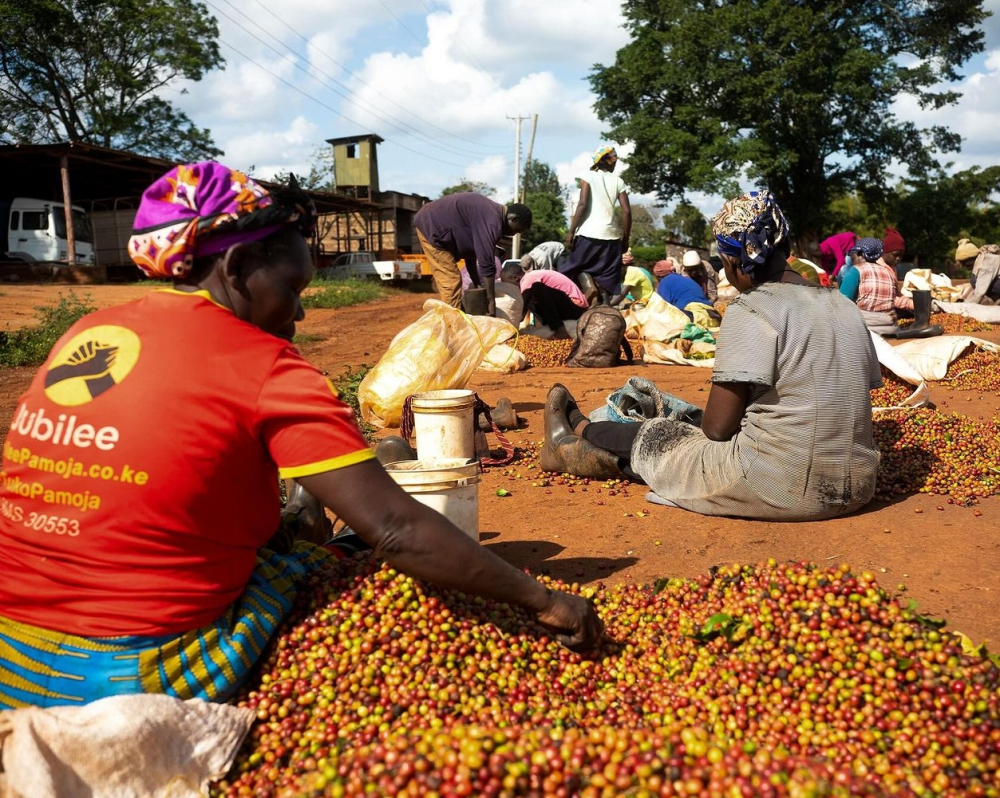 The cupping results showed that Nyeri beans generally exhibited berry flavors, moderate sweetness, and honey and cream aftertastes; Murang’a beans were characterized by pronounced berry notes, complemented by slight floral and green tea aromas; Kirinyaga beans, in addition to berry flavors, also had moderate sweetness and, when cooled, displayed notable roasted nut aromas.
According to descriptions by Mr. Hsu Pao-lin in 《Coffee Hunter’s Guide 2》 (《尋豆師2》), Nyeri coffee features bright blackberry flavors, a full body, and citrus and floral aromas; Murang’a coffee excels in bright acidity and a substantial mouthfeel; Kirinyaga coffee showcases bright fruit acidity, a medium body, and refined sweetness. However, these flavor descriptions should be taken as references only, as actual flavors can be influenced by multiple factors such as altitude, processing methods, and storage conditions. For instance, cupping revealed that beans grown at higher altitudes often have more elevated acidity, while those from lower altitudes may present duller acidity in cooler environments. Therefore, when selecting Kenyan coffee beans, one should not rely solely on regional labels but consider a range of other factors to truly appreciate the unique charm of Kenyan coffee.
The above content is compiled by CoffeeHunters, a coffee news website.


