







Introduction:Explore in depth the characteristics of Brazil’s four core coffee-producing regions—the world’s largest coffee-producing country—including Minas Gerais, Cerrado, Sul de Minas, and Mogiana. Learn how their geographic environments contribute to flavor variations. From classic Red Bourbon and Yellow Bourbon varieties to the evolution and advantages of the pulped natural processing method, this article provides pour over parameters and practical tips for medium-dark roasted Brazilian beans, teaching you how to brew a balanced cup at home with notes of nuts, chocolate, and caramel.
As the world’s top coffee-producing nation, Brazil is renowned for producing coffee beans that are low in acidity, balanced, and rich in robust nutty and chocolatey tones. Thanks to their stable flavor profiles and affordable pricing, Brazilian beans are widely used as the base for espresso blends and are an indispensable element in the daily offerings of many cafés. This article will delve into the terroir characteristics of Brazil’s four major producing regions, differences among the main cultivated varieties, and the technological evolution of the pulped natural processing method. With Cerrado pulped natural Red Bourbon as an example, it offers practical pour over extraction recommendations suited for medium-dark roasted beans.
Generally speaking, coffee beans grown at high altitudes, due to climatic conditions and significant day-night temperature variations, often exhibit more complex flavor layers and higher bean density. However, Brazil’s mostly flat plateau terrain results in relatively lower overall altitudes and a lack of extreme microclimates. This has instead led to the development of large-scale cultivation models that prioritize stability and balanced flavors. As a result, Brazilian coffee is not only easy to enjoy but also serves as a flavor stabilizer in many blends.
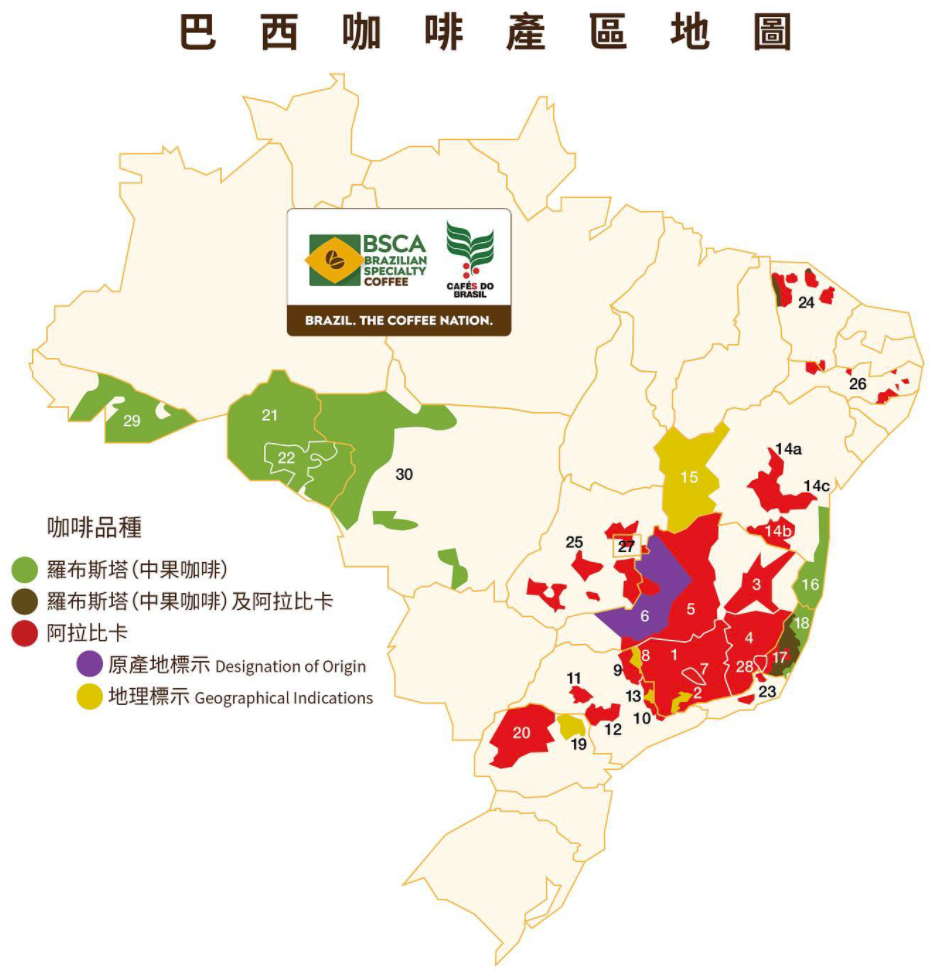
With a coffee-growing history spanning over three hundred years, Brazil has become a major economic crop since the 1970s. Coffee is produced in 17 states nationwide, but over ninety percent of production is concentrated in the southeastern region, particularly in Minas Gerais, São Paulo, Mato Grosso do Sul, and Bahia. Among them, Minas Gerais alone accounts for nearly half of the national total output, with a coffee-growing area of 1.22 million hectares—larger than the entire coffee-growing region of Colombia.
When it comes to specialty coffee, the representative producing regions within Minas Gerais include Cerrado, Sul de Minas, and Mogiana in São Paulo. The industry generally agrees that Minas Gerais’ output and quality influence the overall market performance of Brazilian coffee, and among these, Sul de Minas, Cerrado, and Mogiana are considered the three pillars of specialty Brazilian coffee. These three sub-regions not only each have unique microclimates, altitudes, and soil conditions, but they also directly shape the final flavor profiles of the coffee.
Cerrado is located in the western part of Minas Gerais and features typical highland topography, with an average altitude exceeding 1,000 meters. Its flat terrain and distinct dry season are highly conducive to large-scale farming and centralized harvesting. This region has long attracted numerous international exporters to establish large coffee estates, often with individual farms spanning over 10 hectares, ensuring both high production efficiency and consistent quality.
Sul de Minas is situated in the foothills at elevations above 1,100 meters. Its sloped terrain, distinct wet and dry seasons, and significant day-night temperature differences create a microclimate ideal for cultivating Bourbon and Yellow Bourbon varieties, making it one of the important sources of specialty-grade Brazilian beans. In comparison, Mogiana, located near Sul de Minas, often intercrops coffee with natural vegetation. Its fertile red volcanic soil provides rich nutrients, enabling coffee cherries to accumulate more flavor compounds. Some farms in this area maintain traditional farming methods, while many have adopted modern management techniques, resulting in coffee flavors that combine fruity notes, chocolate, and a unique sugarcane-like sweetness.
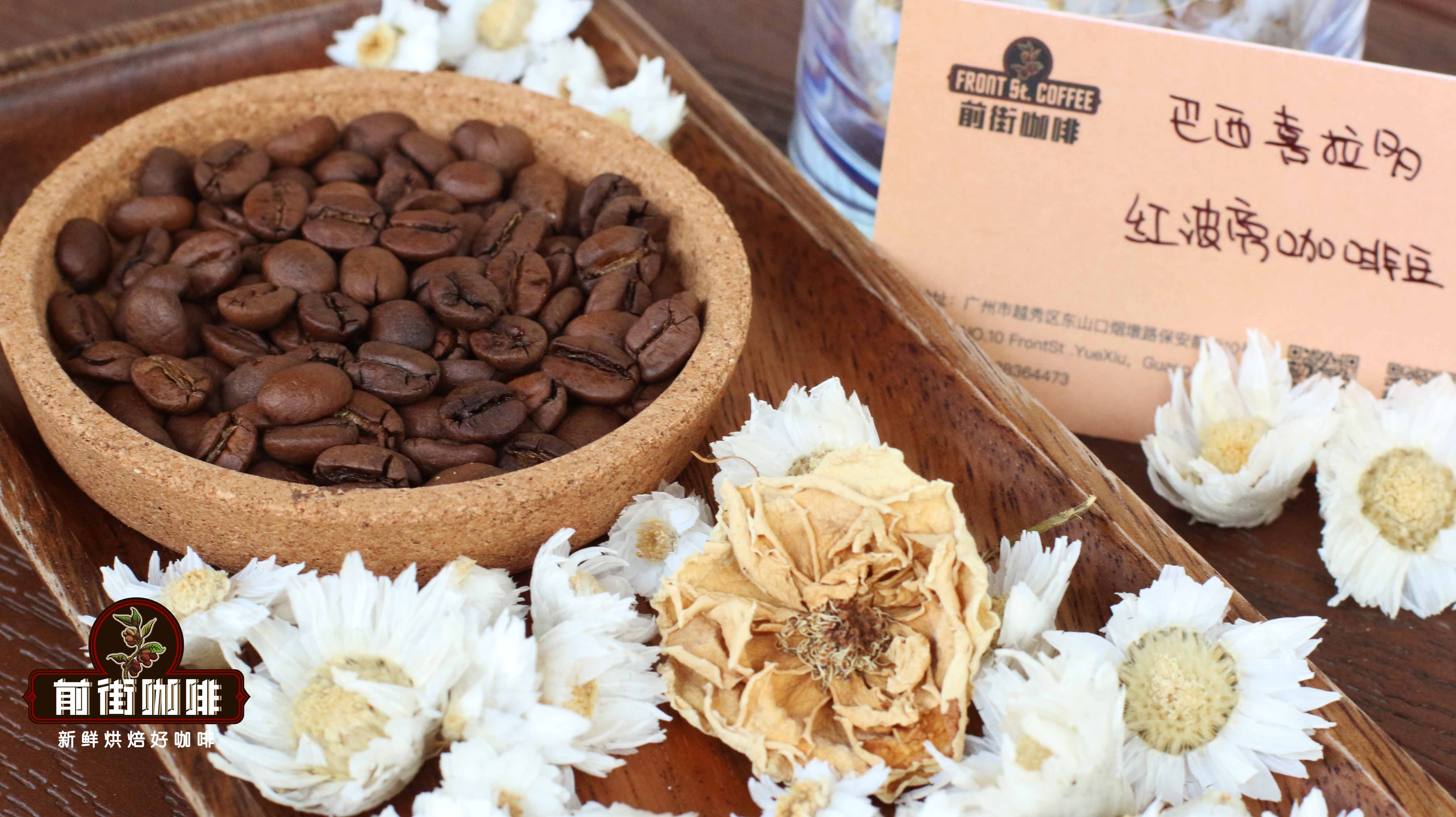
Among the many producing regions and varieties, after multiple cuppings, Cerrado pulped natural Red Bourbon was selected as the representative of Brazilian coffee and included in the regular recommended bean list, allowing coffee enthusiasts to experience authentic Brazilian flavors at reasonable prices. This bean, when medium-dark roasted, showcases aromas of nuts, caramel, and cream, with a full-bodied yet layered mouthfeel, making it an excellent choice for those new to Brazilian coffee.
The main varieties cultivated in Brazil include Bourbon, Mundo Novo, and Catuaí. Among them, the Bourbon variety has the longest history, having mutated from Typica, and is divided into Red Bourbon and Yellow Bourbon based on the color of the ripe fruit. Red Bourbon turns from green to red when ripe, is commonly found in medium to high-altitude regions, offers a balanced flavor profile, gentle acidity, and intense aroma, making it a reliable choice for many coffee farmers and roasters.
Yellow Bourbon derives its name from the yellow color of the ripe fruit, a trait resulting from genetic selective expression of the fruit skin pigment. This variety tends to accumulate high concentrations of fructose in high-altitude environments, resulting in a pronounced sweetness and juicy mouthfeel. It has ranked highly in Brazil’s Cup of Excellence competitions multiple times. When roasted, it often emits aromas reminiscent of creamy peanuts and sugarcane, making it suitable for drinkers who prefer mellow and sweet flavors.
Brazil’s coffee processing methods primarily include natural (sun-dried), pulped natural, and washed. Among these, the evolution of the pulped natural method has been key to improving the overall quality of Brazilian beans. Before the 1990s, Brazil commonly used the traditional natural process, where whole coffee cherries were directly sun-dried on the ground, often resulting in earthy or fermented off-flavors. To address this issue, Brazilian coffee research institutions developed the pulped natural method in the 1990s. This involves removing the pulp and skin while retaining the mucilage layer, followed by 1 to 3 days of sun drying, then mechanical-assisted drying to achieve a moisture content of 12%, and finally a maturation stage. This method not only shortens processing time but also effectively reduces the risk of off-flavors, significantly enhancing the cleanliness and clarity of Brazilian coffee flavors.
Of course, some regions still retain traditional natural processing methods. For example, the introduced Natural Queen Estate beans first use floatation to remove unripe cherries before drying, and employ African raised beds throughout the drying process. Manual turning ensures even heat distribution, further improving cleanliness and flavor expression.
So, how can you brew a balanced-flavored Brazilian coffee at home? Using medium-dark roasted Cerrado pulped natural Red Bourbon as an example, it is recommended to use the pour over method to better appreciate its layers of nuts, caramel, and dark chocolate. First, ensure the coffee beans are within their optimal flavor window—ideally used within one month of roasting—to achieve the richest aromatic expression.
Since medium-dark roasted coffee beans have a higher degree of caramelization, which can easily release excessive bitter substances, it is recommended to control the water temperature between 87–88°C and choose a medium grind size (such as EK43s setting 10.5, or about 75% passing rate through a Chinese standard 20-mesh sieve) to avoid over-extraction. A KONO filter, which has a slower flow rate, is recommended. Its unique structure slows down the water flow, helping to fully release aromatic compounds.
Specific parameters are recommended as follows: 15 grams of coffee, a 1:15 coffee-to-water ratio, total water temperature of 87–88°C, medium grind size (about 75% passing rate through a Chinese standard sieve). The first step is to pour roughly double the weight of the coffee grounds (about 30 grams) for the bloom phase, lasting around 30 seconds. Then, pour water in small streams in a circular motion from the inside out until reaching 125 grams for the first pour. Once the coffee bed drops to the middle of the filter, pour again up to 225 grams, keeping the total extraction time around 2 minutes. This approach fully highlights the Brazilian beans’ full-bodied roundness and sweet flavor profile.
The brewed Cerrado pulped natural Red Bourbon delivers an immediately noticeable sweetness with subtle hints of lemon aroma. The mid-palate reveals rich notes of nuts and caramel, while the finish leaves a strong impression of dark chocolate. The overall mouthfeel is balanced and layered, making it highly suitable for coffee lovers who enjoy medium-dark roasted flavors.
The above content is compiled by CoffeeHunters, a coffee news website.


