







Introduction:Indonesian Mandheling coffee is renowned for its bold body and low acidity, but different roast levels have a significant impact on its flavor profile. This article delves into the characteristics of Mandheling from the two major producing regions—Lake Toba in Sumatra and the Gayo Mountains—and explores how medium-dark to dark roast profiles enhance its spice, cedar, and chocolate notes. It also shares practical brewing and roasting parameters, allowing you to brew a rich, full-bodied Mandheling SOE Americano and espresso at home.
Indonesian Mandheling coffee is loved by coffee enthusiasts worldwide for its rich and bold taste, but its unique flavor profile is actually closely tied to the terroir of the producing regions and the depth of roasting. In particular, the two core regions of Lake Toba in Sumatra and the Gayo Mountains in Aceh not only offer distinct jungle and earthy notes, but also develop a deep aromatic foundation due to the wet-hulling process. This article will start with an overview of the producing areas to help you understand why Mandheling is often roasted in the medium-dark to dark range, and how such roast levels influence its performance in pour over, espresso, and Americano.
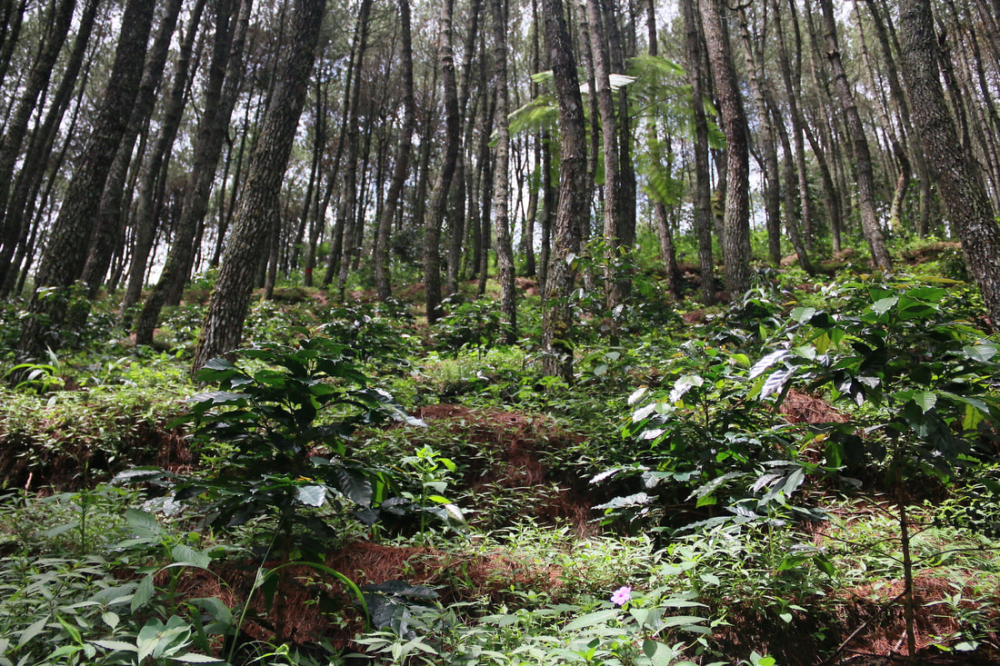
Coffee drinkers familiar with Mandheling often first notice its large bean size and dark appearance, which emits strong caramel and spice aromas when brewed. Upon tasting, it offers a pronounced sweetness with noticeable herbal and woody undertones. All of this stems from the dual influence of its growing environment and post-harvest processing method. Strictly speaking, only Arabica coffee grown around Lake Toba in Sumatra, Indonesia, qualifies as 'Mandheling.' Among these, theLintong region (near Lake Toba) and the Gayo Mountains in Aceh are the most famous, with altitudes typically ranging between 1,200 and 1,500 meters. The coffee trees mature slowly under shaded conditions, and combined with the wet-hulling process, they produce Mandheling’s signature bold body and low acidity.
Traditionally, Mandheling coffee is mostly medium-dark to dark roasted (commonly referred to as Dark Roast). This roasting strategy is primarily aimed at highlighting its low acidity and high body, while further bringing out the complex layers of spice, cedar, and dark berry notes. Light to medium roasts can preserve more acidity and fruity floral notes, but often fail to showcase the most classic richness and earthiness of Mandheling. Therefore, it is within the medium-dark to dark roast range that its aroma and taste can achieve the best balance.
So, how can you use dark-roasted Mandheling to make a rich, full-bodied Americano? The key lies in using freshly roasted, high-quality beans. Generally speaking, the 4th to 45th day after roasting is the golden period when the flavor and aroma of the beans are at their peak. During this time, the beans release the most soluble substances and oils, making them particularly suitable for making espresso or Americano. It is recommended to choose beans roasted within 5 days and delivered quickly to ensure they are still within their optimal flavor window.
If you want to try pour over or espresso brewing at home, here is a set of tested and effective parameter settings suitable for various equipment, which can also highlight Mandheling’s unique flavors. Taking the preparation of a Mandheling SOE Americano as an example, it is recommended to use 20 grams of coffee powder to extract 40 grams of concentrated liquid, with a powder-to-liquid ratio controlled at 1:2, and the overall extraction time falling between 26–33 seconds. The grind size is suggested to be adjusted to Galileo 2.0 (approximately medium-fine to medium grind). This parameter combination can effectively balance body and clarity, avoiding over-extraction or excessive acidity.
When using this Mandheling to make espresso, it is recommended to use a double-shot portafilter, with the coffee dose controlled between 18 to 20 grams, while maintaining a 1:2 powder-to-liquid ratio. Specifically, 20 grams of coffee yields 40 grams of espresso, and 18 grams yields 36 grams. In terms of operation, first thoroughly clean and dry the portafilter, then use the grinder to grind the required amount of coffee, and distribute it evenly in the portafilter using a distribution tool, followed by tamping with appropriate pressure to ensure consistent compaction. Before starting extraction, you can run water through the group head to rinse away any residue, then attach the portafilter and begin extraction. When the scale shows the target liquid weight (e.g., 40 grams), and the extraction time falls between 28–33 seconds, you can stop. This will yield an espresso with balanced taste and prominent crema.
Once you have the ideal espresso, you can add water according to your preference to make an Americano. The recommended ratio is 1:5, meaning adding 200 grams of hot water at about 80°C to 40 grams of espresso liquid. This way, you can retain Mandheling’s bold base while showcasing its spice and herbal layers, suitable for those who enjoy a solid yet refreshing cup. Additionally, this bean is also very suitable for use with various equipment such as French press, pour over, siphon, and moka pot. As long as you adjust the grind and time appropriately, its versatile flavors can be fully revealed.
The above content is compiled by CoffeeHunters, a coffee news website.


