







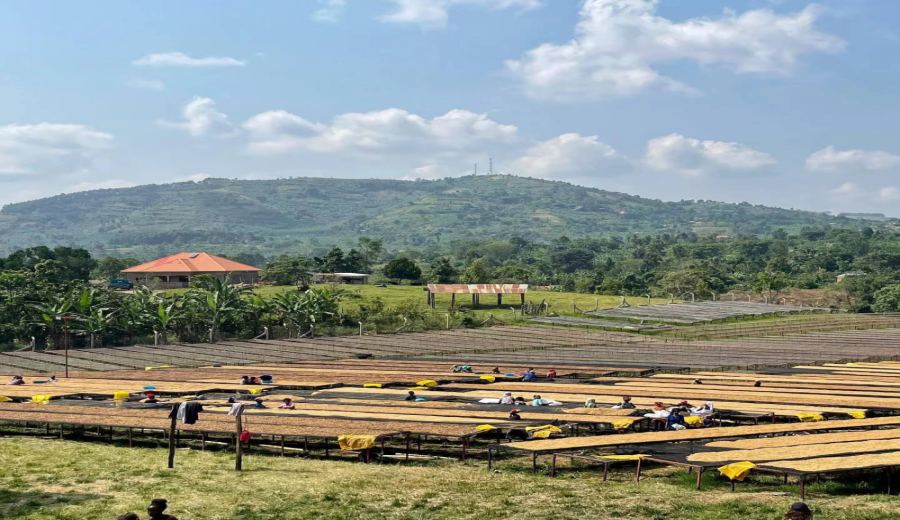
Introduction:Although Uganda is a landlocked country in Africa, its coffee industry has risen rapidly in recent years. This article delves into Uganda’s coffee grading system, regional distribution, and processing methods, helping you understand the differences between the two major types—Robusta and Arabica—and deciphering their unique flavor profiles, including fruity notes, wine-like layers, and earthy undertones, to assist you in selecting the most suitable coffee beans more precisely.
Located at the source of the Nile, Uganda is an African landlocked country without any coastline. Although it has a long history of coffee cultivation, years of conflict have long stagnated the quality of its coffee. It is only in the past fifteen years, with the gradual stabilization of the political situation, that Uganda’s coffee industry has begun to flourish and gradually reveal its potential.
Straddling the equator, Uganda features a tropical highland and savanna mixed climate, with stable year-round temperatures averaging around 18°C. The country experiences distinct wet and dry seasons, with the long rainy season from March to May and the short rainy season from October to December. Annual rainfall ranges between 1000 and 1400 millimeters, providing favorable conditions for coffee cultivation.
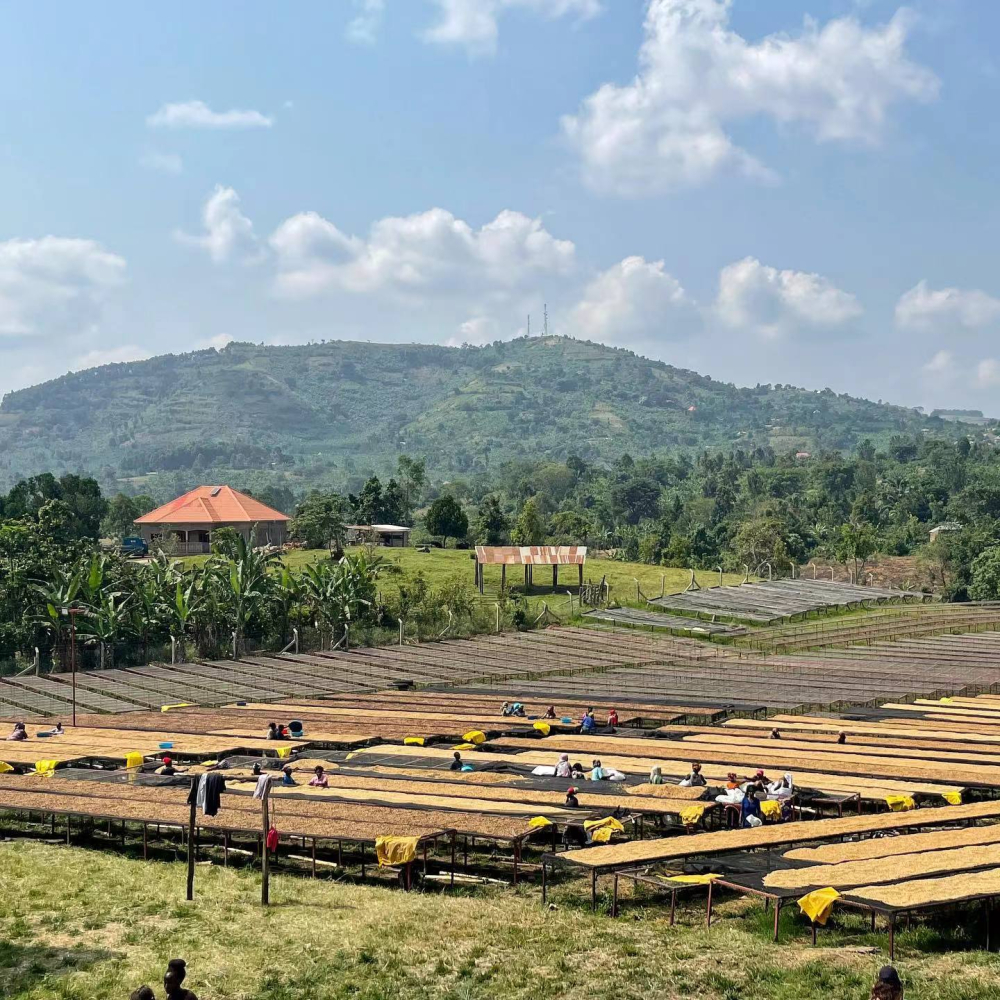
The country is home to over 500,000 coffee farms, with approximately a quarter of the population engaged in coffee-related industries. Interestingly, up to 94% of the coffee grown in Uganda is Robusta, while only 6% is Arabica. Due to its strong adaptability, Robusta is widely cultivated in mid-to-low altitude areas, whereas the rarer Arabica mostly grows in high-altitude tropical rainforest regions and is exported to global markets.
In terms of production regions, Uganda’s Robusta is mainly distributed in the central, eastern, western, and southeastern parts of the country, typically grown at altitudes below 1200 meters. Arabica, on the other hand, is concentrated on the foothills of Mount Elgon in the east, as well as highlands such as Mt. Rwenzori and Mt. Muhabura in the southwest, at elevations of about 1500 to 2300 meters. The climate and soil in these regions contribute to their distinctive flavor characteristics.
Regarding processing methods, Ugandan coffee primarily employs traditional washed and natural (sun-dried) processes. Washed processing highlights the coffee’s cleanliness and acidity, while natural processing enhances sweetness and fruitiness. Different processing methods directly affect the final flavor profile and serve as an important reference when choosing coffee beans.
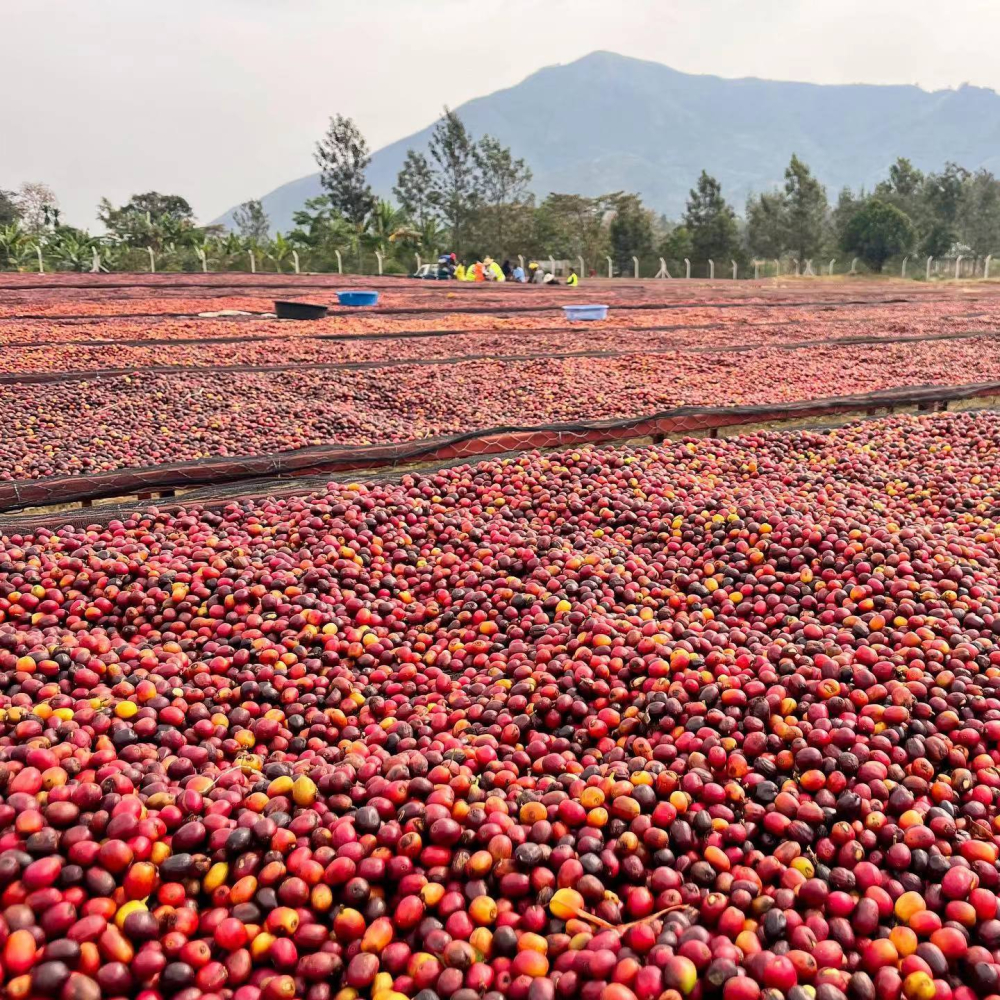
Ugandan coffee beans are classified under a detailed grading system based on size, density, and appearance. Among them, AA+ is the highest grade, representing exceptionally outstanding cupping performance, usually selected from the best-flavored beans within the AA grade; AA grade beans have a screen size of 17–18 and are commonly found high-quality beans on the market; AB grade beans have a size of 15–16, are the most produced, and offer good value for money; C grade beans are smaller than AB.
TT grade consists of lighter beans sorted from AA and AB through air classification, while T grade comes from lighter beans in the C grade. E grade is the rare “elephant bean,” an unusually large bean formed by the fusion of two coffee beans; PB refers to peaberry beans, which are separately categorized due to their unique shape but do not necessarily have superior flavor; UG includes beans that do not meet the above criteria.
In terms of varieties, Robusta mainly includes two types: ‘Uganda Nganda’ and ‘Erecta,’ which feature a strong body and unique herbal notes. Arabica is dominated by traditional varieties such as Kent, Typica, SL-14, and SL-28. These varieties are mostly grown in high-altitude regions, resulting in complex flavor profiles.
Ugandan coffee boasts distinctive flavor characteristics, often exhibiting rich ripe fruit aromas, a wine-like and layered mouthfeel, and a balanced acidity and sweetness accompanied by notable juiciness. Though sharing some similarities with neighboring Kenyan coffee, Ugandan beans carry a softer earthy aroma, giving them a unique identity among East African coffees. They are highly suitable for coffee enthusiasts who enjoy complex and full-bodied flavors.
For consumers looking to try Ugandan coffee, it is recommended to choose based on roast level: medium-light roasts can highlight fruitiness and acidity, while medium-dark roasts better showcase its richness and sweetness. Additionally, brewing with pour over or drip methods allows for a clearer appreciation of its delicate flavor layers, making it an excellent way to explore Ugandan coffee.
The above content is compiled by CoffeeHunters, a coffee news website.


