








Introduction:The Huila region of Colombia is renowned for its stable and layered coffee flavors, and the local "Flower Moon Night" coffee employs an innovative double anaerobic natural process to release intense strawberry and winey chocolate notes. This article delves into the geographical advantages of the Huila region, harvesting techniques, and the details of this special fermentation process, while also providing practical pour over parameters and tips to help you master the brewing essence and flavor profile of this specialty coffee.
Colombia has long ranked as the world’s second-largest coffee producer, consistently delivering high-quality Arabica specialty coffees thanks to its unique geographical environment and stringent quality standards. Among its many producing regions, Huila stands out with its stable flavor profile and high-altitude advantage. The recently popular “Flower Moon Night” coffee, in particular, utilizes a double anaerobic natural process to create a bright, layered profile of berries and chocolatey wine notes, earning widespread acclaim among global coffee enthusiasts. This article will explore the terroir characteristics of Huila, the importance of hand-picking, and the fermentation techniques and best brewing recommendations for this uniquely processed coffee, helping you gain a more comprehensive understanding of this unforgettable brew.
 As a major global coffee exporter, Colombia ranks among the top in both planting area and production of Arabica varieties, especially with a strong foundation in washed processing techniques that deliver bright acidity and rich body. Beyond variety and processing methods, the country’s national coffee growers' associations have long been committed to quality control and technology promotion, which are also key factors in maintaining its high market standing. Among these, the Huila region is nationally recognized as a hub for specialty coffee, home to numerous high-altitude coffee farms that provide the ideal conditions for developing complex flavors.
Located on the southern slopes of Colombia’s Central Cordillera, Huila features a landscape dominated by hills and mountains, with an average cultivation altitude exceeding 1,500 meters, and some premium estates reaching over 1,800 meters. The high-altitude environment brings significant diurnal temperature variation and abundant rainfall, not only extending the ripening period of coffee cherries but also encouraging the beans to accumulate richer sugars and aromatic compounds. Coffees produced in this region typically exhibit a balanced acidity-to-sweetness ratio, a full body, and distinct notes of nuts and chocolate, with high-altitude batches performing particularly well and earning consistent praise on the international market.
Colombia employs a rigorous altitude-based grading system, where Supremo is the highest grade—characterized by dense beans and extremely low defect rates. Many of Huila’s specialty coffees fall under this grade. Although a certain brand’s Huila everyday coffee is positioned for regular consumption, it also uses Supremo-grade beans, offering classic notes of nutty cream and delicate fruitiness, making it an ideal entry point for exploring the flavors of this region.
It’s worth noting that due to Huila’s rugged terrain, mechanical harvesting is not feasible in most areas, so the region relies mainly on hand-picking to select only perfectly ripe coffee cherries, ensuring that only optimally mature fruits enter subsequent processing. While this increases labor costs, it effectively enhances the final purity and consistency of the coffee’s flavor, and is one of the key reasons the region maintains such high quality.
In terms of processing methods, traditional washed processing remains dominant in Huila, but the emerging double anaerobic natural method has introduced a completely different flavor dimension. Take the “Flower Moon Night” coffee, for example: after harvest, the coffee cherries undergo floatation to remove unripe or defective beans, then are placed in stainless steel fermentation tanks where carbon dioxide is injected to displace oxygen, followed by a 15–20 day anaerobic fermentation process conducted at low temperatures. This process facilitates more complex microbial reactions, bringing out intense strawberry, winey, and chocolate notes while enhancing sweetness and softening acidity. After fermentation, the beans are spread out to dry in the sun, gradually stabilizing their flavor and moisture content.
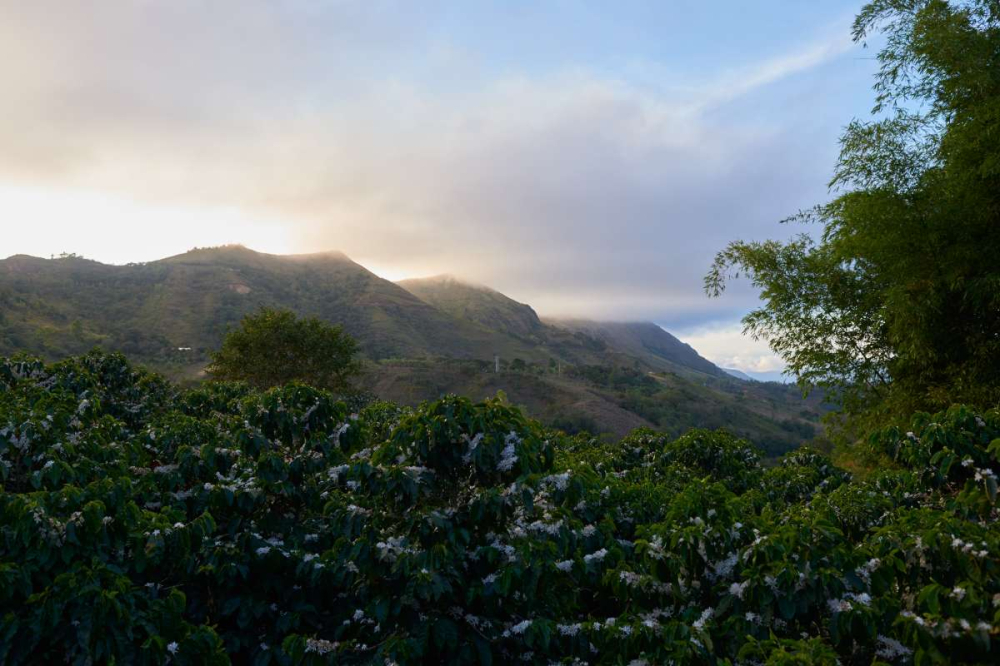
This “Flower Moon Night” coffee comes from the El Diviso Estate in Huila, grown at around 1,800 meters above sea level using the Caturra variety and processed via the double anaerobic natural method. It was one of the most popular specialty coffees from a certain brand in 2020. Its rich strawberry jam aroma, fermented winey tones, and chocolatey finish often leave a deep impression on first-time tasters, showcasing the tremendous potential of special processing methods to elevate the sensory experience of coffee.
If you’d like to recreate this coffee’s captivating flavors at home through pour over, here are the professionally recommended brewing parameters and steps: Use a V60 dripper, control the water temperature at 91°C, use about 15 grams of coffee grounds, with a 1:15 coffee-to-water ratio (approximately 225 grams total water). Set the grind size to medium-fine, with a target of 80% passing through a #20 sieve, to ensure optimal extraction of nuanced flavors and layers.
In practice, you can employ a pulsed pouring technique: start with a 30-second bloom using 30 grams of water to activate the coffee’s aroma; then pour in a slow, circular motion until you reach 125 grams for the first pour. When the water level drops and is about to expose the coffee bed, continue pouring up to 225 grams, then stop and wait until nearly all the water has dripped through the dripper before removing it. The total brew time should ideally be around 2 minutes to help balance acidity and sweetness while maintaining clarity of flavor.
For brewing, it is recommended to use freshly roasted coffee beans within 5 days post-roast, and to consume them within 4 to 7 days upon receipt—this is when the flavors are at their peak. Proper storage and timely enjoyment are essential to fully appreciate the unique charm and refined layers of Huila’s Flower Moon Night coffee.
The above content is compiled by CoffeeHunters, a coffee news website.


