







Introduction:Yunnan small-bean coffee has been making waves in international competitions in recent years, with its flavor potential drawing significant attention. This article delves into the origins of Yunnan small-bean coffee varieties, their primary growing regions and advantages of high-altitude cultivation. It also explores the historical background and improvement of the Catimor variety, introduces a coffee brand’s trial planting of Typica and Bourbon in Lincang, and examines the flavor differences among its three representative beans. Finally, it provides practical pour-over brewing tips to help you fully highlight the nutty, caramel, and plum notes.
In recent years, Yunnan small-bean coffee has gradually entered the international specialty coffee stage, achieving impressive results in various evaluations and drawing more attention to China’s coffee industry. What exactly is Yunnan small-bean coffee? What are its characteristics, and how should it be brewed to bring out its best flavors? This article will guide you through a comprehensive understanding of these coffee beans from the Yunnan Plateau, covering everything from growing regions and variety origins to representative beans and pour-over techniques.
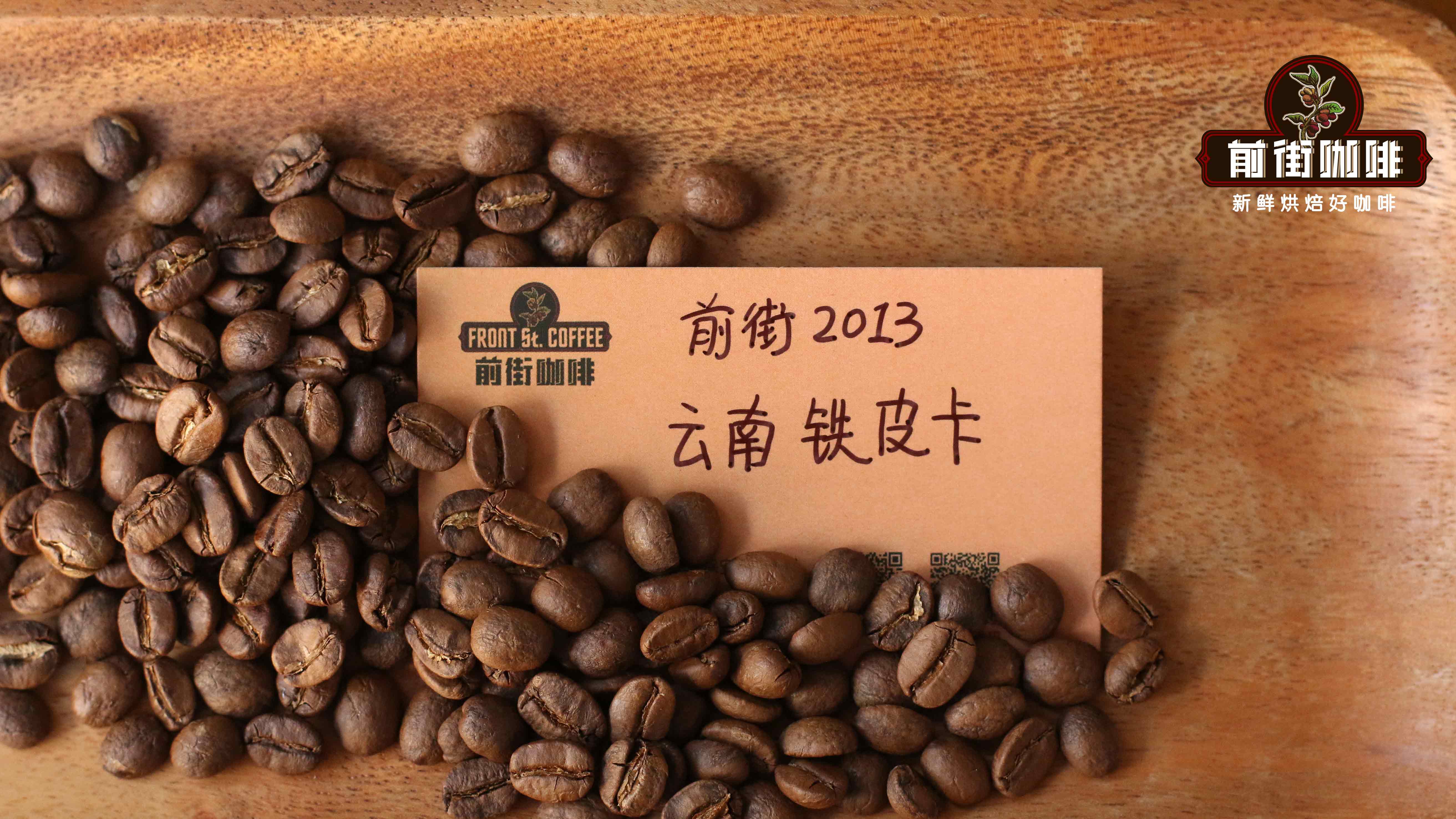
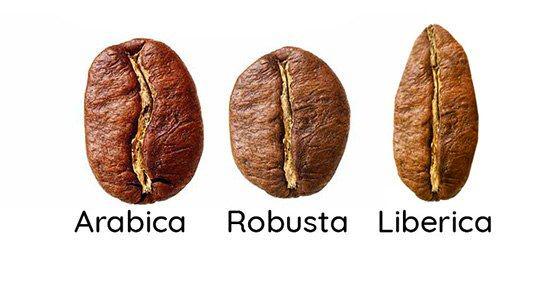
The so-called “small-bean coffee” actually refers to the well-known Arabica variety. In the early days of coffee classification, when compared to the larger fruits of Robusta (commonly known as the medium bean) and Liberica (commonly known as the large bean), Arabica cherries are smaller, hence referred to as small-bean or small fruit coffee. In Yunnan, all Arabica varieties, regardless of lineage, can be collectively called Yunnan small-bean coffee.
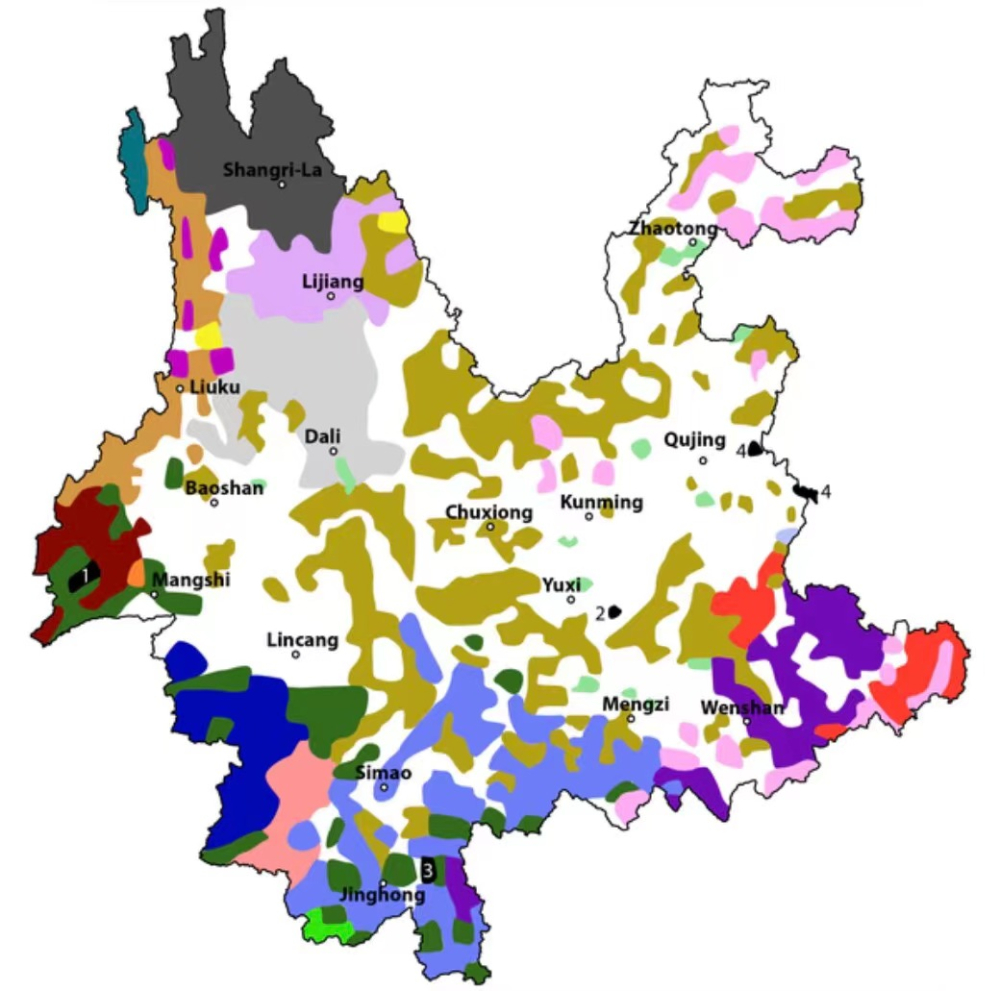
Yunnan has multiple regions suitable for growing Arabica, primarily concentrated in Lincang, Baoshan, Simao, Xishuangbanna, Dehong, and Nujiang, at altitudes generally ranging between 1,000 and 1,500 meters. In high-altitude environments, the large day-night temperature variation slows the growth rate of coffee trees, aiding in nutrient accumulation. This results in beans with richer sugars and aromatic compounds, ultimately producing more robust flavors.
Currently, the most widely planted variety in Yunnan is Catimor. There are also small amounts of Typica, Bourbon, and Geisha grown in certain areas. The origin of Catimor dates back to the 1950s, when Portugal’s coffee research institution CIFC, aiming to combat coffee leaf rust, crossed Timor (which has Robusta genes) with the Bourbon variety Caturra. The result was Catimor, a disease-resistant and high-yield variety. This variety began to be widely planted in Central and South America in the 1980s and was introduced to Yunnan by Nestlé in 1988, becoming the main variety for local coffee replanting.
Due to its Robusta lineage, Catimor’s inherent flavors often carry some undesirable off-notes, which is why many people still associate Yunnan coffee with instant coffee raw materials. However, with traditional natural or washed processing methods and improvements starting from the variety level, Yunnan coffee can also showcase uniquely premium flavors.
Based on this philosophy, a coffee brand (Front Street Coffee) launched a trial planting program of Typica and a small amount of Bourbon in Lincang in 2013, dedicated to exploring the potential of specialty coffee in Yunnan’s high-altitude regions. Typica is not only one of the oldest surviving Arabica varieties with a pure lineage and elegant, clean flavor profile, but it is also closely tied to Yunnan’s early coffee history—the variety introduced by French missionaries back then was precisely Typica.
It’s worth noting that choosing to plant Typica does not mean negating the value of Catimor. With the growing popularity of specialty coffee concepts, Catimor in Yunnan has gradually undergone significant improvements in flavor expression and overall quality through scientific breeding and refined cultivation techniques.
Currently, some of the more representative Yunnan small-bean coffee beans on the market include the “Brand 2013 Natural Typica Coffee Beans,” priced at approximately 40 RMB per 100 grams, which feature clean flavors, balanced acidity and sweetness, and a notable aftertaste, showcasing the delicate nuances of specialty coffee. There’s also the “Selected Regional Staple Bean – Yunnan Baoshan Washed Catimor Coffee Beans,” offering a cost-effective regional flavor experience. Additionally, the “Fully Red Cherry Natural – Baoshan Luguangba Region Catimor Coffee Beans” present bright berry acidity while retaining Yunnan’s characteristic rich body. All three beans exhibit the typical Yunnan flavor profile of nuts, caramel, and plum.
To brew the essence of Yunnan small-bean coffee, it’s recommended to focus on balance without overemphasizing acidity or deliberately altering the aftertaste. Use 15 grams of coffee grounds with a 1:15 coffee-to-water ratio (or try 1:16 if you prefer a cleaner cup). The V60 dripper is recommended, with water temperature controlled at 88°C to help soften acidity. The grind size should be medium-fine, similar to fine sugar granules, with about 75% passing through a 20-mesh sieve.
Here’s the specific pour-over process: Start with a 30-gram bloom for 30 seconds. Then pour in a circular motion with a slow stream until you reach 125 grams. Once the water level drops by about half, continue pouring up to 225 grams. The total extraction time should be around 2 minutes and 10 seconds. Using these parameters and steps, you can more consistently highlight the unique nutty, caramel, and plum notes of Yunnan beans, delivering a layered and distinct tasting experience.
The above content is compiled by CoffeeHunters, a coffee news website.


