







Introduction:Many people assume that Americano is just espresso diluted with water, but its origins are actually closely tied to American household habits. This article delves into the fundamental differences between Americano and single-origin pour-over coffee, explaining their variations in brewing principles and flavor profiles. It also provides the correct brewing method and practical parameters for drip bags, accompanied by real-world testing examples to help you better understand the characteristics and brewing techniques of various types of coffee.
It’s commonly believed that Americano is simply espresso diluted with water. However, tracing its true origins reveals that Americano actually stems from the drip coffee makers commonly used in American households—it’s the most widely consumed black coffee among Americans. So, what exactly differentiates Americano from pour-over single-origin coffee? And how can you brew a drip bag coffee correctly to bring out its best flavors? This article starts with the historical background of Americano, clarifies common misconceptions, and uses actual coffee bean examples to guide you through the differences in flavor and brewing methods among the three, while also recommending several drip bag options suited to various taste preferences.
What is real Americano?
As the name suggests, Americano is a coffee beverage with American characteristics. But this term was actually coined outside of the United States—just as foreigners rarely refer to themselves as “foreigners.” In the U.S., the most common coffee-making tool in households is the drip coffee maker, with nearly every home owning one or more. In contrast, fully automatic coffee machines are relatively rare in American households. The so-called “Americano” is simply black coffee brewed using a drip machine, extracting coffee grounds with hot water. It doesn’t emphasize specific origins or complex processes, focusing instead on convenience and everyday use.
How did coffee become popular in the U.S.?
Since 1607, with European immigrants arriving in North America, coffee and tea were also introduced. Influenced by religion, many British Puritans advocated replacing alcohol with tea and coffee, gradually forming a drinking habit. The Boston Tea Party of 1773 further led Americans to choose coffee as their national drink, symbolizing a break from British culture. As a result, coffee not only became a daily beverage but also carried cultural symbolism.
Why do Americans favor drip coffee?
As a nation of immigrants, the U.S. has a diverse culture and a fast-paced lifestyle, leading to a preference for convenient and practical approaches to coffee. Drip coffee, being easy to operate, requiring minimal skill, and capable of brewing large quantities at once, perfectly fits the public's needs. Compared to Europeans’ emphasis on coffee rituals, Americans prioritize efficiency and convenience.
How did Starbucks’ Americano come about?
During World War II, when American soldiers visited Italy and encountered the strong espresso, they often found it hard to accept. They began adding hot water from their military canteens to dilute the espresso. Italians mocked this practice, calling it as weak as dishwater. Later, this “espresso with added water” drink came to be known as Americano, which is what we now recognize as the Starbucks-style Americano. However, this is fundamentally different from the traditional drip-brewed black coffee commonly used in American households.
Is single-origin coffee the same as Americano?
Although single-origin pour-over coffee is also a type of black coffee, it involves manually controlling water temperature, flow rate, and brewing time to delicately extract coffee beans from a single origin or variety. In contrast, traditional Americano is usually brewed directly via a drip machine or made by diluting espresso. While both methods use filtered extraction, there are significant differences in equipment, technique, and flavor expression. More importantly, pour-over coffee is often regarded as one of the best ways to showcase the original flavors of coffee beans.
What is a drip bag coffee? How to brew it correctly?
Drip bag coffee is a pre-packaged form of pour-over coffee, where ground coffee is placed in a filter bag and can be brewed simply by pouring hot water—making it ideal for travel or situations without specialized equipment. For brewing, it’s recommended to use water at 90°C to 93°C. Start with a 30-second bloom, then pour water in a circular motion from the center outward, maintaining a general coffee-to-water ratio of 1:15, which can be fine-tuned based on personal taste. Below are a few drip bag options with distinctive flavor profiles:
- For those who enjoy floral notes and a fresh taste, the Panama Geisha drip bag offers delicate flavors with citrus and floral undertones.
- If you prefer bright acidity and sweetness, the Huaguai drip bag features layers of black tea and berry notes, suitable for those who enjoy fruity acidity.
- For a balanced flavor that is neither too acidic nor too bitter, Brazilian drip bag coffee is a great choice, offering stability with nutty and chocolatey notes.
- If you like rich and full-bodied coffee, try the Golden Mandheling drip bag, which is carefully selected for its outstanding aftertaste and aroma.
How do Americano and pour-over differ in flavor?
To clearly compare, this experiment used 【Yirgacheffe · Red Cherry】coffee beans, a naturally processed Ethiopian heirloom variety grown at altitudes between 1700 and 2200 meters, known for its intense fruit and fermentation aromas. The experiment brewed the beans using SOE Americano, pour-over single-origin, and espresso-diluted methods to observe flavor differences.
SOE Americano: Brewing Method and Flavor
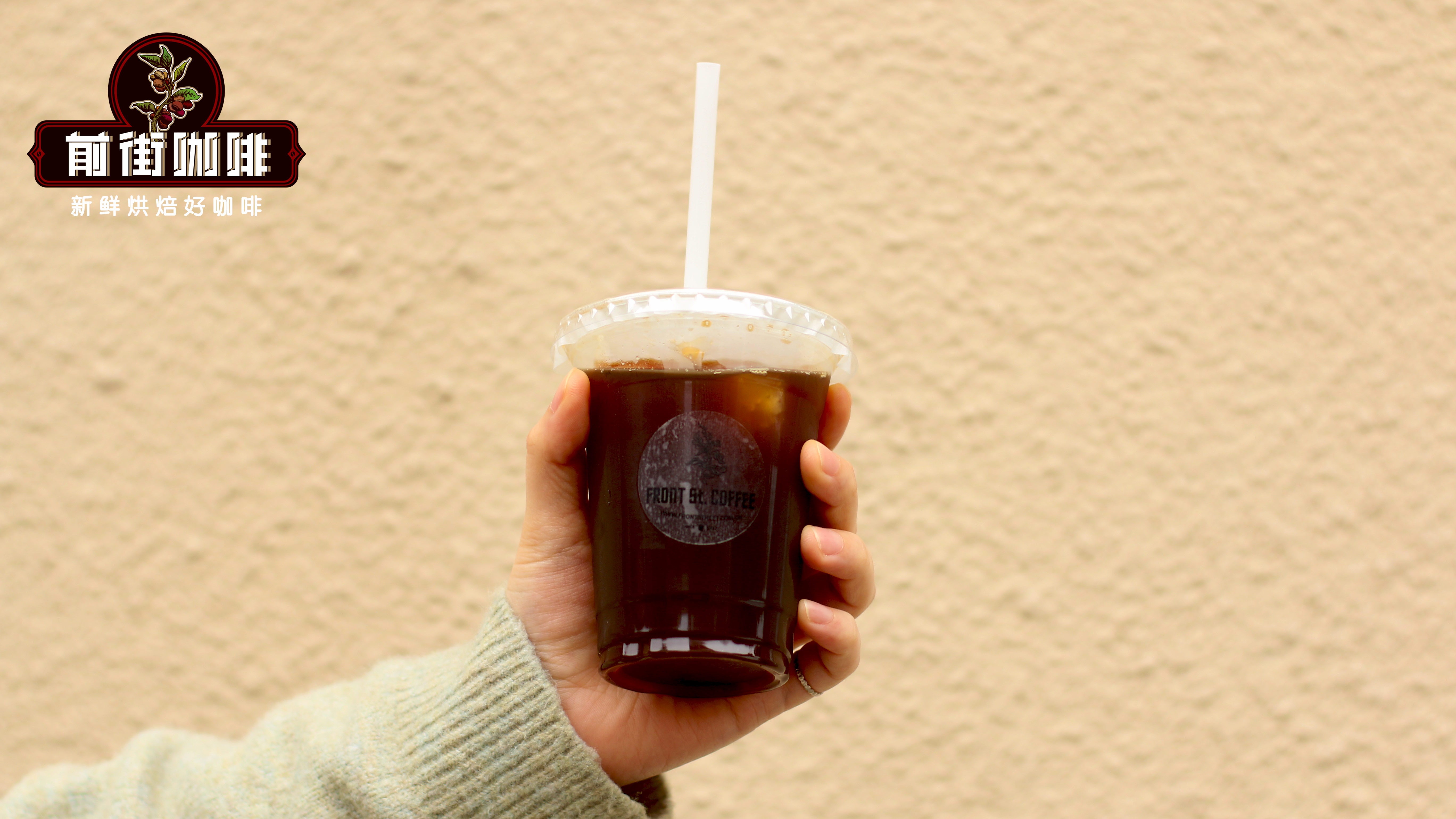
SOE Americano is made by mixing 40ml of espresso with 280ml of hot water, at a 1:7 ratio. In terms of flavor, it initially presents a strong fermentation aroma. On the palate, the fruit acidity is mild, with citrus notes, a distinct sweetness, and a tea-like finish. Overall, the taste is smooth but the flavor profile is somewhat flat.
Pour-over Single-Origin: Flavor Profile
The pour-over was brewed using a Hario V60 dripper, with water temperature controlled at 90–91°C and a coffee-to-water ratio of 1:15. The grind size was similar to granulated sugar. The brewing technique involved a 30-second bloom (using 30g of water), followed by pouring water in small circles, with splits at 125g and 225g, and a total extraction time of about 2 minutes. This Red Cherry pour-over showcased intense fruit and jasmine aromas. On the palate, it had strawberry and berry acidity, a velvety middle note of almond and cream, and an aftertaste of oolong tea, delivering a richly layered and distinctive flavor.
Summary: Insights on Americano vs Pour-over
The test results showed that brewing sun-dried Red Cherry as SOE Americano enhanced its sweetness and created a more balanced overall flavor, though the texture felt slightly thinner with less complexity than the pour-over. The pour-over version, on the other hand, revealed a more nuanced and varied flavor profile, balancing acidity and richness, with a long-lasting aftertaste—ideal for those who enjoy exploring the finer details of coffee. If you prefer a simple, easy-drinking black coffee, Americano is a great choice; if you want to deeply experience the original charm of coffee beans, pour-over or drip bag pour-over will offer much more surprise.
The above content is compiled by CoffeeHunters, a coffee news website.


