








Introduction:The water level in pour over coffee actually has a noticeable impact on the final flavor. Many have heard that a "high sweetness water level" can enhance sweetness, but few understand the principles behind it. This article delves into how water level affects the coffee bed structure and extraction efficiency, analyzes the differences between high and low water levels, and provides practical pouring suggestions and coffee bed wall height control techniques so you can adjust based on your taste preferences and more easily brew your ideal cup.
In the world of pour over coffee, the seemingly simple parameter of "water level" actually has a profound impact on extraction results and the final flavor profile. In recent years, the term "high sweetness water level" has frequently appeared on social media platforms, emphasizing that controlling the water level can highlight the sweetness of the coffee. But is there any truth to this claim? Can the water level really influence the taste of the coffee we drink?
The answer is yes. In fact, the height of the water level directly alters the distribution of coffee grounds in the filter, which in turn affects the thickness and stability of the coffee bed, ultimately interfering with the contact time between hot water and coffee grounds as well as the evenness of extraction. Simply put, adjusting the water level is about adjusting the "environmental conditions" of extraction.

When we use a lower flow rate and slower pouring speed, the water level remains relatively low, and the coffee bed becomes flatter and more compact. In this case, the hot water has to penetrate a thicker layer of coffee grounds. Although the extraction time is extended, the process becomes more even, and the coffee often presents a more balanced taste, with sweetness being easier to highlight. This is one of the core principles behind what many refer to as the "high sweetness water level."
Conversely, if the pouring flow is too strong—exceeding even the filter’s drainage rate—the water level will rise rapidly, and the coffee bed will expand and become loose. In this scenario, the coffee grounds are no longer tightly packed, and some particles may adhere to the inner walls of the filter, causing the hot water to primarily extract from the bottom layer while the upper layer may be under-extracted. Due to the fast drainage, the overall extraction time is shortened, resulting in a sharper flavor profile with prominent acidity, but also a potential loss of sweetness and subtlety in flavor layers.
From a practical standpoint, if you want a pour over coffee with more distinct layers and vibrant acidity, you can try raising the water level to elevate the coffee bed wall to a certain height. For example, when using a small filter (such as a Kalita Wave) to brew 15 grams of coffee, you can raise the coffee bed to about three-quarters of the filter’s height. For a V60, you might aim for roughly half the height of the short ribs as a reference. However, it’s important to note that such high-water-level brewing has its limits, especially with smaller amounts of coffee—excessively high coffee walls may not remain stable and could lead to channeling along the edges, affecting overall extraction consistency.
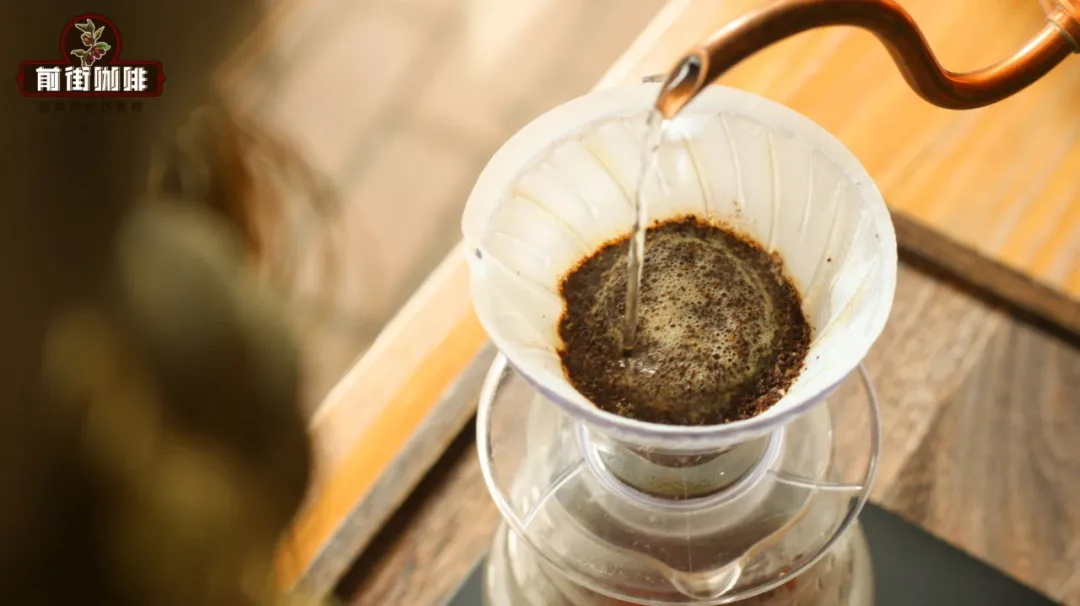
If your goal is to create a pour over coffee with pronounced sweetness, a full-bodied mouthfeel, and an overall balanced profile, it’s advisable to adopt a lower water level strategy—controlling the pouring speed and volume so the coffee bed wall doesn’t get too high. Taking the same 15-gram dose in a small V60 as an example, maintaining the coffee bed at about two-thirds of the filter’s height helps the coffee grounds stay stably stacked, allowing the hot water to penetrate more evenly, achieving more efficient extraction while highlighting sweetness and a rounded mouthfeel.
However, low water level extraction demands relatively higher pouring skill because it requires maintaining a consistently small flow throughout. Beginners may affect the stability of the coffee bed due to improper control. If you’re not yet fully confident in your water control ability, consider breaking the total pouring into more stages and reducing the volume of each stage, thereby achieving better control over coffee bed height and stability. This is also a common staged pouring strategy used by many advanced brewers when handling light-roast, high-density beans.
Of course, for these techniques to work effectively, choosing the right coffee beans is also crucial. If you’re aiming for sweetness as the main characteristic, look for beans with notes of tropical fruits, caramel, maple, dried fruit, or gentle floral aromas. Beans with low acidity and strawberry-like sweetness, or medium-roast Yunnan varietals with pronounced dried fruit sweetness, are great options that can express their sweet potential through water level adjustments.
In summary, the height of the water level in pour over coffee is not just a technical detail—it’s a key variable that influences flavor expression. By understanding the relationship between coffee bed structure and extraction efficiency, leveraging the different characteristics of high and low water levels, and pairing them with suitable bean varieties and staged pouring techniques, you too can brew a clear-flavored, sweet-highlighted pour over coffee at home.
The above content is compiled by CoffeeHunters, a coffee news website.


