







Introduction:An in-depth exploration of the geographical environment and microclimate characteristics of Ethiopia’s Guji region, with a focus on three renowned sub-regions—Hambella, Shakiso, and Uraga—and an analysis of their unique coffee flavor profiles. This article also details the origin, processing method, and recommended pour over parameters for the Huakui coffee beans, helping coffee enthusiasts grasp the essence and brewing techniques of Guji coffee.
Guji is a highly regarded specialty coffee region in southern Ethiopia, officially separated from Sidama in 2010 and administratively part of the Oromia region. It features majestic highland terrain, with deep valleys and plateaus interwoven, along with nutrient-rich volcanic soils and significant diurnal temperature variations, resulting in coffee with intense floral aromas and ripe fruit notes. Guji encompasses several well-known sub-regions, such as Hambella, Shakiso, and Uraga, among which Hambella is the birthplace of the famous “Huakui” coffee beans. This article will comprehensively introduce the geography and flavor characteristics of these sub-regions, as well as analyze the processing techniques and pour over recommendations for Huakui, allowing you to deeply understand the diverse charm of Guji coffee.
In 2010, Ethiopia, through its unique ECX (Ethiopia Commodity Exchange) trading system, separated Guji from Sidama, primarily due to its distinct flavor profile and exceptional quality. From an administrative perspective, Guji falls under the jurisdiction of the Oromia region, geographically located in the southern part of the country, featuring highly varied landscapes including high mountains, plateaus, canyons, and plains. The region’s soils are mostly of volcanic origin, with deep layers often reaching around two meters in depth, and are dark brown or brown in color, exhibiting naturally high fertility. Additionally, many areas still retain pristine forests where fallen leaves and plant debris decompose naturally, continuously nourishing the coffee plants. With an average altitude exceeding 1800 meters and significant day-night temperature differences, coffee cherries have more ample time to develop complex aromatic compounds, which is also a key reason why each sub-region forms its unique “terroir.”
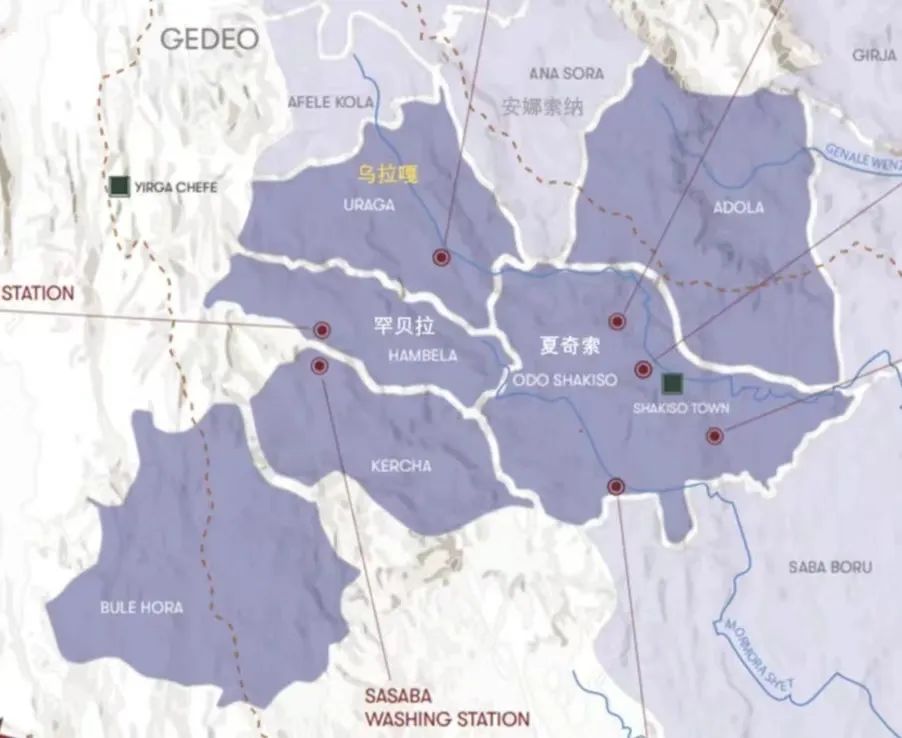
Hambella is one of the most representative sub-regions within the Guji region and the birthplace of the “Huakui” coffee beans. It is located in the western part of Guji, separated from the Kochere area of Yirgacheffe by a highland plateau approximately 30 kilometers wide and at an altitude of 3200 meters. The planting altitude in Hambella ranges between 2100 and 2300 meters, making it one of the highest-altitude coffee-growing areas in Ethiopia. Its coffee harvest season typically falls between November and January each year. The coffee here is known for its intense floral aromas and fresh tropical fruit notes, with a layered and balanced flavor profile that is considered a delicacy by many coffee connoisseurs.
Shakiso, on the other hand, has a distinctly different historical background. In its early days, this region was primarily focused on gold mining, with its northeastern area being a famous gold mining belt in Ethiopia. In the 1990s, Haile Gebre, then governor of the Oromia region, after stepping down from office, recognized the potential of the coffee industry, relocated to Shakiso, and collaborated with local farmers to develop coffee cultivation. Due to its proximity to Yirgacheffe, Shakiso has gradually gained attention in the specialty coffee community. The region’s altitude ranges from about 1800 to 2200 meters, and the coffee produced is often described as having a “sweet lemon-honey tone,” with gentle aromas, refreshing flavors, and captivating appeal.
Uraga is located at the northernmost tip of the Guji region, bordering Yirgacheffe, and is the latest of the three to gain recognition. With an altitude of up to 2300 meters and fertile black soil, it is very suitable for coffee tree growth. In 2019, Uraga’s washed beans performed exceptionally well in the TOH (Taste of Harvest) competition, gradually bringing it into the international market spotlight. Uraga coffee is characterized by bright acidity, a pronounced tea-like mouthfeel, and a rich array of floral and fruity aromas, delivering an overall delicate flavor with a long-lasting aftertaste.
Overall, the flavor profile of Guji region coffee generally lies between the freshness of Yirgacheffe and the body of Sidama, featuring an aroma spectrum of citrus, stone fruits, berries, flowers, and chocolate. According to statistics from the Dutch green coffee trader Trabocca, citrus is the most common aroma type, followed by stone fruits, berries, and flowers, often accompanied by lively acidity and a juice-like mouthfeel, with medium body and an overall smooth and layered drinking experience.
When discussing the most famous coffee from the Guji region, one cannot overlook the “Sidamo Natural Huakui” introduced by a certain coffee brand. These beans actually come from Hambella in Guji, within the Oromia region, and its unique geographical location—separated from the Kochere area of Yirgacheffe by a 3200-meter-highland to the west, and bordered by other Guji sub-regions to the east, south, and north—makes it one of the highest-altitude coffee cultivation areas in all of Ethiopia. Hambella currently has nearly 20 processing facilities of varying scales, among which the most representative is the “Buku Abel” processing station under DW Company. In 2017, a natural lot from this station won the championship at Ethiopia’s National Coffee Quality Competition. At that time, this coffee stunned everyone with its intense strawberry and cream aromas and was later named “Huakui” by Chinese importers. Currently, DW Company has established multiple processing stations in the core area of Hambella, Dimtu, including “Buku Abel,” “Buku Saysay,” “Haro Soresa,” and “Tirtiro Goye,” with an annual production of about 1100 tons. It is important to note that only the natural beans produced by the “Buku Abel” processing station can be rightfully called “Huakui.”
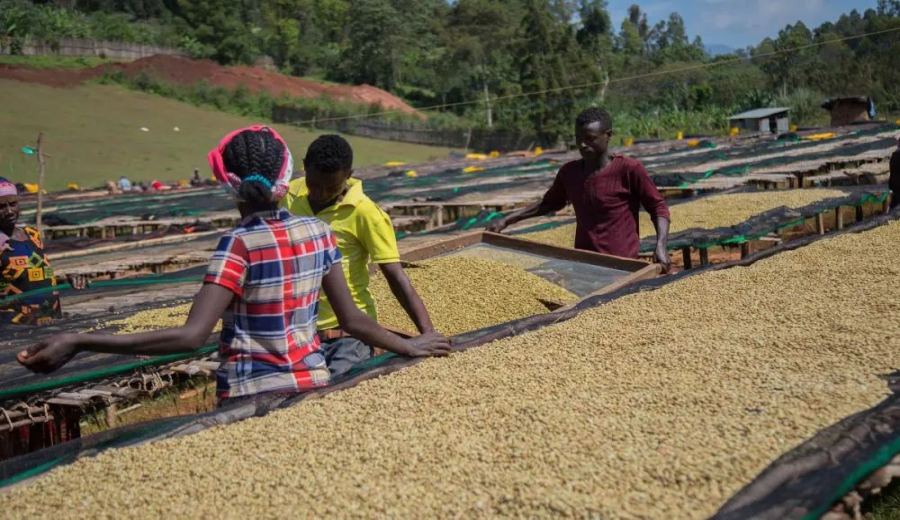
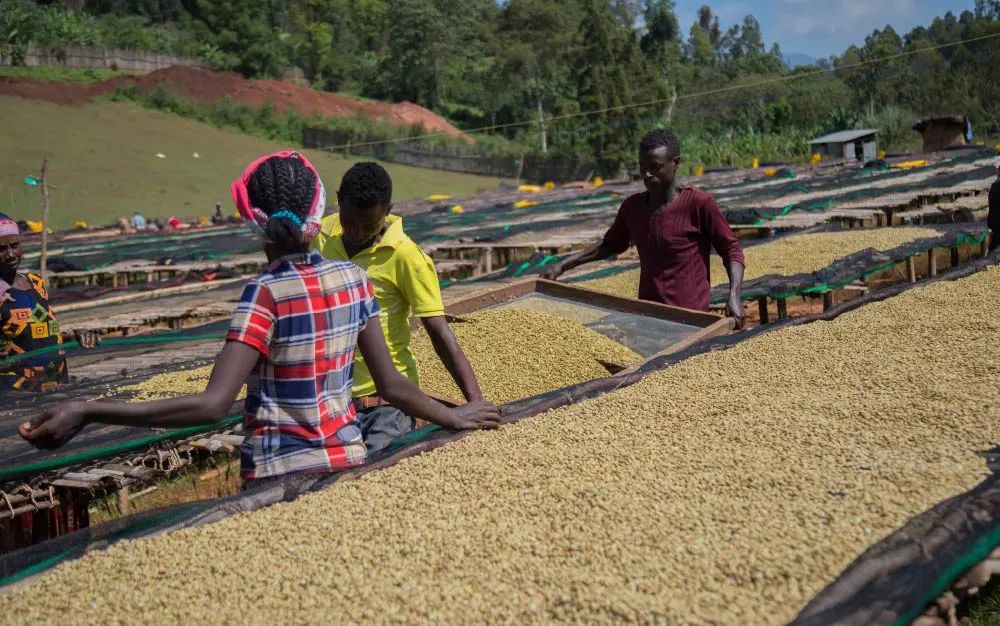
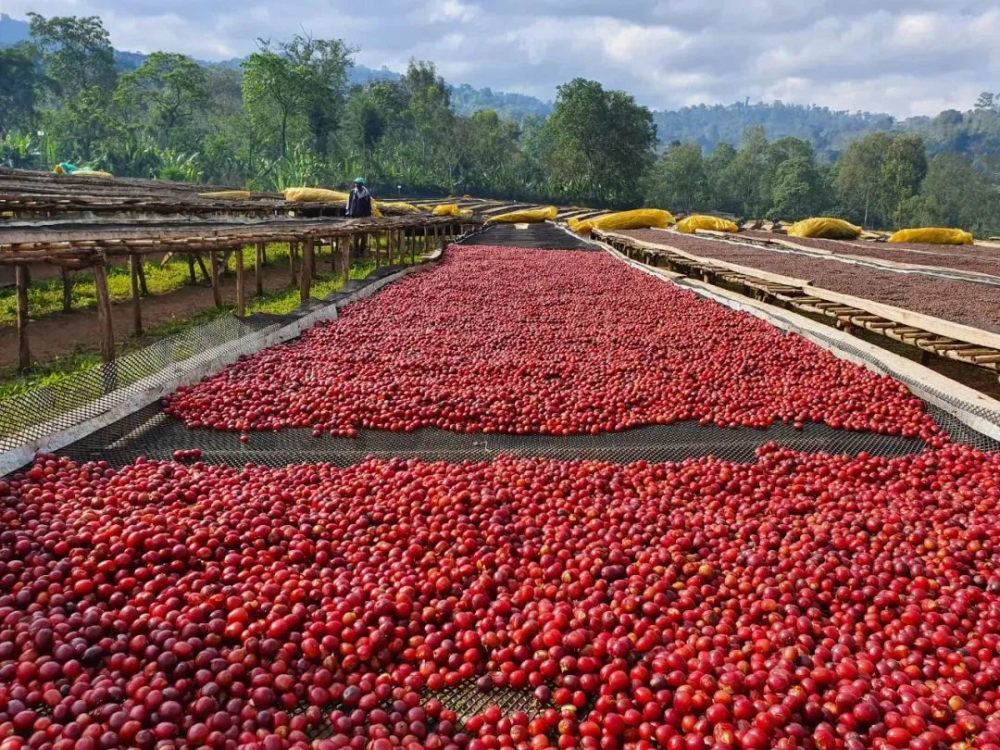
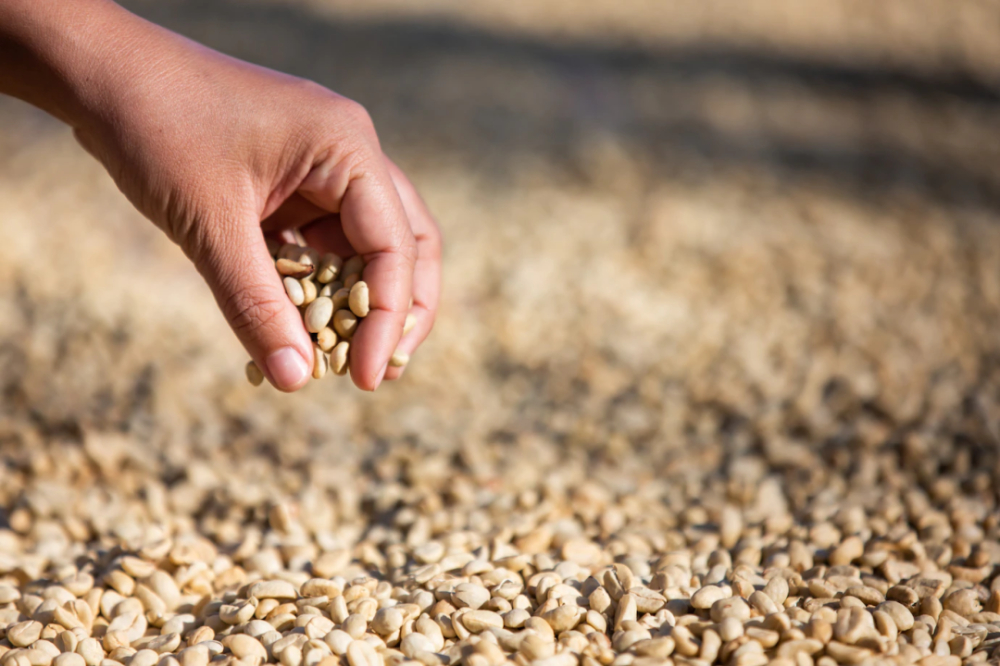
The processing of Huakui coffee is quite meticulous. The harvesting period is from December to January each year, and the Buku processing station only selects fully ripe red coffee cherries with a sugar content of 30 or higher. These cherries are placed on African raised beds for sun drying. To control temperature and humidity, strong sunlight is blocked during midday to prevent overheating and fermentation; at night, rainproof covers are used to avoid rain affecting the drying process. Throughout the process, the coffee cherries must be constantly turned, and the stacking thickness must be precisely controlled to ensure even drying. After approximately 18 days, when the moisture content of the green beans drops to 13%, they can be packaged and stored.
For brewing, it is recommended to use medium-light roasting to highlight the floral and tropical fruit notes of Huakui. As it is a high-altitude hard bean, its water absorption during grinding is slightly weaker, so a medium-fine grind size is suggested, paired with a high water temperature of 92°C and a V60 filter cone, which can more fully release its richly layered aromas and flavors. The following are the recommended pour over parameters: use 15 grams of coffee grounds, a 1:15 coffee-to-water ratio, with a grind size passing through a 20-mesh sieve at 80%. Control the water temperature at 92°C. Begin with a 30-second bloom using twice the amount of coffee grounds (about 30 grams) of water, then pour water in small streams in a circular motion from the inside out until reaching 125 grams for the first pour. Once the coffee bed has descended to the middle of the filter cone, continue pouring with the same fine stream until reaching 225 grams. The total extraction time should be controlled to around 2 minutes (with an error margin not exceeding 10 seconds).
Once brewed, Huakui coffee delivers a burst of sweet tropical fruit flavors such as passionfruit and mango, complemented by the bright acidity of berries and citrus. The mouthfeel is silky smooth, with a lingering finish reminiscent of black tea’s richness, leaving a memorable impression. It is recommended to use freshly roasted coffee beans (within 5 days of roasting) for brewing to achieve the best aroma expression. Generally, the resting period for coffee beans is about 4 to 7 days, with the optimal flavor window lasting approximately 4 to 30 days. It is advisable to observe flavor changes based on the roast date to savor the characteristics of different stages.
The above content is compiled by CoffeeHunters, a coffee news website.


