







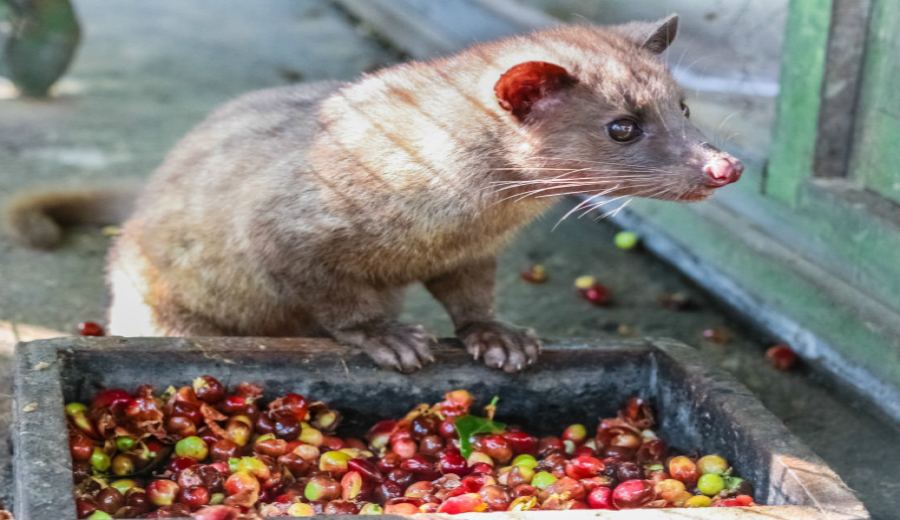
Introduction:Indonesian civet coffee (Kopi Luwak) is one of the most controversial and talked-about specialty coffees in the world. This article will take you deep into its unique flavor profile, the natural fermentation mechanism during its production process, how to distinguish between wild and farm-raised products, and debunk common market misconceptions about counterfeit products. It also provides practical pour over techniques and parameter settings to help you fully experience the true essence of this rare coffee.
Indonesian civet coffee, scientifically known as Kopi Luwak, is one of the most famous specially processed coffees in the world. This coffee is said to have been "brewed by nature" because it once passed through the digestive system of the civet. Compared to regular coffee, it often exhibits a rich and delicate mouthfeel, with relatively low acidity and bitterness, and carries an irreplicable cool aftertaste. Some describe it as having a refreshing mint-like sensation, which becomes even more noticeable when taking a deep breath or sipping cold water after drinking.
The aroma of this coffee typically leans toward honey and dark chocolate, and even without added sugar or milk, it can display sweet and silky qualities. Even when the coffee cools slightly, its flavor can still maintain a certain degree of richness, which is one of the reasons it is so highly regarded. However, the market is flooded with many products claiming to be "civet coffee," many of which are actually instant flavored coffees produced in places like Vietnam, having no relation to real Kopi Luwak. Though their prices are more affordable, they cannot provide the same sensory experience.
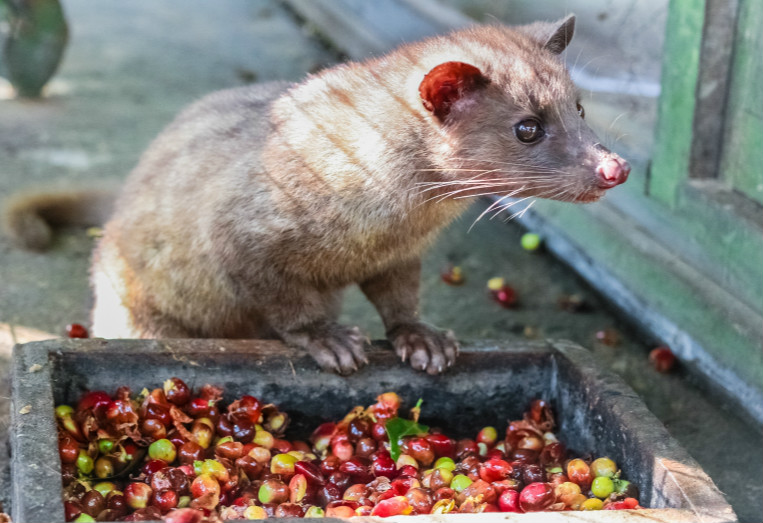
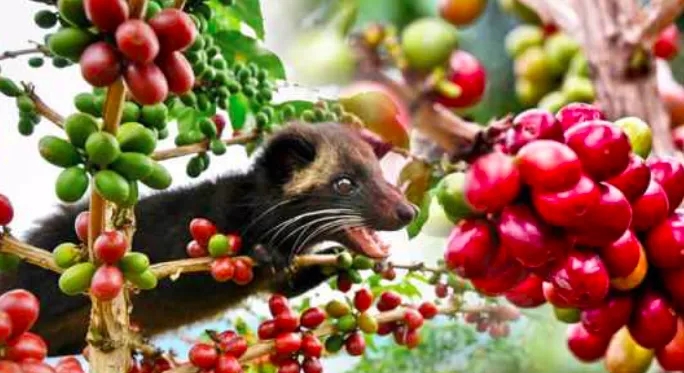
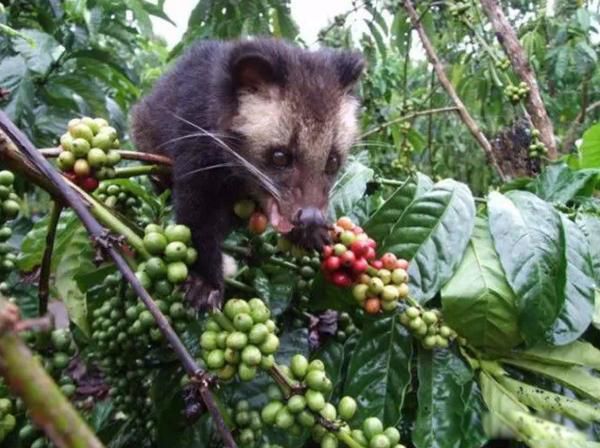
Authentic Kopi Luwak is produced only in Indonesia, with origins traceable back to the Dutch colonial period. It is said that Dutch colonists at the time prohibited local residents from drinking plantation coffee, but they accidentally discovered that the beans excreted by civets after consuming coffee cherries, having undergone natural fermentation in the civet’s digestive system, had a completely different flavor. The civet (Luwak) is an omnivorous wild animal that prefers to eat ripe, sweet coffee fruits but cannot digest the coffee beans inside. During their passage through the intestines, these beans are affected by stomach acid and enzymes, while also picking up a special aroma due to contact with the civet’s reproductive organs, resulting in a unique layered flavor.

Notably, the digestive process of the civet smooths the surface structure of the coffee beans, which is believed to help reduce acidity and bitterness while enhancing overall roundness and body. Additionally, because civet excretion is very secretive and collection is difficult, the yield of wild Kopi Luwak is extremely limited—estimated at no more than 400 kilograms per year globally—contributing to its high price. A typical 50-gram pack of raw beans can sell for as much as 1,500 RMB, yielding only 3 to 4 cups, with a single cup often costing over 400 RMB.
Due to supply shortages, many regions have begun to farm civets artificially to stabilize supply, but this practice has sparked animal welfare controversies. Many farms confine civets in small spaces and force-feed them large quantities of coffee cherries, leading to excessive stress and deteriorating health in the animals. Although the coffee beans produced by these farm-raised civets are still called Kopi Luwak, their flavor quality is generally inferior to that of wild-collected versions, and most are still of the Arabica variety, as its flavor performance usually surpasses that of Robusta.
Due to the rarity and special origin of Kopi Luwak, its brewing method also requires extra care to fully showcase its unique herbal, nutty, and dark chocolate notes. It is recommended to avoid adding sugar or milk when brewing, so as not to mask its delicate flavor characteristics. A certain coffee brand previously used medium-dark roasts when processing this coffee, as this roast level helps bring out the coffee’s rich base while preserving moderate acidity and aromatic layers.
For actual pour over brewing, it is recommended to use a KONO filter cone. This type of cone, with its rib design and relatively shallow venting structure, can extend the contact time between coffee grounds and water, thereby enhancing extraction richness and body. Suggested parameters are as follows: water temperature around 88°C, coffee dosage 15 grams, coffee-to-water ratio 1:15, grind size medium-fine (approximately 75% passing through a #20 sieve). When pouring, it is advised to use a coarse stream and pour slowly in circles to reduce channeling effects and ensure even extraction.
In summary, Indonesian civet coffee (Kopi Luwak) is not just a coffee, but a unique beverage story intertwined with nature, animals, and human needs. Understanding its origin, discerning its authenticity, and mastering the correct brewing method are the keys to truly appreciating the distinctive charm and flavor essence of this top-tier coffee.
The above content is compiled by CoffeeHunters, a coffee news website.


