







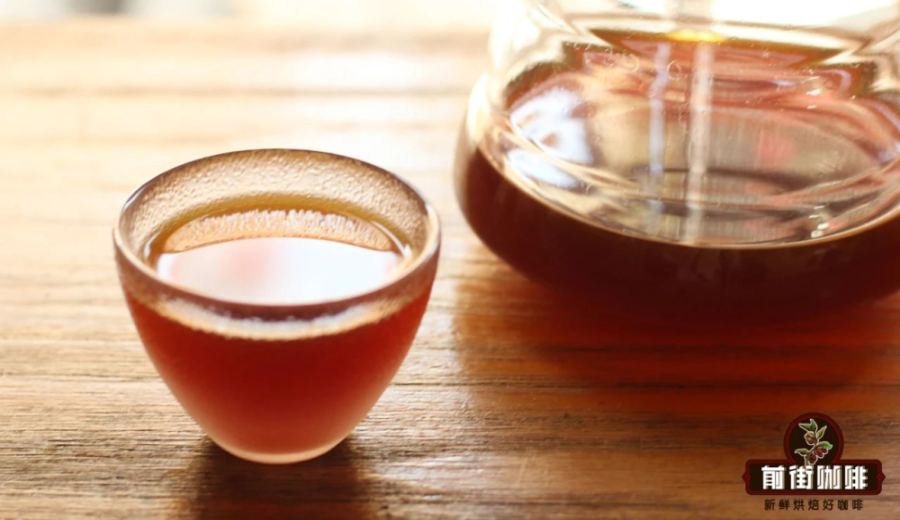
Introduction:Explore in depth five major regions of Colombia—Medellín, Santander, Huila, Cauca, and Nariño—to understand the unique varieties, processing methods, and flavor profiles of their coffee beans. This article provides detailed pour over brewing suggestions and roasting parameters to help coffee enthusiasts master the optimal extraction methods for each bean. From altitude and climate to bean variety, it offers a comprehensive analysis of the regional flavors of Colombia’s specialty coffee.
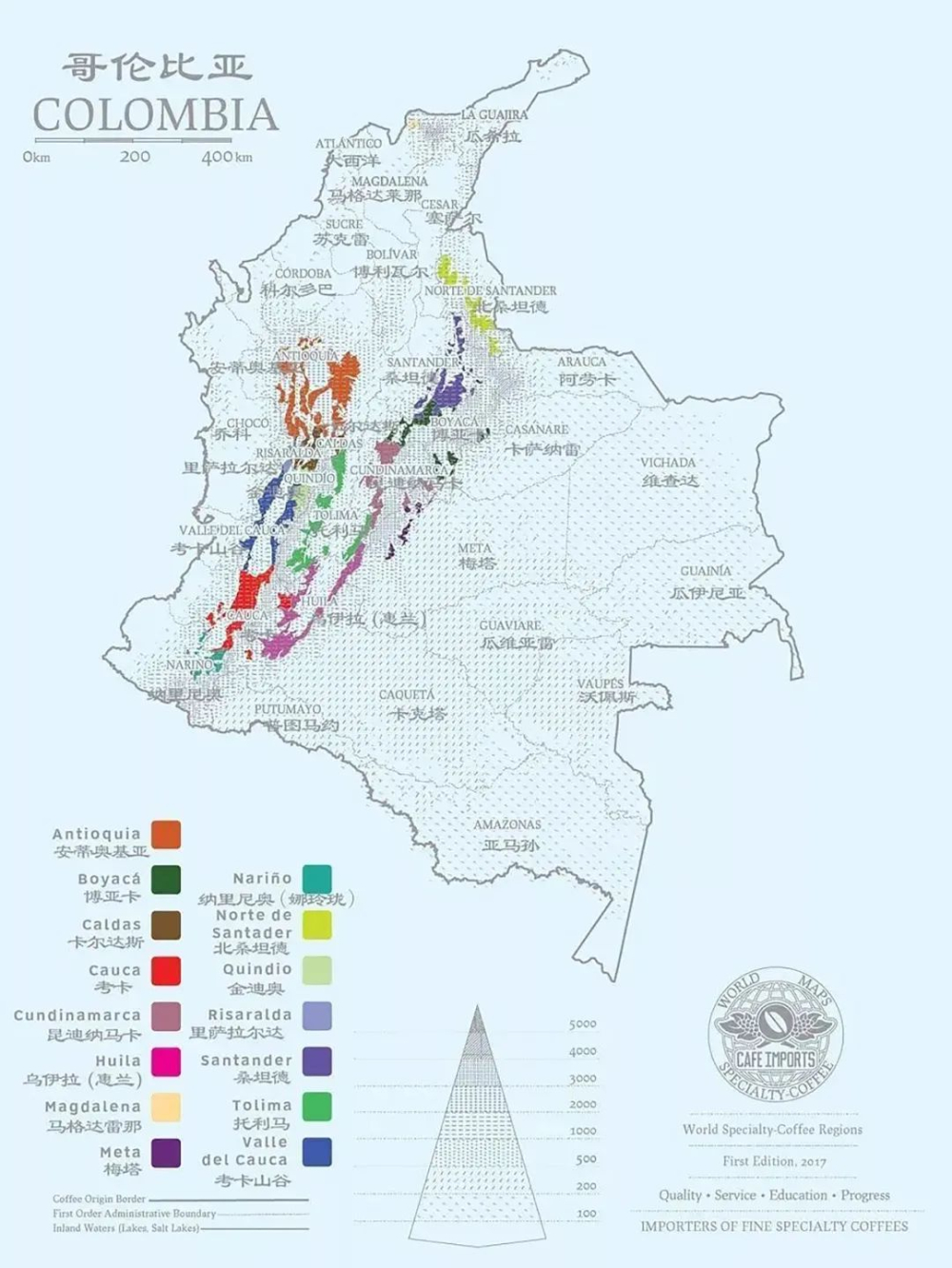
Colombia enjoys the dual maritime advantages of the Atlantic and Pacific Oceans, making it not only an important coffee-exporting country in Central and South America but also a region that nurtures diverse and high-quality coffee-growing areas thanks to its exceptional geographical environment. The country’s main specialty coffee-producing regions are concentrated in the mountainous foothills of the central and southern areas, particularly the Eastern and Central Cordilleras, as well as the southern regions of Huila, Cauca, and Nariño. This article focuses on these five regions, detailing the variety characteristics, processing methods, typical flavor profiles of their coffee beans, and providing practical pour over brewing advice and roasting parameters to help you better appreciate the diverse charm of Colombian coffee.

Colombia is one of the few countries in the world with ports on both the Pacific and Atlantic Oceans. This geographic advantage significantly reduces the logistics costs of coffee exports and enables its specialty beans to reach global markets more quickly. Among the many producing regions, the central mountain area—comprising Medellín, Armenia, and Manizales, collectively known as the “MAM” golden triangle—is a traditional and stable source of high-quality coffee. In the south, regions such as Huila, Cauca, and Nariño leverage their high altitudes, complex terrains, and unique microclimates to produce specialty coffees with delicate flavors, distinct layers, and bright acidity.
First, we visit the Medellín region located in northern Colombia. The coffee here is known for its balanced acidity and prominent sweetness, with a full bean body and rich aroma, making it suitable for drinkers who prefer a bold flavor profile. It is generally recommended to use a medium-dark to dark roast to bring out its rich caramel and nutty notes. It is worth noting that Medellín coffee exported under the unified umbrella of the FNC association has relatively strict quality control, resulting in better flavor consistency and cleanliness. Though the price is slightly higher, the quality performance is even more outstanding.

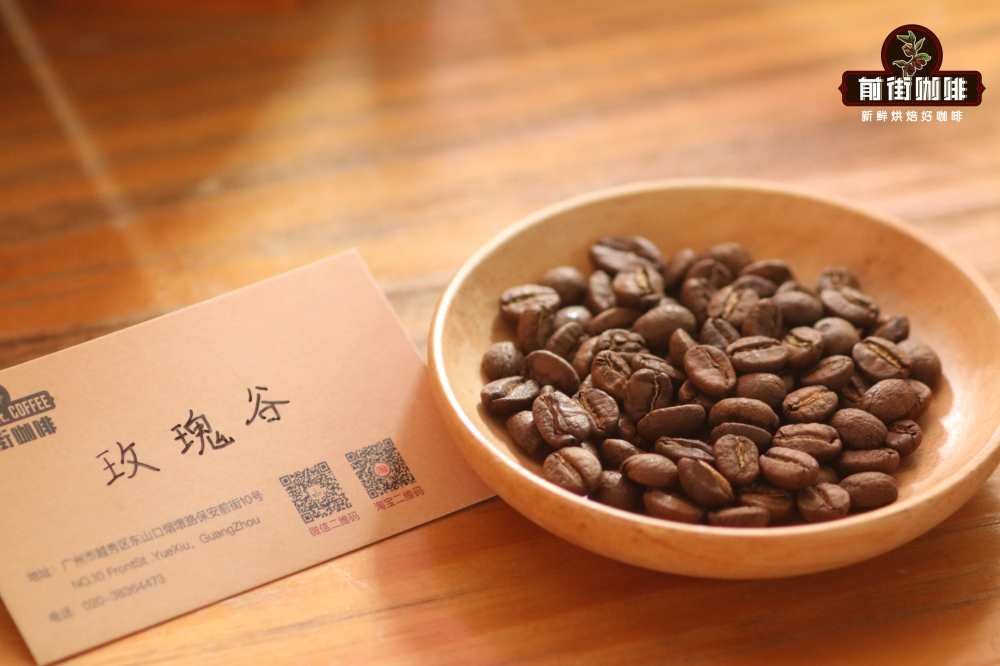
Next is Santander Province, one of the oldest coffee-growing regions in Colombia, with planting altitudes of around 1400-1600 meters. Although its overall production accounts for only about 5% of the national total, it possesses non-negligible flavor potential. The industry has found through cupping that the coffee from this region often exhibits distinct herbal aromas and unique aftertastes, making it suitable for coffee lovers who enjoy fresh flavor profiles. In particular, the “Rose Valley” coffee from this area is highly recommended. It undergoes anaerobic double enzyme-washed processing, is grown at an altitude of 1700 meters, and is of the Caturra variety. It showcases intense peach aroma and winey chocolate flavors, with an entrance as lively as peach juice and an aftertaste that lingers with the smooth texture of creamy toffee.
The following are the pour over recommendations for “Colombia Rose Valley Coffee Beans”: It is recommended to use the Yangjia 800N, with a bean input of about 500g. The initial bean drop temperature is 180°C, with a heat setting of 130 and damper at 3. When the temperature drops to 140°C, increase the damper to 4. By this point, the beans turn from green to yellow and the grassy aroma gradually dissipates. At 180°C, reduce the heat to 100 while maintaining the damper at 4. When entering the first crack stage (around 10’20”), open the damper to 4, allow the first crack development for about 1’50”, and finish roasting at 196°C to ensure sufficient roasting without being underdeveloped.
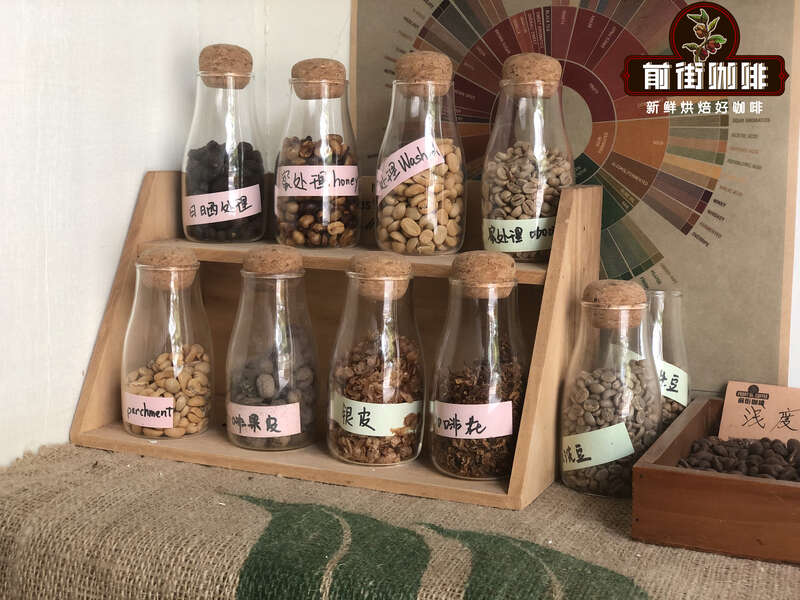
Huila is an important coffee hub in southern Colombia, accounting for about 12% of the country’s production and home to several well-known micro-regions, some of which have even become brand symbols. Cupping shows that the coffee from this region often presents a rich profile of nuts, chocolate, and caramel, with a balanced flavor and layered complexity. Recommended Huila coffee beans are typically grown at altitudes of 1500-1800 meters, mostly of the Caturra variety, and processed using the washed method. They feature soft acidity and a sweet aftertaste reminiscent of dark chocolate and caramel, making them suitable for daily drinking as well as for use as a milk coffee base.
For roasting, it is recommended to use the Yangjia 800N, with a bean input of 500g, a furnace temperature of 185°C at the start, damper at 3, and heat set to 120. The turnaround point is around 1’32” at a temperature of 98.6°C. At 140°C, open the damper to 4, and at 192°C, reduce the heat to 80 and fully open the damper to 5. Around 8’30”, as you approach the pre-first crack stage, listen carefully for the first crack. Once the first crack begins (around 9’15”), continue the development for 3’00”, and finish roasting at 202°C.
Cauca Province is located in the southwest of Colombia. Though it accounts for only about 8% of the national production, it is a well-known coffee origin-certified region. With an average altitude of 1758 meters, and some areas reaching up to 2100 meters, the region experiences a diurnal temperature variation of up to 11°C, with daytime averages around 18°C. This temperature variation helps accumulate flavor compounds in the coffee cherries, creating its unique bright acidity and full sweetness. Among its offerings, “Colombia Sakura Coffee Beans” are representative. These beans are of the Castillo variety, processed with double anaerobic washed methods, and grown at an altitude of 2050 meters. They exhibit a complex flavor profile of rich berries, strawberry jam, and mint tea, with an aftertaste that carries the natural aromas of mugwort and basil.
It is recommended to use the Yangjia 800N for roasting, with a bean input of 480g, a furnace temperature of 165°C at the start, damper at 3, and heat set to 120. The turnaround point is at 1’32”, and at 115°C, open the damper to 4. At 152.9°C, the beans begin to turn yellow on the surface, the grassy aroma disappears, and the dehydration stage begins. Around 8’27”, as you approach the pre-first crack stage, the first crack starts at 10’10”. Then fully open the damper and reduce the heat to 50, allowing for a first crack development of 1’30”, and finish roasting at 193°C.
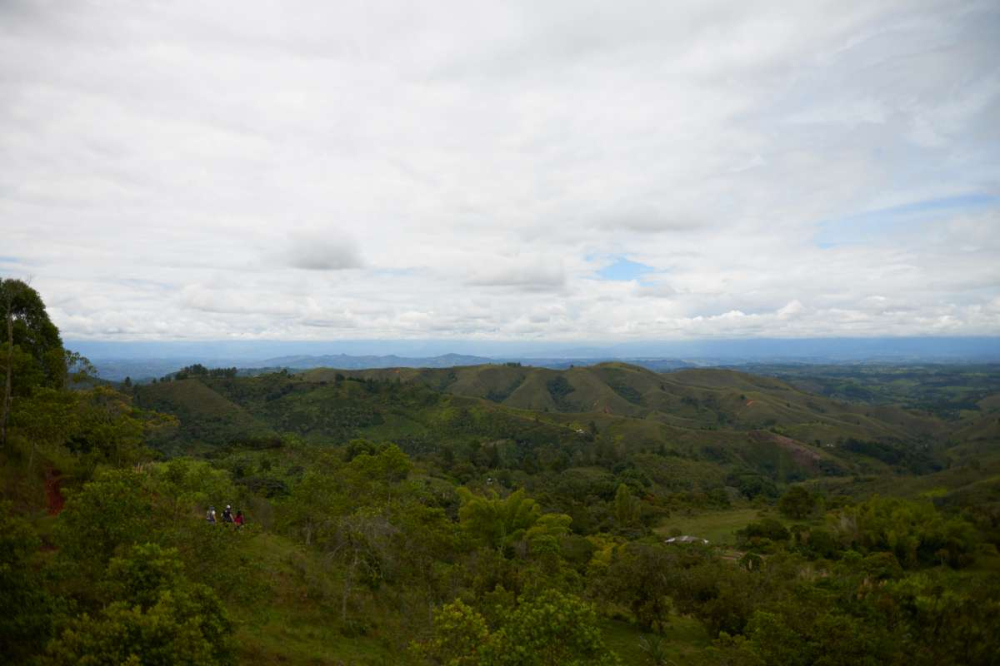
Finally, we come to Nariño, located in the southernmost part of Colombia. This is one of the highest-altitude coffee-producing regions in the country, with most planting locations situated above 1600 meters, and some areas even exceeding 2300 meters. Nariño lies near the equator, enjoying abundant sunshine year-round. Coupled with fertile volcanic soil and a unique microclimate, the coffee from this region boasts exceptionally high acidity and complex fruit flavors. The area has distinct wet and dry seasons, but even during the drier months, the southerly trade winds and cool nighttime temperatures create dew that provides moisture for the coffee trees. The harvest season usually begins in April each year and can extend into August in the higher-altitude areas.
For brewing Nariño coffee, it is recommended to use a Hario V60 #01 filter, with water temperature controlled at 90-91°C, a coffee dose of 15 grams, a brew ratio of 1:15, and a grind size of medium-fine (approximately 80% through a #20 sieve). It is recommended to use freshly roasted coffee beans (within about 5 days) to achieve the best flavor expression. The brewing process may adopt a three-stage extraction: start with a 30-second bloom using 30 grams of water, then pour in a slow circular motion until reaching 125 grams for the first pour. When the water level drops, continue pouring to 225 grams. Finally, remove the filter just before the coffee bed is exposed, with the total extraction time controlled between 2’00" and 2’10" to fully release its floral, fruity, and high-altitude refined flavors.
The above content is compiled by CoffeeHunters, a coffee news website.


