







Introduction:Kenyan coffee is globally renowned for its vibrant acidity and berry-like aromas, a reputation built upon a transformative journey from colonial plantations to the specialty coffee auction system. This article delves into the unique characteristics of Kenyan coffee regions, classic processing methods, and its distinctive auction mechanism. It also shares expert pour-over brewing recommendations—including using a Hario V60 dripper, 93°C water temperature, and pulsed pouring techniques—to help you fully express its delightful notes of cherry tomato, dark plum, and caramel. Whether you’re a beginner or an advanced coffee enthusiast, you’ll find practical inspiration here.
With its distinctive bright acidity and rich berry flavors, Kenyan coffee holds a prominent place in the global specialty coffee market. But behind these captivating profiles lies a long struggle—from colonial rule to the establishment of an independent auction system. From its early days dominated by large-scale plantations under British colonialists to today’s transparent auction system that produces world-class specialty beans, Kenya’s coffee development is filled with stories worth exploring.
For many newcomers to coffee, Yirgacheffe or Mandheling might be their first introduction to the coffee world. As their palates mature, some gravitate toward fuller-bodied, lower-acid styles like Mandheling, Blue Mountain, or Brazilian beans, while others develop a strong preference for high-acidity, bright-flavored coffees—Kenyan coffee and Panamanian Geisha being top choices for such enthusiasts. Many seasoned coffee lovers, when describing Kenyan coffee, often mention its lively acidity reminiscent of cherry tomatoes, clear layers of fruit acids, and vibrant berry flavors. Just hearing these descriptions is enough to build anticipation for a great cup.
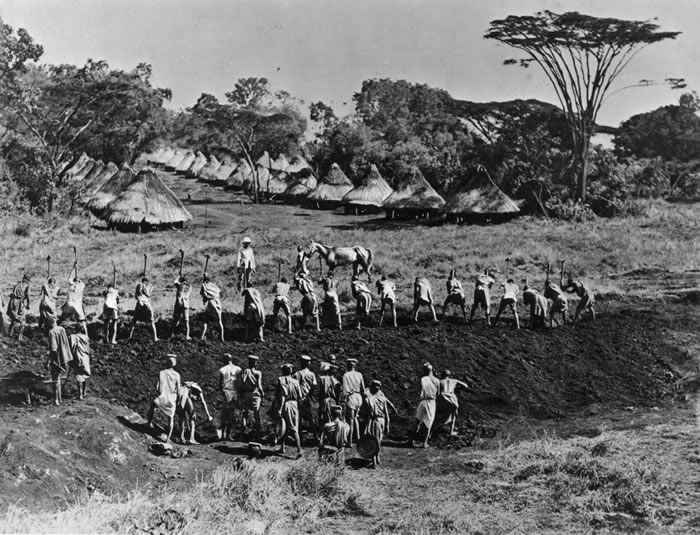
Although Kenya’s coffee-growing history isn’t as long as that of neighboring Ethiopia, its development has been full of turning points. According to the classic specialty coffee book The World Atlas of Coffee, coffee cultivation in Kenya started relatively late. The earliest records indicate that in 1893, French missionaries introduced coffee trees from Réunion Island to the region, with the first harvest occurring in 1896. At that time, Kenya was still part of Britain’s “East Africa Protectorate,” and coffee—as a key cash crop—was entirely controlled by colonists. Local people were not allowed to grow coffee privately; plantations were mostly concentrated on large estates run by the British, and harvested beans were sent to London for auction.
It wasn’t until 1933 that the Kenya Coffee Board was officially established, gradually returning control of coffee sales management to locals. The following year, in 1934, Kenya introduced its coffee auction system, holding its first auction in the capital, Nairobi, in 1935. This system has been in continuous use ever since, becoming a vital mechanism for ensuring quality and transparency. In the early 1950s, through agricultural reform legislation, the local government enabled family farms to expand their land holdings. Beyond subsistence farming, they were encouraged to grow cash crops to increase income, further promoting the diversified development of the coffee industry.
To this day, Kenyan coffee is still primarily sold through the Nairobi Coffee Exchange. Every Tuesday during the harvest season, the exchange holds regular auctions. Qualified traders can obtain green coffee samples in advance, evaluate them through professional cupping, and then bid for desired lots at the auction. This open and transparent trading model not only ensures fairness but also motivates farmers to continuously improve cultivation and processing standards, contributing to Kenya’s reputation for high-quality coffee.
If you want to experience the classic Kenyan flavor profile firsthand, try a well-known lot from the Thika region. This coffee typically uses the SL28 and SL34 varieties, undergoes double-washed (K72) processing, and is grown at altitudes between 1550 and 1750 meters. Its flavor often features vibrant cherry tomato acidity, deep dark plum notes, and a smooth caramel finish—making it a classic favorite among many coffee enthusiasts.
In terms of brewing, since this coffee is usually medium-light roasted, it’s recommended to use 93°C water for extraction to fully highlight its bright acidity and complex aromas. To avoid over-extraction due to high temperatures, it’s advised to use a Hario V60 dripper, whose unique spiral ribs accelerate water flow, resulting in a cleaner cup and accentuating the lively acidity. Suggested parameters include: 15 grams of coffee, a 1:15 coffee-to-water ratio, and a grind size around EK43s#10 (equivalent to 80% passing through a #20 sieve). The brewing steps recommend starting with a 30-second bloom using 30 grams of water, followed by pouring up to 125 grams for the second stage. When the coffee bed is about to surface, pour up to 225 grams to complete the third stage, with the total extraction time controlled around 2 minutes. This approach will fully showcase the layered complexity and charm of Kenyan coffee.
The above content is compiled by CoffeeHunters, a coffee news website.


