







Introduction:Brazilian Yellow Bourbon is renowned for its rich body, balance, and pronounced sweetness. The high-altitude cultivation at Queen Estate further enhances its unique mucilage layer and delicate flavors. This article delves into the variety’s background and processing methods, offering an in-depth analysis of optimal pour over brewing parameters for medium-dark roasted Yellow Bourbon—including filter choice, grind size adjustment, water temperature control, and a three-step pouring technique—to help you master the key skills for extracting nutty, dark chocolate, and caramel notes, crafting a classic Brazilian cup with a silky-smooth creaminess.
Brazilian coffee has long been celebrated worldwide for its balanced and full-bodied characteristics. Among them, the Yellow Bourbon variety, when grown in high-altitude environments, can exhibit even more delicate sweetness and rich complexity. This article will take you on a comprehensive journey to understand the Yellow Bourbon coffee beans from Brazil’s Queen Estate—from varietal evolution, cultivation and processing methods, to the recommended pour over extraction parameters after medium-dark roasting. Step by step, we’ll break down how to use filter selection, grind fineness, water temperature settings, and a three-stage pouring method to fully present the intertwined classic flavors of nuts, dark chocolate, and caramel, while enjoying a silky-smooth mouthfeel experience.
When it comes to Brazil, many people’s first impression might be the kingdom of football. However, for coffee enthusiasts, Brazil is also a major producer of high-quality coffee beans. Its coffee is known for its full body and excellent balance, loved by consumers around the globe. Today, we’ll focus on how to precisely extract Brazil coffee’s most representative “national flavor” using the pour over method.
Yellow Bourbon is one of the most highly regarded varieties among Arabica coffees. Its origins can be traced back to Bourbon Island (now Réunion Island), which was once a French colony. In the 18th century, the French introduced round-seeded coffee beans from Yemen to be planted there. In 1860, Brazil brought these round Bourbon coffee beans back to the country, and they gradually spread to Central and South America, becoming an important parent variety for coffee cultivation in the region. Compared to the typical Red Bourbon, Yellow Bourbon exhibits a rare yellow fruit color during ripening instead of red, and usually performs better at high altitudes, with sweeter and more concentrated aromatic profiles.
Yellow Bourbon cherries are relatively smaller and rounder compared to other varieties, with a higher bean density. In suitable high-altitude environments, they can display outstanding sweetness and bright acidity. This variety, along with Typica, belongs to historically premium cultivars. Although it has slightly better resistance to coffee leaf rust than others, it still benefits from shaded growing conditions to ensure growth quality and flavor development. Generally, Bourbon varieties change in fruit color from green to light yellow and red, eventually turning deep red as they mature. However, due to its unique genetic expression, Yellow Bourbon turns a warm yellow upon ripening—an uncommon and prized variety in specialty coffee.
Queen Estate (Fazenda Rainha) is located in Brazil’s Mogiana region and is one of the few specialty coffee farms situated at high altitude. Compared to the low-altitude flat areas of Brazil, which are mostly geared toward mass production, Queen Estate’s unique hilly terrain and stable climate conditions allow the Yellow Bourbon coffee grown here to accumulate a richer mucilage layer, further enhancing sweetness and overall flavor complexity.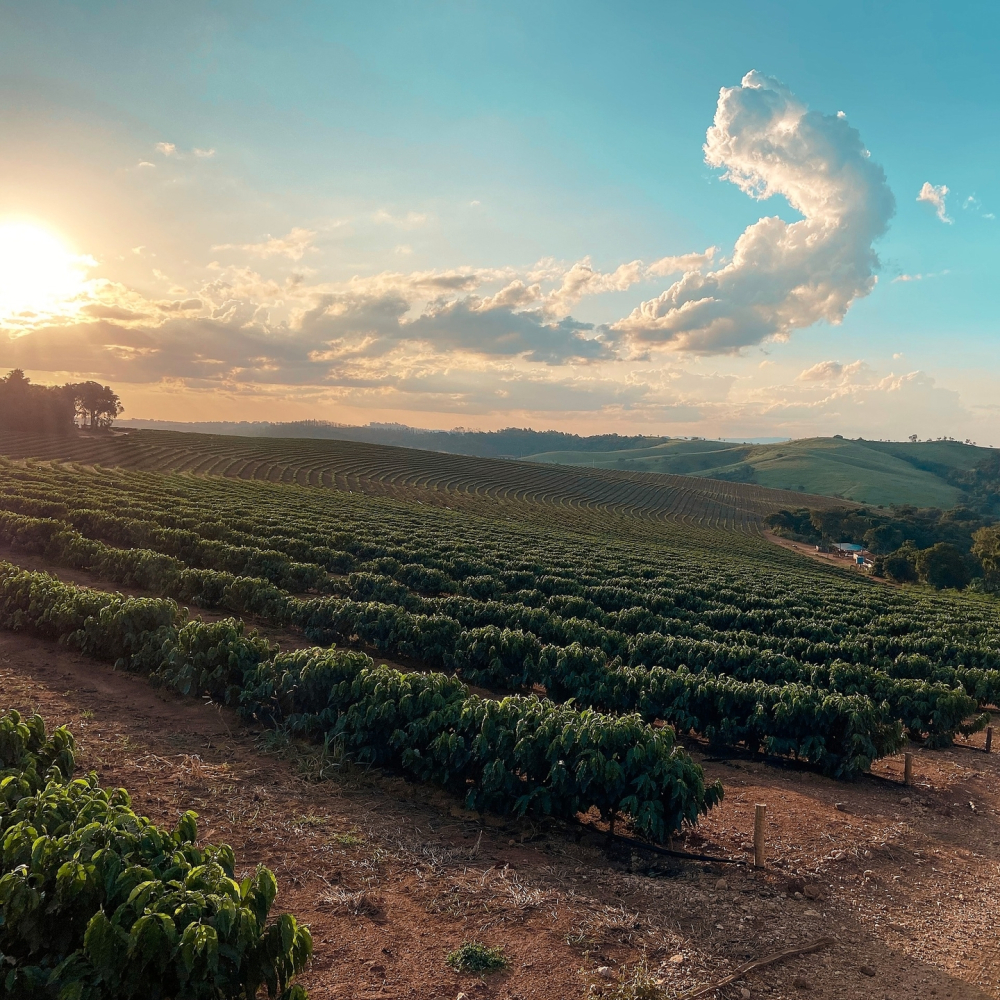
In terms of processing, Queen Estate has abandoned the traditional and rough natural (sun-dried) method—where coffee cherries are directly exposed to cement floors, often leading to earthy flavors and improper fermentation issues. Before drying, the estate first uses water flotation to remove unripe cherries, and opts to place the coffee cherries on African raised beds for sun drying. During this process, the cherries are continuously turned to ensure even heat exposure, effectively reducing off-flavors and preserving the coffee’s purity and delicate flavors.
To highlight the classic regional characteristics of Queen Estate Yellow Bourbon—especially its rich chocolate aroma and layered profile—it is recommended to use a medium-dark roast. This roast level perfectly balances sweetness and body, allowing the coffee’s mucilage aromas and caramelization reactions to reach their ideal state. Based on cupping results, this coffee’s sweetness is particularly prominent, so a three-stage pouring method is suggested to gradually bring out different flavor layers, thereby elevating the overall drinking experience.
Coffee beans are typically at their best for consumption within 4 to 7 days after roasting, when flavor expression is most complete. If left too long—for example, over a month and a half—aromas may noticeably fade, or even develop woody notes. Therefore, it is recommended to choose freshly roasted coffee beans to achieve the optimal flavor performance.
In terms of pour over equipment, considering the generally full and rounded mouthfeel characteristics of medium-dark roasted coffee beans, it is recommended to use a KONO filter cone, which has a relatively slower flow rate. The upper part of this cone has a smooth curved surface, while the lower part features guide ribs covering about one-third of its length. These ribs help the filter paper adhere tightly to the inner wall of the cone, reducing the space for air to rise, encouraging water to penetrate downward more centrally. This mimics the extraction effect of a siphon, helping to fully release the aromatic compounds within the coffee grounds.
Regarding grind size, since medium-dark roasted beans have lower density and a looser structure, grinding too finely can lead to over-extraction, releasing excessive woody or astringent bitter notes. It is recommended to adjust the grind to a medium level—with a 70% passing rate using a Chinese standard No. 20 sieve—resulting in slightly coarser coffee particles, which helps control extraction time and maintain flavor balance.
Water temperature control is also one of the keys to the performance of medium-dark roasted coffee. Unlike lighter to medium roasts, which benefit from higher temperatures to highlight aromas, Brazilian Yellow Bourbon, having undergone a longer caramelization process due to its medium-dark roast, can easily become overly intense and bitter if still brewed with very hot water. It is recommended to keep the water temperature at 87~88℃ to help reduce bitterness and bring out sweetness and body.
It is recommended to use 15 grams of coffee grounds, with a 1:15 coffee-to-water ratio(i.e., a total water volume of about 225 milliliters), suitable for 1 to 2 servings. The pour over steps are as follows: First, pour about 30 milliliters of water (approximately double the amount of coffee grounds) for blooming, and let it sit for 30 secondsto allow the coffee grounds to fully expand and release aroma. Then, use a thin stream of water to pour in a circular motion from the inside out until reaching 125 grams , performing the first pour. Once the coffee bed settles to the middle of the cone, continue pouring with the same fine stream until reaching 225 grams, keeping the total extraction time around about 2 minutesto complete a Brazilian Yellow Bourbon pour over cup with full flavor and distinct layers.
The final pour over cup of Queen Estate Yellow Bourbon presents pronounced aromas of lemon, nuts, and peanuts. Upon tasting, it offers a strong nutty profile complemented by the sweetness of dark chocolate and caramel. The sweetness is clear and lingering, with a velvety-smooth mouthfeel. The overall flavor is well-rounded and balanced, making it an excellent choice for experiencing the classic taste of Brazilian coffee.
The above content is compiled by CoffeeHunters, a coffee news website.


