







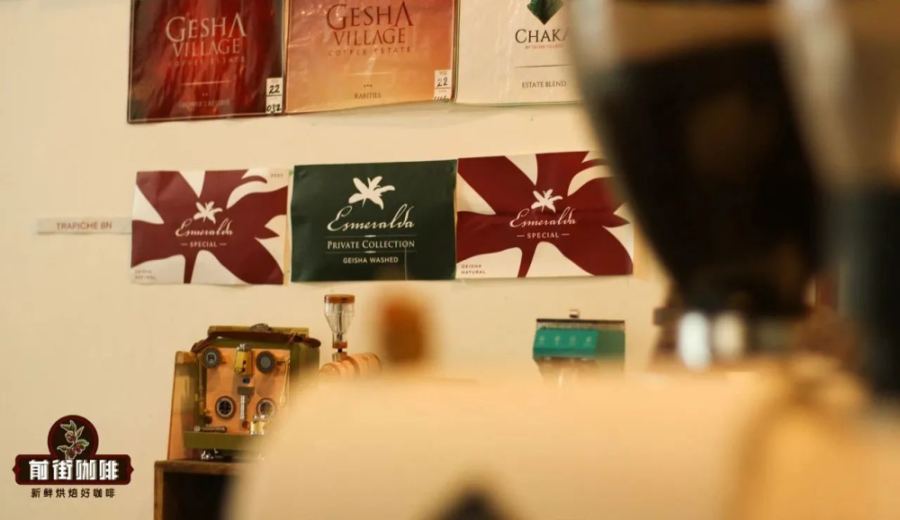
Introduction:The Geisha coffee from Panama’s Hacienda La Esmeralda is a standout in the specialty coffee world. Its three main tiers — Red Label, Green Label, and Blue Label — often leave consumers puzzled when choosing. This article delves into the origins, altitude differences, processing methods, and cupping profiles of these three grades, comparing their flavor profiles and market positioning. It also provides practical pour over recommendations and suggested parameters to help you choose the Geisha that best suits your taste.
In recent years, Geisha coffee has risen to prominence in the specialty coffee market, and the Geisha produced by Panama’s Hacienda La Esmeralda is hailed as the benchmark for this variety. But when you walk into a café or specialty coffee bean shop and face the three tiers of Emerald Geisha — Red Label, Green Label, and Blue Label — have you ever felt confused? These three may seem similar, but they actually differ significantly in origin, altitude, processing method, and flavor profile. How are they graded? And how should you choose? This article will break it all down for you.
Hacienda La Esmeralda and the Origins of Geisha
When talking about Geisha, one must mention Panama’s Hacienda La Esmeralda. This estate originally focused on dairy farming before shifting to coffee cultivation in the 1980s. In 1996, the estate acquired the nearby Jaramillo growing region and discovered an exceptionally flavorful coffee variety in this high-altitude area — a variety not widely known at the time, later confirmed to be Geisha from Ethiopia. In 2004, this coffee won first place in the Best of Panama (BOP) competition, instantly gaining international fame.
Hacienda La Esmeralda categorizes its Geisha coffees into multiple series based on factors such as planting altitude, processing method, plot of origin, and cupping scores. Among these, the most well-known are the Red Label, Green Label, and Blue Label — the three most common tiers frequently compared by consumers.
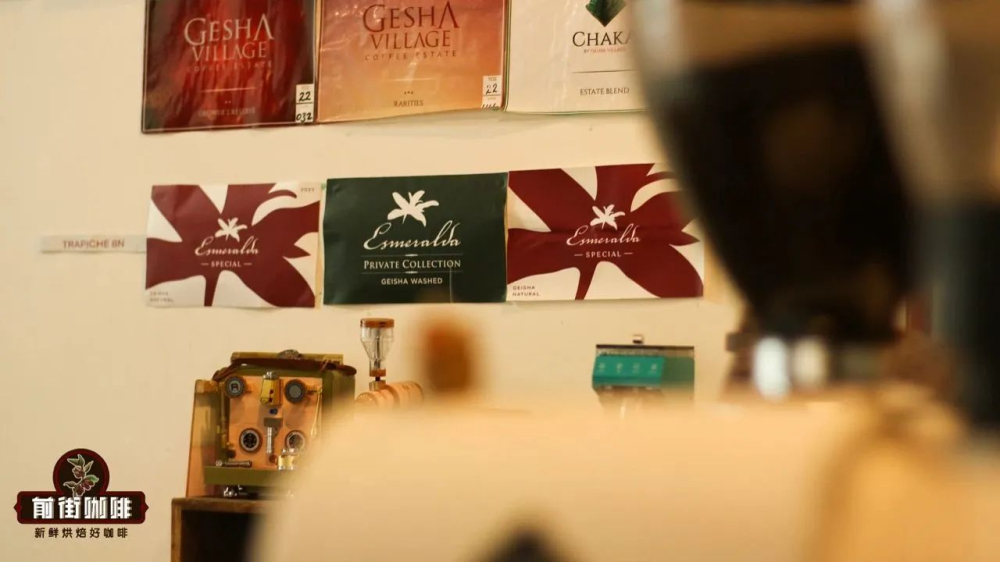
An In-depth Look at the Three Tiers of Emerald Geisha
The grading of Geisha at Hacienda La Esmeralda is not solely based on bean size or defect rate, but takes into comprehensive considerationaltitude,cupping scores, andmicro-region characteristics, dividing them into the following three main grades:
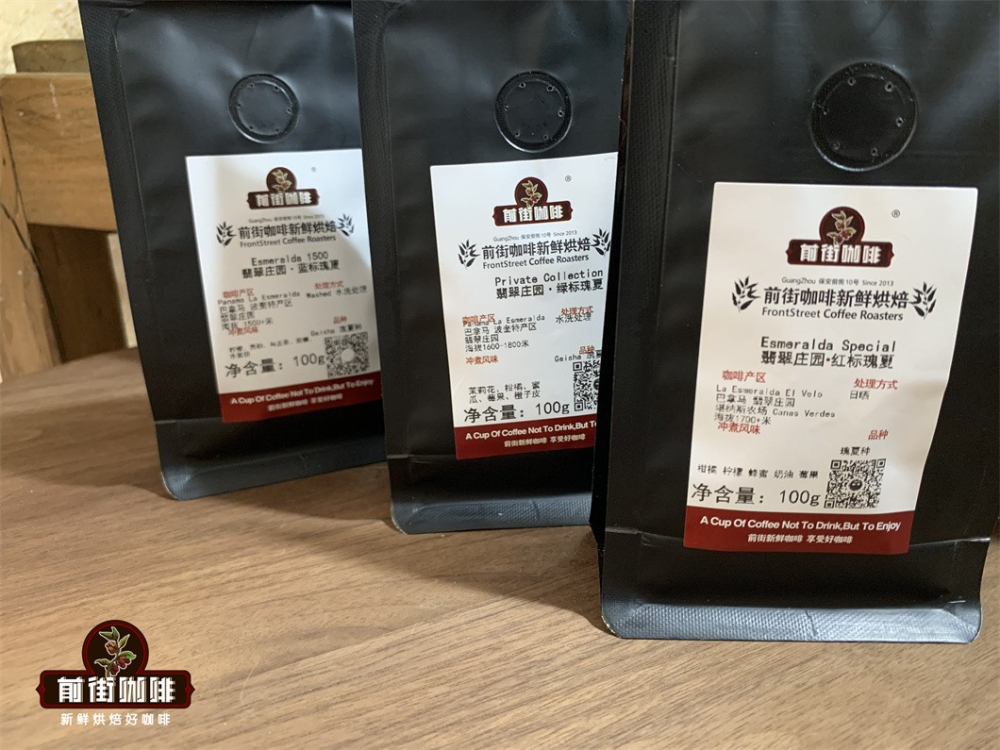
Red Label Geisha (Esmeralda Special): The flagship auction-grade
Officially named “Esmeralda Special,” the Red Label Geisha is the flagship offering from Hacienda La Esmeralda. It is selected exclusively from high-altitude micro-regions such as Jaramillo and Cañas Verdes,at elevations between 1600 and 1800 meters, and often scores 90 points or higher in cupping evaluations. This grade of Geisha is entered into the estate’s annual independent auction each year, with only batches from strictly selected plots eligible for inclusion.
It’s worth noting that there are also non-auction versions of the Red Label available on the market. These come from the same high-quality plots but do not go through the auction process, making them more affordable while still retaining top-tier flavor potential. The Red Label typically useswashed or natural processing methods, and is renowned for its bright floral notes, citrus tones, and tea-like finish — representing the most classic expression of Geisha’s flavors.
Green Label Geisha (Private Collection): A high-altitude blended specialty
The Green Label, also known as “Private Collection,” though not part of the auction, also comes from high-altitude regions between 1600 and 1800 meters, sourced from micro-lots in areas like Jaramillo and Cañas Verdes. Unlike the Red Label, the Green Label is ablended lot, without specific plot designation, so its flavor may vary slightly from year to year, but it still retains the classic Geisha traits of floral aroma, fruity acidity, and full body.
The Green Label is usually washed processed, offering good value for money. It’s highly recommended for coffee enthusiasts who want to experience high-quality Geisha without opting for the top-tier Red Label. Its flavor profile often includes jasmine, ginger flower, citrus, and honey — fresh yet layered.
Blue Label Geisha (Geisha 1500 / New Volcanic Blue Label): An entry-level option
The Blue Label, officially named “Geisha 1500,” commonly referred to as the “New Blue Label” or “Volcanic Rock Geisha,” is the lowest-altitude tier among the three, grown at around1400 to 1500 meters, and is a blend from three plots: Jaramillo, Cañas Verdes, and El Velo. Early versions of the Blue Label were mainly washed processed, but since 2019, a small amount of natural-processed versions have also been released.
The Blue Label has a relatively mild flavor, featuring subtle floral notes, fruity acidity, and sweetness. Its body is not as rich as the Red or Green Labels, but it remains a good value entry-level choice. Note that starting in 2021, the official Hacienda La Esmeralda product catalog no longer lists the Blue Label. The “New Blue Label” found on the market is often a third-party green coffee offering from 1500-meter-altitude Geisha lots, still bearing the characteristics of Hacienda La Esmeralda.
How to Choose Between Red, Green, and Blue Labels? A Summary of Differences
The biggest differences among the three Geisha tiers lie inaltitudeandthe degree of plot selection. The Red Label is grown at the highest altitude, from the most carefully selected plots, and requires auction qualification — resulting in the most concentrated and vibrant flavors. The Green Label is also high-altitude but blended, offering excellent value. The Blue Label is the most entry-level, with lower altitude and gentler flavors, suitable for those new to Geisha.
If you’re seeking the ultimate, cleanest, and brightest flavor profile, the Red Label is the top choice. If you prefer high cost-performance while still experiencing Geisha’s complexity, the Green Label is highly recommended. The Blue Label, meanwhile, suits users with a limited budget who want to explore the charm of Geisha.
Pour Over Recommendations and Flavor Profiles
Geisha from Hacienda La Esmeralda is generally roasted to alight degreeto preserve its delicate floral and fruity acidity. It’s recommended to use a V60 dripper, with a brew ratio of 1:15, water temperature around 90°C, and grind size close to superfine sugar (about 80% through a #20 sieve). These parameters fully highlight the citrus, tea-like qualities, and honey finish of Geisha.
● Red Label Natural: Rose, strawberry, citrus, black tea, honey
● Green Label Washed: Jasmine, ginger flower, citrus, Ti Kuan Yin tea, honey
● Blue Label (Volcanic) Washed: White floral, citrus, green tea, honey
The freshness of coffee beans greatly impacts flavor. It is recommended to choose beans shipped within 5 days of roasting, and to consume them within 4 to 7 days of receipt for optimal flavor. If grinding your own, brew as soon as possible to avoid oxidation affecting the aroma.
The above content is compiled by CoffeeHunters, a coffee news website.


