







Introduction:Want to understand Ethiopia’s coffee grading system? This article delves into whether Natural Huila G1 truly represents top-tier quality, explains the significance behind the Hambella 7063 lot number, and introduces you to the geography and farm background of the Hambella region. It also provides practical light roast pour over parameters and a three-stage extraction technique to help you fully release the floral and fruity aromas and layered complexity of Huila.
As a globally significant origin for specialty coffee, Ethiopia’s green bean grading system has garnered much attention. Many consumers assume that “Natural Huila G1” is synonymous with the highest quality, but in reality, grade classification involves multiple professional evaluation metrics and cannot be determined solely by the letter grade. This article will break down Ethiopia’s cupping scores, defect rate standards, and the meaning behind lot numbers, while taking you to the source of Huila coffee — the Hambella sub-region within the Guji zone — to explore its unique geographical environment and farm operation model.
The quality assessment of Ethiopian coffee is primarily based on two aspects: cupping flavor performance and green bean defect rates. According to SCAA standards, green beans scoring 85 points or above and classified as G1 or G2 are considered Q1 grade; those between 80 and 85 points across G1 to G3 are Q2; and any beans scoring below 80, regardless of grade, are classified as G3. This means that even if labeled G1, if the cupping score is below 85, it may still not qualify as top-tier specialty coffee.
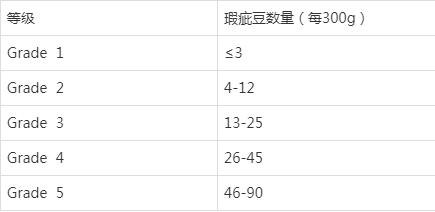
In the assessment of green bean defect rates, there are slight differences in evaluation methods between washed and natural beans. For washed beans, a random 300g sample is taken; if the number of defective beans is between 0–3, it is graded Grade 1; 4–12 beans are Grade 2. There are a total of nine grades, with G1 and G2 being specialty-grade, and G3 to G9 considered either commercial or domestic-grade. Prior to the establishment of the ECX system, natural beans were mostly rated G3 to G5, until ECX redefined the rules, allowing natural beans to achieve G1 or G2 grades — which is why G1 naturals are now increasingly seen in the market.
As for the specific scoring criteria of the natural processing method, it is divided into two main parts: physical characteristics account for 40% (with defect count making up 30% and aroma 10%), and cup quality accounts for 60% (including cleanliness, acidity, mouthfeel, and flavor characteristics, each weighted at 15%). Therefore, even among beans graded G1, subtle differences in flavor can still exist. Moreover, the primary difference between G1 and G2 often lies in the number of defects, rather than absolute flavor performance, so one shouldn’t judge which is better simply based on the grade letter.
Each batch of coffee beans has its own unique lot number. For example, “Hambella 7063” represents the origin and processing details of that particular batch. In natural processing grading, the main categories are G1, G2, and G3, with G1 having the lowest defect rate and being the premium natural grade commonly found in the market. Huila coffee falls precisely within this high-standard G1 category.
The origin of Huila coffee — Hambella — is one of the key sub-regions within the Guji zone of Ethiopia’s Sidama region. Hambella is located at the heart of the Guji zone, Ethiopia’s largest coffee-producing area, and administratively belongs to the Oromia state. To its west, it borders the Kochore sub-region of Yirgacheffe, separated by a highland mountain range about 3,200 meters in elevation and roughly 30 kilometers wide; to its east, south, and north, it neighbors the Shakiso, Uraga, and Kercha sub-regions, making it one of the highest-altitude coffee-growing areas in all of Ethiopia — even higher than the commonly known Harrar main production zone.
The Hambella farm in Hambella spans an impressive 200 hectares, employs 28 full-time staff, and can mobilize over 700 seasonal workers during harvest season, 70% of whom are women. In addition to growing and processing its own coffee, the farm also purchases green beans from surrounding smallholder farmers, improving overall quality through rigorous screening and processing procedures. Notably, the farm was co-founded by Aman Adinew (former Head of Quality Control at ECX) and his brother Michael, and houses a specialty coffee lab dedicated to enhancing the flavor potential of its coffees.
Huila coffee is processed using the traditional natural method. To prevent mold or off-flavors during drying, farmers place the harvested coffee cherries on raised African beds and sun-dry them for 21 days. The cherries are turned multiple times daily to ensure even drying, and defective or moldy beans are removed every three to five days. Once the pulp is completely dry and hardened, a hulling machine removes the dried husk, followed by a final screening of the green beans. This processing method effectively enhances the intensity and purity of the flavors, resulting in the rich aromatic layers characteristic of Huila coffee.
The name “Huila” originates from the 2017 Taste of Harvest competition hosted by the African Fine Coffees Association (TOH). That year, a lot of natural beans submitted by Ethiopia’s DW Coffee Exporters stood out among the contestants, even beating several well-known Geisha varieties to claim the championship. Later imported by Beijing-based Hongshun International, it was named “Huila” in honor of its competition-winning status, and has since become a popular item in the market. To differentiate between vintages and origins, Hongshun specifically designates beans from the Buku Abel processing station in Hambella as authentic Huila, and has subsequently released versions Huila 2.0 through 7.0 based on this foundation.
If you want to brew Huila coffee at home and fully express its flavor profile, it is recommended to use a light roast and a V60 filter with slightly higher water temperature to highlight its floral and fruity notes. Specific parameters are as follows: grind size at 80% passing through a Chinese standard No. 20 sieve, 15g coffee dose, 1:15 coffee-to-water ratio, and water temperature controlled at 91°C. A three-stage extraction method is advised: the first pour of 30g water for a 30-second bloom to allow the coffee grounds to fully expand; the second pour to 125g at 1 minute, continuing once the water level drops to two-thirds of the coffee bed; and the third pour to 225g at 1 minute 40 seconds, with a total extraction time of approximately 1 minute 59 seconds, and the whole process kept around 2 minutes. After brewing, gently swirl the server to even out the coffee liquid before enjoying its rich layers of fermented wine, citrus, mango, honey, and spicy finish.
The above content is compiled by CoffeeHunters, a coffee news website.


