








Introduction:An in-depth exploration of Kenya’s three premier specialty coffee regions—Thika, Nyeri, and Kirinyaga—analyzing their unique flavor profiles through altitude, processing methods, and varietal characteristics. The article also delves into the origins and growing conditions of the classic SL28 and SL34 varieties, as well as Kenya’s iconic K72 washed processing technique. Practical pour over recommendations and roast curve references are provided to help you better appreciate the charm of Kenyan coffee.
As an important African producer of specialty coffee, Kenya is renowned worldwide for its bright fruity acidity and complex layers. Among its many regions, Thika, Nyeri, and Kirinyaga stand out as ideal starting points for coffee enthusiasts wishing to explore Kenya’s signature flavors, thanks to their exceptional geographical conditions and traditional processing methods. This article will comprehensively compare the altitude, varieties, processing techniques, and cupping profiles of these three regions, while also taking an in-depth look at Kenya’s most representative SL28 and SL34 coffee varieties—exploring their history and ideal growing environments.

Kenya’s coffee plantations are mostly concentrated in the central highlands. Though relatively small in area, Thika benefits from a prime location just a stone’s throw from the capital, Nairobi. The region’s average altitude ranges between 1550 and 1750 meters, with a cool climate and significant diurnal temperature variation—ideal conditions for cultivating high-quality coffee. Thika primarily grows the SL28 and SL34 varieties, both known for their excellent clarity of acidity and aromatic expression. Local coffees often exhibit bright berry acidity, rich berry juice flavors, and a honey-like finish. Most coffee farmers in Thika operate on a small scale, and the beans they produce are frequently praised for their intense fruitiness and good balance.
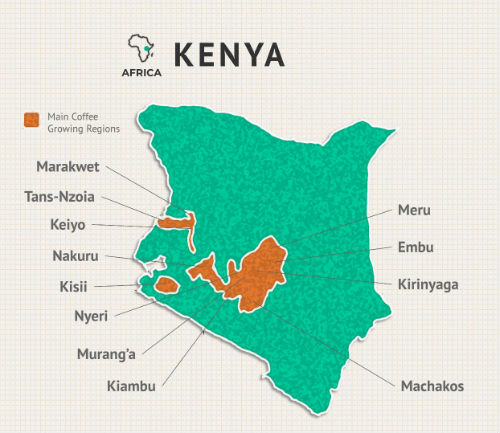
The Nyeri region is located in the high-altitude area at the foot of Mount Kenya, with elevations generally exceeding 1700 meters—some areas even approaching 1900 meters—making it one of Kenya’s highest-altitude coffee-growing regions. In addition to fertile volcanic soils, the region enjoys a climate highly conducive to coffee cultivation, resulting in beans with tight structure and rich layers. Nyeri coffees are known for their deep berry notes and bright, tart-sweet flavors reminiscent of black plums, along with a delicate and lingering aftertaste. There are two harvests per year, with the main season from October to December producing particularly outstanding coffee quality. Nyeri coffees often showcase dark fruit profiles such as plum and grape, paired with a soft base of cream and caramel—ideal for coffee connoisseurs who enjoy complex flavors.
Adjacent to Nyeri, the Kirinyaga region is also situated at the foothills of Mount Kenya, with altitudes ranging approximately from 1300 to 1900 meters. Its main harvest season runs from October to December, with a secondary season from June to August. The region is dominated by smallholder coffee farmers, with washing processes largely managed uniformly through cooperatives to ensure consistent quality. Kirinyaga coffees typically present a rich berry main note, complemented by honey and creamy sweetness, achieving a balanced acidity and solid mouthfeel. Compared to Nyeri, Kirinyaga’s flavor profile leans slightly sweeter, yet still retains the distinctive clarity of acidity and layered complexity characteristic of Kenyan coffee.
In terms of variety, SL28 and SL34 are the soul of Kenyan coffee. Developed in 1935, SL28 originated from a drought-resistant strain in the Tanganika region and, after selection, demonstrated outstanding adaptability and flavor potential. This variety thrives in medium to high altitudes, and though somewhat susceptible to disease, it can deliver exceptional clarity of acidity and aromas of citrus and berries under the right conditions. SL28 beans are round and full-bodied, and genetic analysis has confirmed their relation to the Bourbon variety. SL34, on the other hand, traces back to a tree known as the “French Mission” in the Kabete area of Kenya. Its beans are slightly elongated, similar to Typica, and genetic studies have also linked it to the Typica family. Like SL28, SL34 is suited for high-altitude cultivation, exhibiting strong drought resistance and a rich spectrum of flavors.
Perhaps the most celebrated aspect of Kenyan coffee is its unique K72 washed processing method. This technique involves prolonged dry fermentation: after the coffee cherries are depulped, they undergo three separate 24-hour dry fermentations—totaling 72 hours—to fully break down the mucilage and enhance flavor development. Once fermentation is complete, the beans are soaked in clean water overnight before being sun-dried. This intricate process gives Kenyan coffee its bright and clear acidity, rich aromatic layers, and distinctive sweetness—key traits that set it apart from coffees of other regions.
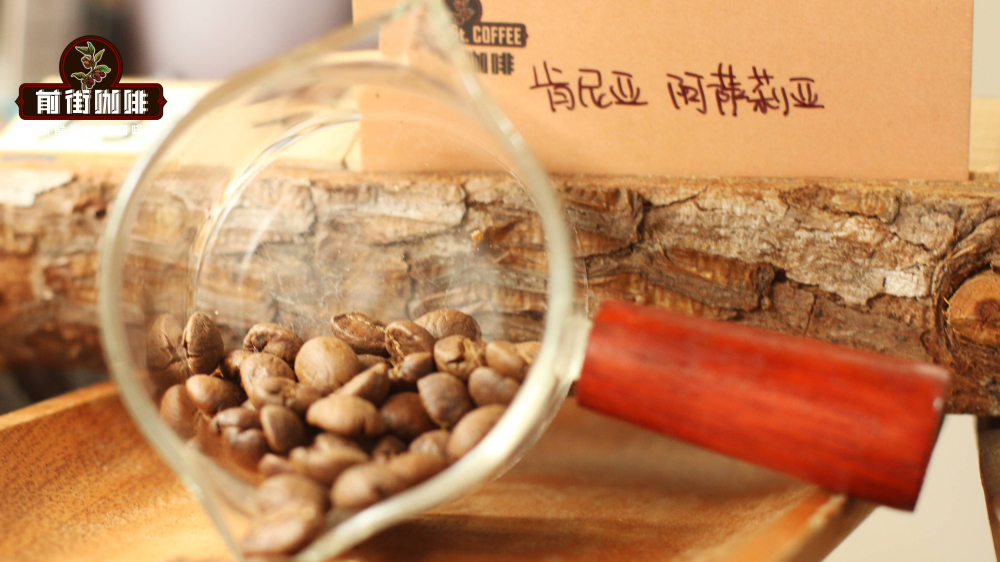
For brewing and roasting recommendations, Kenyan coffee performs best with a medium-fine grind and water heated to around 90°C, helping to highlight its acidity and fruity notes. For pour over, the V60 filter is recommended, with a coffee-to-water ratio of 1:16. By controlling water temperature and pouring rhythm, the multi-layered flavors of berry, black plum, and honey can be fully expressed. Whether it’s the juicy character of Thika, the deep berry tones of Nyeri, or the creamy sweetness of Kirinyaga, with the right extraction parameters, the unique charm of Kenyan coffee can be fully revealed.
The above content is compiled by CoffeeHunters, a coffee news website.


