








Introduction:Costa Rica is not only a representative of specialty coffee in Central America but also a flavor haven in the hearts of global coffee enthusiasts. This article starts with its introduction history, deeply analyzing the terroir differences of its eight major producing regions, the characteristics of mainstream cultivated varieties, as well as its rigorous grading system based on altitude, and provides practical pour-over brewing suggestions to help you fully grasp the essence of Costa Rican coffee.
When it comes to Costa Rica, many people might first think of the "Godzilla" from movies, but this country located in Latin America is actually recognized by both mainland Chinese and Hong Kong/Taiwan coffee consumers as an important producer of specialty coffee. It borders Nicaragua to the north and Panama to the south, and boasts mineral-rich volcanic soil, diverse microclimates, and generally high-altitude terrain, creating an ideal environment for the growth of Arabica coffee trees.
The history of coffee cultivation in Costa Rica dates back to 1729, when the first coffee seedlings were introduced from Cuba. Just over a hundred years later, in 1821, Costa Rica gained independence from Spain, and the new government quickly implemented a series of policies to vigorously support the coffee industry. Historical records show that within just over a hundred years of introduction, approximately 70,000 coffee trees had been planted nationwide, demonstrating astonishing development potential.

To further encourage coffee cultivation, the Costa Rican government implemented a tax exemption policy in 1825 and enacted a landmark regulation in 1832: "He who cultivates coffee owns the land," meaning that anyone who planted coffee on unused land could claim ownership of that land. This policy greatly increased farmers' enthusiasm to participate and also led to the fact that many of today’s high-quality Costa Rican coffees originate from private estates.
In 1948, the government established a dedicated institution — the Costa Rican Coffee Institute (ICAFE, now managed by the official Oficina del Café). Its main tasks include assisting coffee farmers in improving the entire process from planting, post-harvest processing to marketing, ensuring the quality and stability of exported coffee. Precisely because of this, Costa Rican coffee is widely known in the market for its consistent flavor performance.
However, as production increased, the issue of inconsistent quality gradually emerged. To enhance overall competitiveness, Costa Rica revised its laws in the early 20th century, stipulating that coffee farms nationwide could only grow Arabica varieties, excluding other less stable coffee species. In 1989, the government went further by legislating a complete ban on the planting of low-quality beans, thereby laying the foundation for the country’s exclusive focus on Arabica. It is worth mentioning that this policy was achieved through joint research and promotion by government departments and two major research institutions, CATIE (Centro Agronómico Tropical de Investigación y Enseñanza) and ICAFE, and has had a profound impact on the coffee industries across Central and South America.
Coffee cultivation in Costa Rica is mainly concentrated in eight regions: West Valley, Central Valley, Tarrazú, Tres Ríos, Orosi, Brunca, Turrialba, and Guanacaste. Among them, West Valley, Central Valley, and Tarrazú are considered the core regions for specialty coffee, generally located at altitudes between 1,200 and 2,000 meters. These areas, with fertile volcanic soil, mild and stable temperatures (around 19°C), and abundant rainfall, nurture coffee beans with pure flavors.
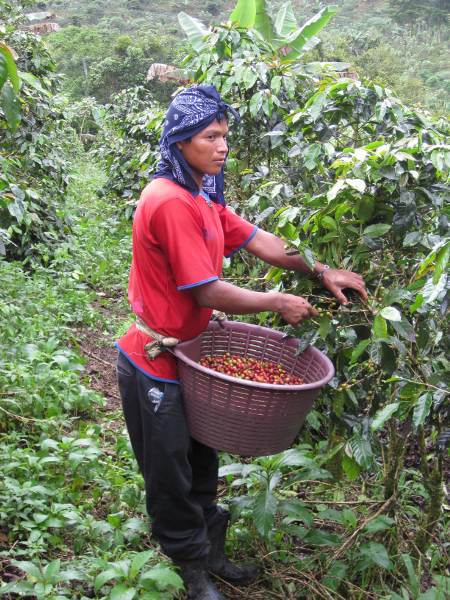
Cupping data from a certain brand shows that coffee from the Tarrazú region excels in cleanliness and bright acidity, often featuring fresh notes such as citrus and berries, making it suitable for drinkers who enjoy vibrant acidity and clear layers. In contrast, coffee from the West Valley region tends to have milder acidity, with a more balanced flavor profile, often accompanied by nutty and caramel aftertastes. Meanwhile, coffee from the Central Valley is widely praised for its extreme purity and well-defined balance of sweet and acidic notes.
In terms of varieties, Costa Rica mainly cultivates Caturra, Catuai, Geisha, as well as smaller amounts of Bourbon and Villa Sarchi. Caturra is a mutation of Bourbon, discovered in Brazil in 1937, and is known for its higher yield and disease resistance. It thrives at altitudes ranging from 700 to 1,700 meters, with flavor often improving at higher elevations. Catuai is a hybrid of yellow Caturra and the Mundo Novo variety, developed in 1949. It features shorter plants and strong wind and rain resistance, making it suitable for high-density planting, though it requires attention to the risk of leaf rust.
The Geisha variety originated from the Gesha forest in Ethiopia in 1931, later passing through Kenya, Uganda, and Tanzania, and was finally introduced to Costa Rica in 1953. This variety is renowned for its delicate floral aroma, fruity acidity, and complex layers of flavor, performing particularly well in high-altitude environments. The Bourbon variety originated from Réunion (formerly known as Bourbon Island), and coffee grown at high altitudes often exhibits bright acidity and wine-like aromatic qualities. Villa Sarchi is a dwarf green-tipped mutation of Bourbon. Though not widely popular in Costa Rica, it was later introduced to Honduras, where it is known for its perfume, cherry, and spice notes, suitable for medium to dark roasting.
Costa Rica’s coffee bean grading system is primarily based on cultivation altitude. The higher the altitude, the greater the bean density and hardness, and the higher the resulting quality and price. Most Costa Rican coffee beans sold by a certain brand belong to the SHB (Strictly Hard Bean) grade, indicating cultivation at altitudes above 1,200 meters.
So, how can you brew a cup of Costa Rican coffee with outstanding flavor? It is recommended to use 15 grams of coffee grounds, with a medium-fine grind size (approximately 78–80% passing through a Chinese No. 20 standard sieve), and a brew ratio of 1:15. Based on multiple tests, a water temperature of 90–91°C can fully bring out the aroma and sweetness of the coffee. A V60 filter is recommended, as it helps enhance the overall layering of flavors.
The specific brewing steps are as follows: First, pour 30 grams of water for a 30-second bloom; then pour up to 125 grams of water, and when the water level drops halfway, add the remaining 95 grams, bringing the total to 225 grams. Control the total extraction time to around 2 minutes and 10 seconds to enjoy a cup of Costa Rican coffee with balanced flavor and rich layers.
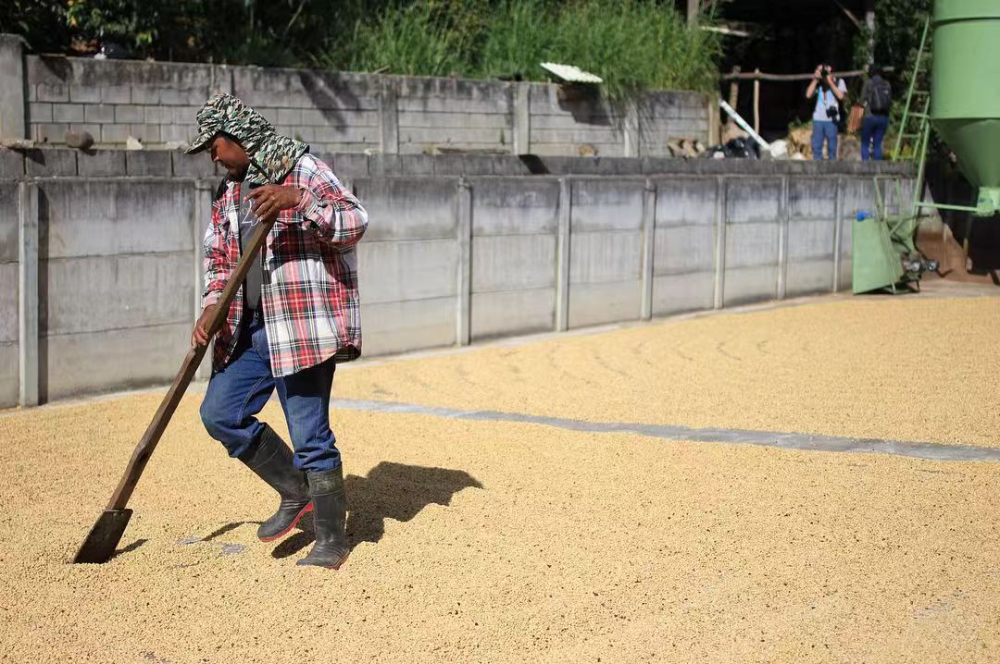
The above content is compiled by CoffeeHunters, a coffee news website.


