








Introduction:Delve into the Geisha washed coffee grown at Finca Las Rosas in Guatemala’s Huehuetenango region. From its century-long history and COE competition accolades to its delicate floral and citrus notes, this article systematically explores the characteristics of the region, the uniqueness of the variety, and the washed processing method. It also provides practical pour over parameters and roasting suggestions, offering coffee enthusiasts a comprehensive guide from origin to cup.
Guatemala’s high-altitude Huehuetenango region stands out with its dry climate, abundant water sources, and freedom from volcanic soil influence, making it an ideal terroir for specialty coffee. Among its treasures, Finca Las Rosas has been dedicated to producing high-quality micro-lot coffee since 1915. Named after the roses beloved by the estate owner’s grandmother, the farm symbolizes elegance and dedication.
Located in San Pedro Necta at an elevation of 1,980 meters, the farm primarily cultivates a diverse selection of specialty varieties including Geisha, Pacamara, Bourbon, Caturra, Pache, and Catuai. Among them, the Geisha washed is its flagship offering. Originally from Ethiopia, this highly promising specialty coffee variety shines even brighter in high-altitude environments, exhibiting nuanced floral and fruity characteristics.
Finca Las Rosas has been selected twice for Guatemala’s Cup of Excellence (C.O.E) competition, achieving seventh place in 2017 with its Geisha washed coffee—testament to its outstanding quality and production capability. Estate owner Isabel Villatoro Hernandez continues her family’s legacy of quality commitment by emphasizing improved production processes and equipment. She not only pursues exceptional cup profiles but also strives to enhance the living conditions of farm workers. Most of the coffee is sold directly to international markets rather than through local cooperatives.
The flavor profile of this Geisha washed coffee features prominent notes of rose, bergamot, lemon, and honey-like aroma. It has a smooth mouthfeel, delicate body, and natural sweetness paired with citrus acidity—ideal for those who enjoy bright acidity and floral notes. The washed processing method strictly controls fermentation and washing steps, resulting in a clean and refreshing flavor profile.
Guatemala is home to over 300 microclimates, with its eight major regions each offering unique characteristics. Among them, Huehuetenango is the highest-altitude region, ranging from 1,800 to 2,100 meters. Sheltered from frost threats by dry, hot winds from Mexico’s Tehuantepec Plateau and blessed with abundant water resources, washed processing has become the dominant method—especially during the harvest season from January to April.
Guatemala’s coffee-growing regions can be divided into five volcanic zones and three non-volcanic zones: the volcanic areas include Antigua, Acatenango, Atitlan, Volcanic San Marcos, and Fraijanes; the non-volcanic ones are Huehuetenango, Coban, and New Oriente. Each region, shaped by distinct microclimates and soils, produces unique flavor profiles, yet all share common traits of gentle richness and pleasant fruit acidity.

In terms of varieties, Guatemala mainly grows Bourbon, Typica, Caturra, and Catuaí. Among these, Bourbon and Typica are among the oldest Arabica varieties, often found in specialty coffee. Some cafés’ house blends primarily use Bourbon, Caturra, and Catuaí, while single-origin Goddess Coffee combines Caturra and Bourbon, showcasing layered berry and citrus notes.
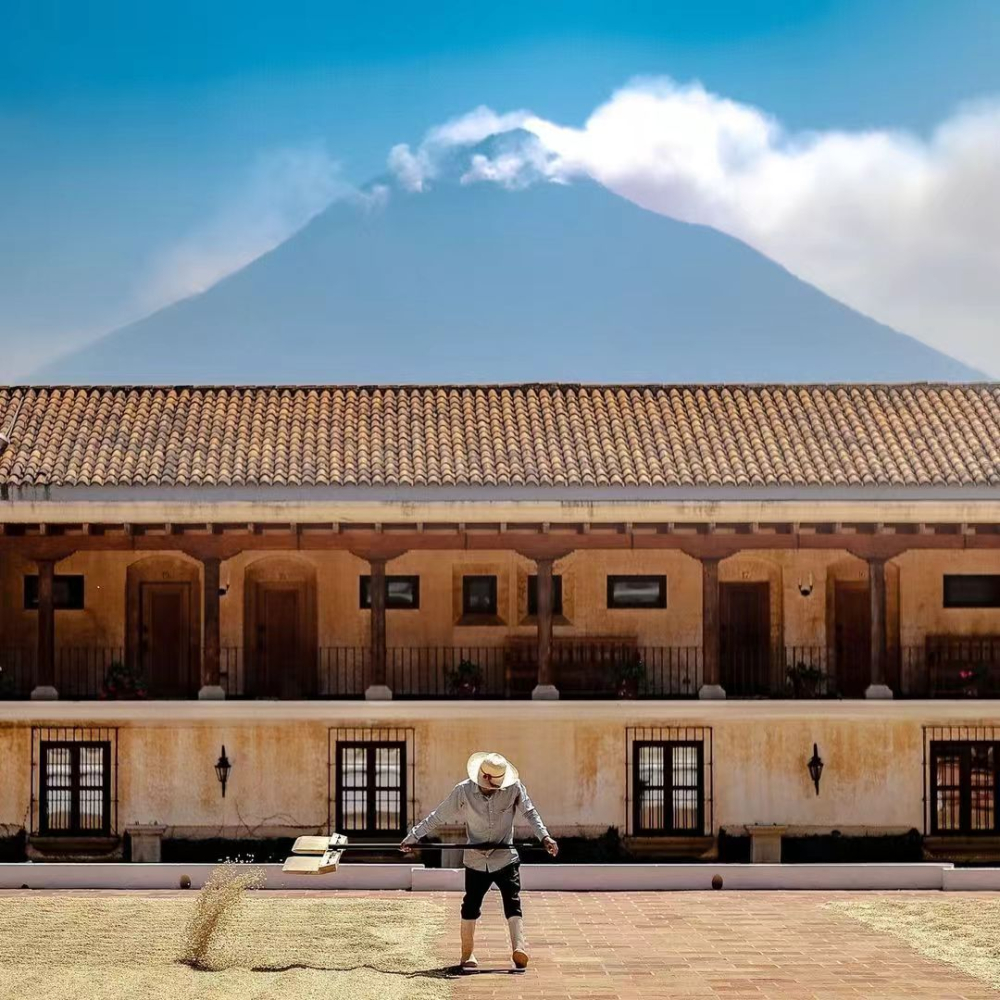
Guatemalan coffee beans are generally processed using the washed method: harvested coffee cherries are first sorted to remove floaters, then depulped. The mucilage is left to ferment with the pulp for about 24 hours, followed by thorough washing to remove residual mucilage. Finally, the beans are dried in the sun or using mechanical drying facilities until their moisture content drops to around 12%, after which the parchment is removed and the beans are graded for export. This method highlights the region’s fundamental flavor characteristics, delivering a clean taste with pronounced acidity—an ideal choice for beginners exploring regional profiles.
For this Huehuetenango Geisha washed bean, it is recommended to use a V60 dripper. Grind to a medium-fine level (e.g., 80% passing through a #20 Chinese sieve, similar in coarseness to granulated sugar), using 15 grams of coffee with a 1:15 brew ratio. Water temperature should be controlled at around 91°C. Use a three-stage pouring method: the first stage involves pouring double the coffee weight (about 30 grams) for a 30-second bloom to release CO₂; the second stage uses a slow circular pour to reach 125 grams; the third stage continues pouring to 225 grams before stopping, with total extraction time around 2 minutes. These parameters help balance sweetness, acidity, and aroma, highlighting the Geisha’s delicate floral and fruity layers.
The flavor profile of this Geisha washed coffee centers on floral and fruity notes such as rose, bergamot, and lemon, with honey-like sweetness and nutty aromas in the mid-palate, and a smooth finish with a light tea-like sensation. It suits coffee lovers who prefer bright and refreshing acidity. In contrast, the Goddess Coffee exhibits berry acidity, citrus notes, and a subtle chocolatey finish, offering rich layers and a smooth mouthfeel—another iconic Guatemalan single-origin.
For roasting, a medium-light roast is recommended to preserve the region’s native flavors and maintain vibrant floral-fruity aromas and clean acidity. Additionally, for the best drinking experience, it is advised to use beans roasted within 5 days and consume them between 4 to 7 days post-roast when the flavors are most fully developed. If purchasing pre-ground coffee, brew it as soon as possible to avoid oxidation affecting aroma quality.
The above content is compiled by CoffeeHunters, a coffee news website.


