








Introduction:Baoshan’s Luxi Dam in Yunnan, with its dry-hot valley climate, nurtures high-quality small-bean coffee. Among them, the washed and natural processed versions of the Catimor variety exhibit distinctly different flavor profiles, creating unique flavor wheels. This article provides an in-depth comparison of the two—from green bean appearance and roasting curves to cupping performance—and analyzes the impact of Yunnan’s 2020 drought on yield. It also offers practical pour-over brewing tips to help you master the brewing techniques for this distinctive regional bean.
Baoshan’s Luxi Dam in Yunnan, located at the eastern foot of the Gaoligong Mountains and along both banks of the Nujiang River, enjoys a rare dry-hot valley climate in China, making it an ideal cultivation area for Arabica small-bean coffee. The region’s elevation mostly ranges between 800 to 1,200 meters, with some areas even reaching 1,400 meters. Coupled with subtropical monsoon influences, the climatic conditions are highly favorable for coffee growth. A supplier-provided batch of both natural and washed Catimor small-bean coffees, although both originating from Baoshan, showcase remarkably different flavor characteristics due to their distinct processing methods.
The Catimor variety originated in 1959 when Portuguese growers introduced a Brazilian Bourbon mutation, Caturra, to East Timor and crossed it with Timor, a hybrid containing Robusta genes. This variety combines Robusta’s disease resistance and high yield potential while retaining some of Arabica’s flavor complexity, making it one of the main cultivars in Yunnan. Particularly in the context of leaf rust threatening coffee-growing regions worldwide, Catimor has been widely promoted for its hardy characteristics.
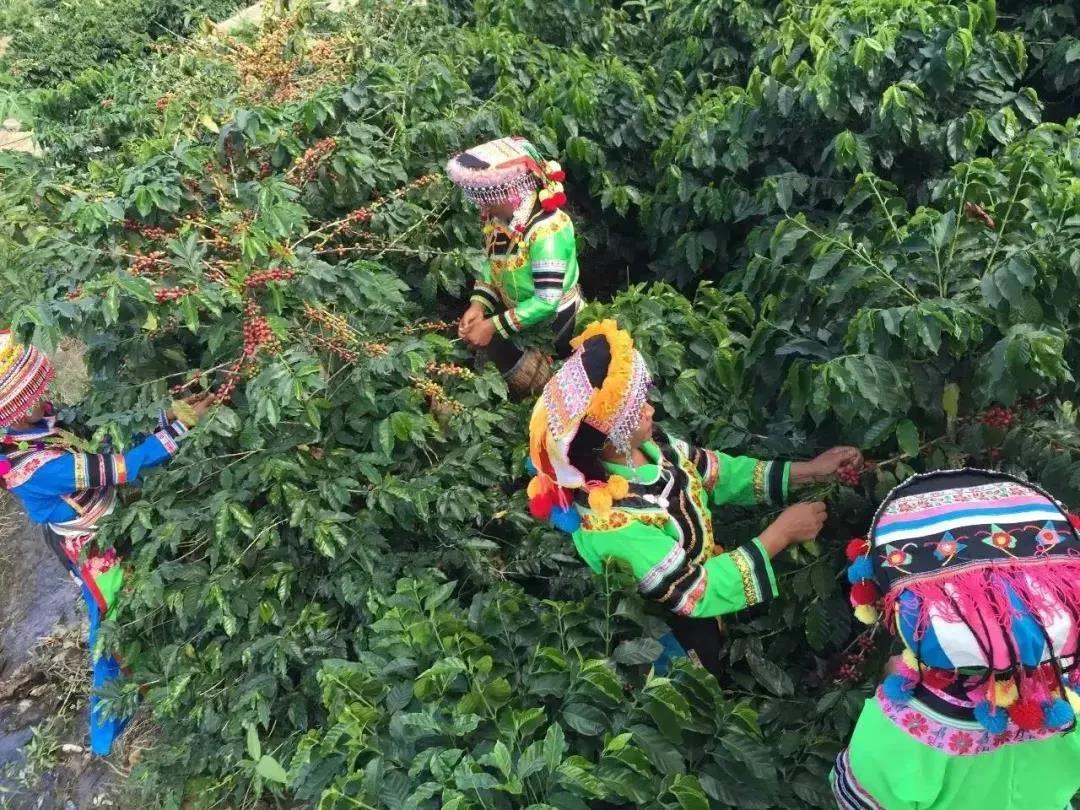
In 2020, Yunnan experienced severe drought, which significantly impacted coffee production. During the flowering period of February to March, rainfall decreased by over 60% compared to previous years, preventing the normal setting of the first wave of fruits. Although heavy rainfall in late April temporarily alleviated the drought, the damage to yield had already been done. Statistics show that approximately 162,200 acres of coffee plantations in Pu’er City were affected, accounting for 23.3% of the total area, while the Baoshan production area also saw a slight reduction in yield. Other regions such as Lincang and Dehong remained relatively stable.
In terms of processing methods, due to Yunnan’s long rainy season and unstable climate, washed processing has become the mainstream choice. This method involves initially separating the pulp with a depulper, then soaking the parchment beans in water to ferment and thoroughly remove residual mucilage. Washed processing can effectively screen out unripe and defective beans, resulting in flavors that feature bright acidity, higher complexity, and a clean mouthfeel, with almost no astringency or off-flavors. In contrast, natural processing requires waiting until the coffee cherries are fully ripe (red cherry stage) before harvesting, and the whole cherries are directly sun-dried. This process involves frequent turning to ensure even drying and regular removal of moldy or defective beans, ultimately delivering a richer sweetness and fuller body.
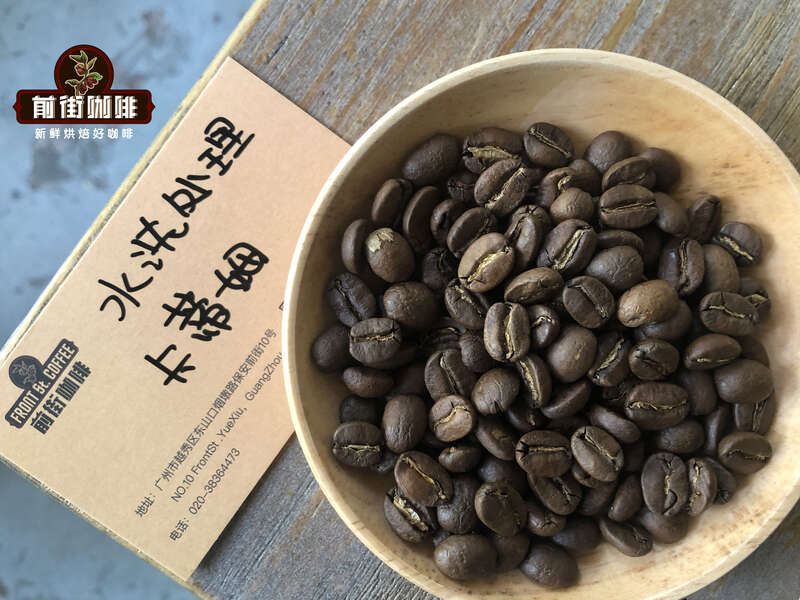
Observing the appearance of green beans, washed Catimor exhibits a bluish-green hue with a faint sour aroma, while natural Catimor tends toward yellow with noticeable fermented aromas. The differences in roasted beans are even more pronounced: natural beans have clean silver skin shedding, whereas washed beans often retain pale-yellow silver skin along the center cut. This is because the silver skin along the center cut is the hardest to remove during roasting. Natural beans have better continuity in their outer silver skin, which tends to come off together, while washed beans, with their fragmented silver skin attachment, are harder to clean completely.
Regarding roasting parameters, a supplier used a Yangjia 800N machine with a 300g charge for testing. The roasting curve for natural Catimor was as follows: 165°C charge temperature, initial heat at 130 and air at 3; at the turning point 1'32", the drum temperature was 128°C, and the air was adjusted to 4; at 153°C the bean surface turned yellow, and at 157°C the heat was reduced to 100; at 9'00" ugly wrinkles and black streaks appeared, at 10'06" first crack began, with the air fully open, and it was dropped at 198.5°C. For washed Catimor, the charge temperature was 190°C, heat at 120 and air at 3; at the turning point 1'40", the drum temperature was 145°C, and the air was adjusted to 4; at 166°C the bean surface turned yellow, at 188°C the heat was reduced to 60 and the air to 5; at 8'37" the pre-first crack phase began, at 9'00" first crack started, and after developing for 3 minutes, it was dropped at 198°C.

Cupping results (using a 200ml ceramic bowl, water at 94°C with 150ppm TDS, grind size at 20# sieve with 70%-75% passing rate, 1:18.18 brew ratio, 4-minute steep) showed that natural Catimor presented red berry acidity on entry, accompanied by nutty and herbal aromas, developed chocolate and caramel sweetness in the mid-palate, with a medium-full body. Washed Catimor exhibited Asian herbal aromas, bright and lively acidity that stimulated salivation, with rich layers, and a clean finish showcasing dark chocolate, honey, and cane sugar sweetness. After full cooling, brown sugar notes became more pronounced.
For actual pour-over brewing, it is recommended to use a V60 filter, 15g coffee, 90°C water, 20# sieve with 80% passing rate grind, and a 1:15 brew ratio. Brewing technique: 30g bloom for 30 seconds, first pour to 125g then pause (slow small circular pour), second pour to 225g with slightly faster flow to avoid channeling. Brewed natural Catimor presents a red berry juice sensation, nutty and cocoa aromas, with a caramel sweet aftertaste; washed Catimor offers nutty aromas, with prominent herbal and chocolate flavors on entry, and a slightly acidic fruitiness in the finish.
In summary, Baoshan Catimor’s washed and natural processing methods each have their own distinctive traits: the former excels with clear acidity and a clean mouthfeel, appealing to those who prefer bright flavors; the latter attracts consumers who enjoy sweet and aromatic styles with its rich sweetness and full body. Regardless of which processing method you choose, mastering the correct roasting and brewing parameters will fully showcase the unique charm of this distinctive Yunnan-origin coffee.
The above content is compiled by CoffeeHunters, a coffee news website.


