







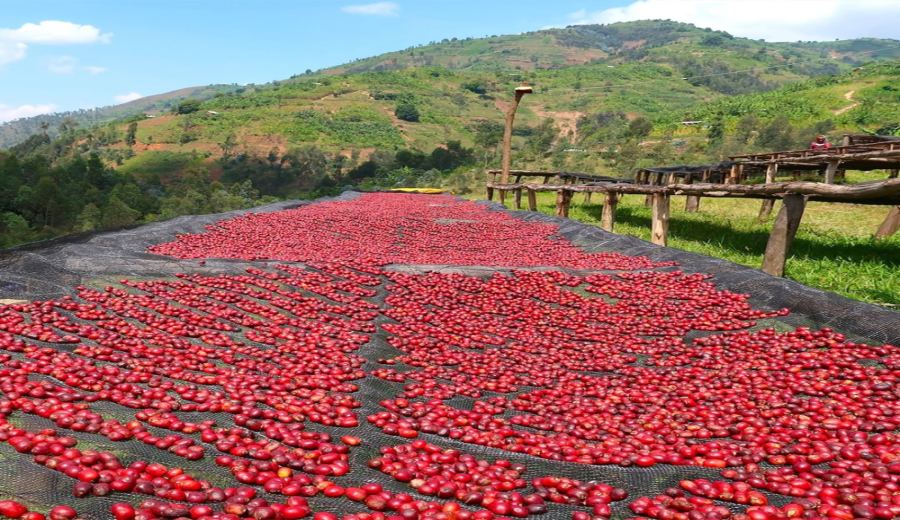
Introduction:The Yirgacheffe Red Cherry coffee beans come in two processing methods: natural (sun-dried) and red honey. Although both are produced in Ethiopia’s high-altitude regions, their differing processing methods result in distinctly unique flavor profiles. This article delves into the processing techniques, regional backgrounds, and flavor characteristics of both, and offers practical pour-over brewing recommendations and parameters to help you make the best choice based on your taste preferences.
Yirgacheffe in Ethiopia has long been world-renowned for its distinctive floral and fruity aromas, with the “Red Cherry” series being a focal point for specialty coffee enthusiasts. The Yirgacheffe Red Cherry offerings from this origin come in both natural and red honey processed versions, and many consumers often wonder: what exactly is the difference between the two, since they both come from Yirgacheffe?The answer lies in the processing method. Natural and red honey processing are among the key factors that influence the final flavor of coffee. Even with the same origin and variety, different post-harvest processing methods can impart vastly different aromas, acidity, and sweetness profiles to the beans.
Yirgacheffe Red Cherry Natural G1
Origin: Yirgacheffe, Ethiopia
Processing Farm: Alete Lan
Elevation: Approximately 2300 meters
Variety: Local landrace
Processing Method: Natural
Grade: G1
Flavor: Prominent berry, lemon, and strawberry fruit acid aromas, accompanied by发酵 wine notes, with a full-bodied mouthfeel and prominent sweetness. The aftertaste is refreshing with a juicy sensation.
Yirgacheffe Red Cherry Red Honey G1
Region: Yirgacheffe Idido
Elevation: 2000–2200 meters
Variety: Local landrace
Processing Method: Red Honey
Grade: G1
Flavor: Leading notes of jasmine and citrus, paired with honey sweetness and berry fruitiness. The mid-palate features almond tones, with an overall rich layered profile, a relatively clean body, and a sweet lingering finish.
The so-called natural (sun-dried) processing method involves placing the entire coffee cherry, complete with its pulp and mucilage, directly on raised drying beds to dry. Care is taken to avoid contact with the ground to prevent off-flavors, and the whole process usually takes over two weeks. This traditional technique preserves more sugars and fermentation-derived flavors, giving the coffee intense fruitiness, a full body, and lower acidity, though it may be slightly less clean than washed beans.
Honey processing, on the other hand, involves removing the outer skin of the coffee fruit while retaining some or all of the mucilage layer before sun-drying. Among these, red honey processing retains about 75% of the mucilage, resulting in a high sugar concentration that facilitates the development of richer caramel and sweet aromas during drying. Compared to yellow honey (retaining about 60% mucilage) and black honey (where almost no mucilage is removed), red honey strikes a good balance between sweetness and acidity.
When talking about Yirgacheffe Red Cherry, one must mention the “Red Cherry Project (Operation Cherry Red).” This initiative is supported by the Dutch trading company Trabocca and the Dutch government, aiming to improve the coffee quality of small-scale Ethiopian producers. Each harvest season, Trabocca carefully selects qualified smallholder organizations and requires them to harvest only fully ripe red coffee cherries, which then undergo multiple rounds of manual sorting to ensure that only the highest-quality cherries proceed to the subsequent processing stages.
Yirgacheffe itself is a well-known coffee town in southern Ethiopia, located in a highland region at an altitude of 1700–2100 meters, making it one of the highest-altitude coffee-growing regions in the world. The area’s cool and humid climate, along with proximity to several lakes that provide abundant moisture, contributes to the development of a uniquely aromatic coffee with distinct floral and fruity notes and a delicate flavor profile. Traditionally dominated by washed processing, the region has in recent years seen more producers experimenting with natural and honey processing to enhance fruitiness and body.
Ethiopian coffee grading was once centrally managed by the ECX (Ethiopian Commodity Exchange), where the number of defective beans was the main criterion. In the past, natural sun-dried beans often had higher defect rates due to technical limitations, typically falling within grades G3 to G5. However, with refined processing methods today, many have now achieved the premium G1 standard. Both Red Cherry beans featured in this article are G1 grade, indicating an extremely low defect rate and high quality.
For the Yirgacheffe Natural Red Cherry, it is recommended to use a light roast to highlight its bright fruit acids and floral-fruity character. Meanwhile, the Red Honey Red Cherry, with its better sweetness and body, can be roasted to either light or medium-light levels to bring out more caramel and honey aromas.
Here are practical roasting suggestions for the Red Honey Red Cherry (using a Yangjia 800N roaster with a capacity of 550 grams):
Charge the drum at 180°C, with 130 power and damper set to 3;
The turning point is around 1’32”, and when the drum temperature drops to 146°C, adjust the damper to 4 while keeping the power unchanged;
When the bean surface turns yellow and grassy notes disappear (around 149°C), enter the drying phase;
At 166°C, reduce power to 110 while maintaining the damper setting;
At 7’43”, ugly wrinkles and dark spots appear, the toast smell transitions to coffee aroma, and first crack is imminent;
At 8’29”, first crack begins. Open the damper to 5, and develop for about 1’28” after first crack, dropping the beans at 190°C.
Recommended pour-over brewing parameters are as follows:
Coffee dose: 15 grams
Coffee-to-water ratio: 1:15
Filter: V60
Brewing water temperature: 91°C
Grind size: Fine sugar level (medium-fine grind)
Pour-over steps:
30 grams of water for a 30-second bloom;
After the bloom, pour in a circular motion up to 125 grams, wait until the water level drops by half, then continue pouring up to 225 grams;
Total extraction time should be controlled to around 2 minutes.
In terms of flavor profile, the Natural Red Cherry highlights bright berry and lemon acidity, with fermentation wine notes adding layers, and a refreshing juice-like sweetness and acidity in the aftertaste. The Red Honey Red Cherry showcases soft floral, citrus, and almond notes, with pronounced sweetness and a smooth mouthfeel. It has a rich profile but a slightly lighter body.
In summary, if you prefer intense fruitiness, a full body, and noticeable fermentation flavors, the natural version is more suitable for you. If you enjoy fresh floral notes, delicate citrus, and honey-like sweetness, then the red honey process is a great choice. Understanding these processing differences can help you select and brew your ideal cup of coffee with greater precision.
The above content is compiled by CoffeeHunters, a coffee news website.


