








Introduction:Colombia is one of the few coffee-producing countries in the world that has ports on both the Pacific and Atlantic Oceans, offering convenient transportation and diverse growing regions. These advantages contribute to the high quality and diverse flavor profiles of its specialty coffees. This article takes an in-depth look at five core coffee-growing regions—Medellín, Santander, Huila, Cauca, and Nariño—breaking down factors such as altitude, microclimates, and processing methods, while also providing professional roasting curves and pour-over parameters to help you better appreciate the unique charm of Colombian coffee.
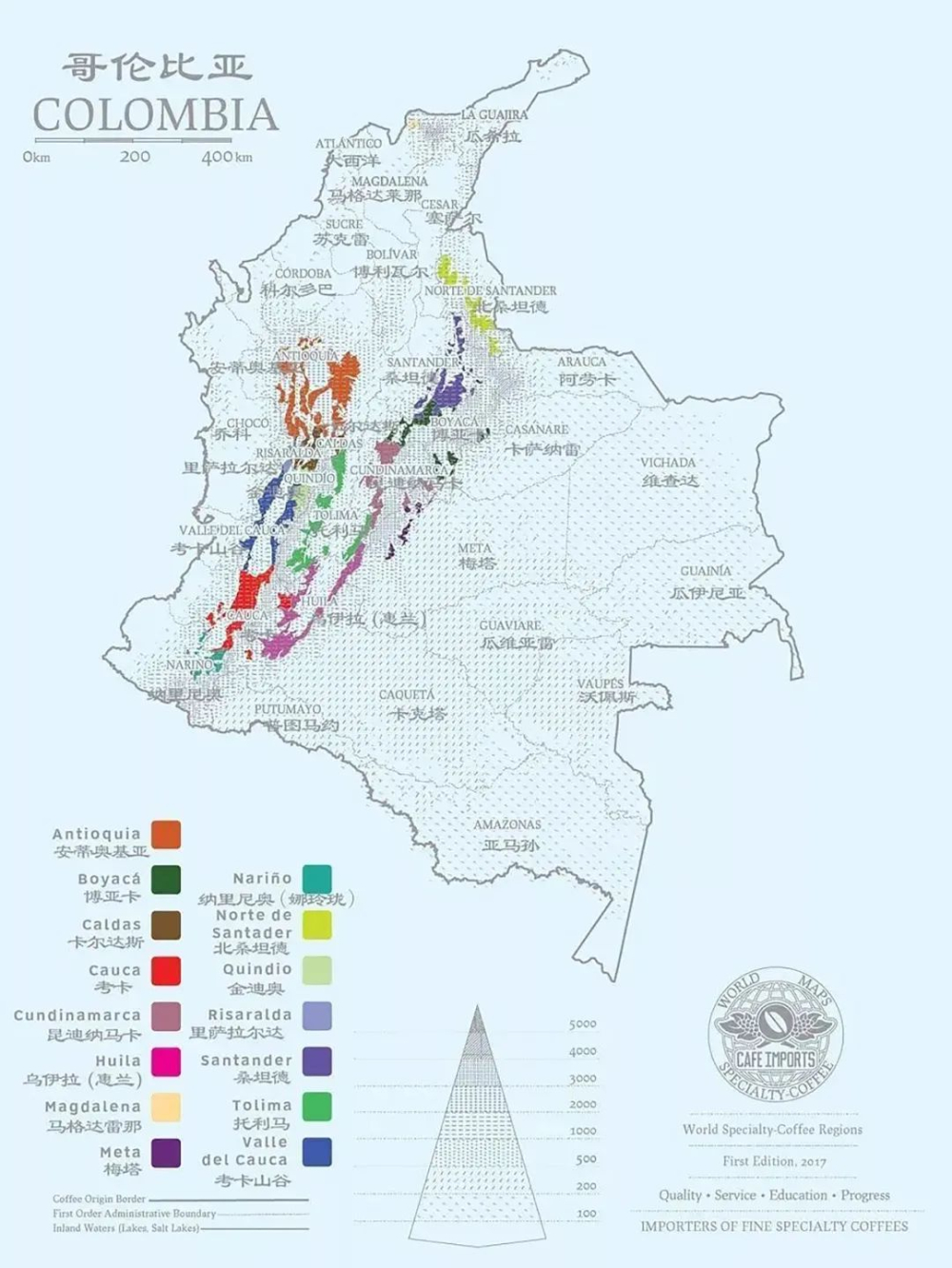
Thanks to its proximity to both the Pacific and Atlantic Oceans, Colombia enjoys some of the most favorable coffee export and transportation conditions in South America, making it a key supplier in the global specialty coffee market. The country’s coffee cultivation is primarily concentrated in the Eastern and Central Cordilleras as well as the high-altitude regions of the south. Among these, the five regions of Medellín, Santander, Huila, Cauca, and Nariño are the most representative. Due to differences in altitude, climate, and soil composition, these regions produce a wide spectrum of flavor profiles, ranging from rich, nutty notes to bright, fruity characteristics.

Colombian coffee is known for its full-bodied aroma, bright acidity, and layered complexity. Some regions even offer unique nutty and honey-like aftertastes, delivering an overall balanced cup. Notably, between 2008 and 2011, Colombian coffee claimed the top spot in the SCAA International Cupping Competition for four consecutive years, underscoring the consistency and excellence of its quality. In the following sections, we will focus on these five regions, exploring their growing environments, flavor characteristics, and practical roasting and brewing recommendations to give you a comprehensive understanding of the diversity within Colombia’s specialty coffees.

Colombia’s main specialty coffee-growing regions are located in the central and southern mountainous areas. Among them, the central mountainous zone—comprising Medellín, Armenia, and Manizales—forms the traditional “MAM Golden Triangle.” These three areas sit at altitudes of around 1,400 to 2,100 meters and are renowned for their tightly structured coffees with balanced sweetness and acidity. In contrast, the eastern province of Santander, despite having a vast planting area of 30,537 square kilometers and an average altitude of 1,400 to 1,600 meters, is one of the earliest regions in Colombia to cultivate coffee. Though it accounts for only about 5% of the country’s total production, it offers distinctive herbal freshness and a rich, lingering finish. As for the southern regions—such as Huila, Cauca, and Nariño—their high altitudes and unique microclimates yield livelier acidity and complex fruit aromas, making them emerging premium zones that have garnered significant international attention in recent years.
Medellín
Located in northern Colombia, Medellín is one of the regions in the MAM Golden Triangle. Its coffee is known for its plump beans, rich aroma, balanced acidity, and especially pronounced sweetness. This coffee is well-suited for dark roasting, which can further enhance its intense fragrance and full-bodied mouthfeel. It’s worth noting that Medellín coffee exported by the FNC cooperative often demonstrates superior quality consistency and cleanliness, resulting in higher prices and greater preference among professional buyers.
Santander
Santander Province in northern Colombia sits at elevations between 1,400 and 1,600 meters and covers a vast area. It is one of the earliest regions in Colombia to grow coffee and currently contributes about 5% of the nation’s total output. The coffee from this region is characterized by strong flavors, long-lasting aftertastes, and a distinctive herbal character. One producer once released a Santander Rosa Valley coffee bean processed using anaerobic double enzymatic washed method, grown at 1,700 meters altitude with the Caturra variety. Its flavor profile was astonishing, featuring pronounced notes of peach, rose, and liqueur chocolate. The cup was as vibrant as fresh peach juice, while also balancing the sweet-tartness of black grapes and the creamy smoothness of toffee.
Huila
Located in southwestern Colombia, Huila is one of the country’s major coffee-producing regions, accounting for approximately 12% of the national output. The region is home to several renowned micro-lots, some of which have even become brand symbols. Huila coffee primarily features nutty, dark chocolate, and caramel notes, with a full body and rich layers of flavor. One producer’s Huila coffee beans, grown at 1,500 to 1,800 meters altitude with the Caturra variety and washed processing, clearly expressed the richness of nuts and dark chocolate, paired with gentle fruit acidity, resulting in an overall balanced and smooth cup.
Cauca
Cauca Province is situated in southwestern Colombia and is one of the country’s certified coffee origin regions. With an average altitude of 1,758 meters—and some areas exceeding 2,100 meters—it is a mountainous region characterized by significant diurnal temperature variations (around 11°C), with daytime averages around 18°C. Such temperature fluctuations slow down the ripening process of coffee cherries, helping the beans accumulate more complex flavor compounds, thus giving Cauca coffee its standout acidity and unique sweetness. One producer’s Cauca Sakura coffee beans, grown at 2,050 meters with the Castillo variety and processed using double anaerobic washed method, delivered a juicy berry-like freshness, complemented by strawberry jam, mint tea, and lingering notes of mugwort and basil, resulting in a delicately layered and captivating cup.
Nariño
Nariño is located in the southwesternmost part of Colombia. Though it accounts for only 3% of the national coffee production, it boasts exceptionally ideal coffee-growing conditions. Positioned near the equator—at around 1 degree north latitude—it enjoys abundant year-round sunlight. Elevations generally exceed 1,600 meters, with some areas reaching up to 2,300 meters. The rugged terrain and elevation variations create diverse microclimates, while the perennial snow-capped mountains provide a shield, protecting high-altitude areas from frost damage. Additionally, volcanic soils are rich in nutrients, and the distinct wet and dry seasons further contribute to the unique flavors and outstanding quality of Nariño coffee.
Roasting and brewing parameters should be tailored to the characteristics of coffee beans from different regions. For example, one producer recommended using the Yangjia 800N roaster for Huila coffee beans, with a charge of 500g, an inlet temperature of 185°C, adjusting heat and air vent based on temperature, allowing 3 minutes of development after first crack, and dropping the beans at 202°C—to fully bring out the nutty and chocolatey flavors. As for Nariño coffee beans, it is recommended to use a Hario V60 #01 filter, a water temperature of 90–91°C, a brew ratio of 1:15, medium-fine grind, and a three-stage extraction method. This approach effectively highlights the coffee’s rich tropical fruit and floral characteristics.
The above content is compiled by CoffeeHunters, a coffee news website.


