







Introduction:India is the world’s fifth-largest coffee producer, with a long-standing coffee culture. Its unique geography and processing techniques give rise to beans with distinctive flavor profiles. This article delves into the characteristics of India’s five major coffee varieties, explores the unique production process of Monsooned Malabar, and shares expert roasting and pour over parameters to help you fully master the brewing essentials and flavor profile of Indian coffee.
India is not only one of the earliest countries in Asia to cultivate coffee but also a significant global coffee-producing region. As early as the 17th century, the Muslim pilgrim Baba Budan brought seven coffee seeds from Arabia and secretly planted them in the Chikmagalur mountain region in the south. This area is now revered as "Baba Budan Hills" in his honor and remains one of India’s important coffee-growing regions. Over time, Indian coffee has become known for its rich herbal notes and bold body, and even more so for the uniquely flavored "Monsooned Malabar" produced through its distinctive monsoon processing method, securing a place in the global specialty coffee market.
Indian coffee is predominantly grown in the high-altitude mountainous regions of the south, at elevations between 800 and 1,600 meters. The climate is mild and variable, with diverse vegetation, contributing to the rich complexity of the coffee beans’ flavors. Approximately 900,000 hectares of land in India are used for coffee cultivation, over 90% of which are smallholder farms. Annual coffee production is around 440,000 to 450,000 bags, making India the fifth-largest coffee exporter globally. Major export markets include Europe, North America, and Asia, with most beans shipped via the Suez Canal, highlighting its importance in the international market.
India’s coffee-growing regions are primarily concentrated in the states of Karnataka, Kerala, and Tamil Nadu, which together account for over 90% of national production. Among these, Karnataka produces the most, accounting for about half of the country’s total output, and grows both Arabica and Robusta; Kerala mainly produces Robusta, making up 30% of the national total; Tamil Nadu grows both, contributing 10%; the remaining regions are mostly emerging areas. Overall, India’s coffee production is dominated by Robusta, which accounts for about two-thirds, while Arabica makes up roughly one-third.
Among the many varieties, India mainly cultivates five major coffee types, each with its own unique flavor and characteristics:
Kent, discovered in 1911 in India’s Malabar region, is a Typica hybrid variety resulting from a cross between S288 and Typica. It is high-yielding and resistant to rust, with a rich and bold aroma, and has served as the base variety for introduction in many Asian countries.
S795S795, also known as Jember, is a hybrid of Kent and Liberica developed in the 1940s. It offers good resistance to leaf rust and delivers a smooth, sweet flavor reminiscent of maple or brown sugar. It is currently the most widely planted Arabica variety in India.
S274S274, a noble small-bean Robusta, has a round and plump appearance with delicate flavors and no astringency, resembling the taste of genmaicha and Japanese tea, with a rich and highly viscous body.
Sln C×RSLN 9, a hybrid of Congolese and Robusta varieties, is often processed using the natural (sun-dried) method, presenting a unique fusion of spices and fruity acidity, bringing a fresh dimension to the specialty coffee market.
CatimorCatimor, developed in Portugal in 1959 by crossing Caturra and Timor, boasts strong disease resistance and high yield. However, its flavor profile is relatively mild, and it is mostly used for commercial purposes.
Indian coffee has a unique grading system based on variety and processing method. Arabica is divided into washed (Plantation) and natural (Cherry) categories, with washed beans graded by size and quality into A, B, C, BBB, and Bulk grades. Robusta uses Parchment as the washed grade, with AB being the highest, followed by C, BBB, and Bulk. This grading system helps buyers select beans of different qualities according to their needs.
When it comes to Indian coffee, one cannot overlook its most iconic specialty processing method—Monsooned Malabar. This technique originated in the 17th to 18th centuries, when coffee beans were transported to Europe by sailing ships. During the six-month voyage, the beans absorbed moisture and salt from the sea, losing some of their acidity but unexpectedly developing rich nutty and grainy notes, with a flavor reminiscent of genmaicha, which became highly favored in the Nordic markets. Today, to recreate this flavor, coffee farmers along the Malabar coast in southwestern India spread sun-dried beans in high-humidity environments during the monsoon season from May to September. By repeatedly turning and stacking the beans, they allow them to naturally absorb moisture over approximately 12 to 16 weeks of aging. The beans are then smoke-treated for pest control and hand-sorted, ultimately yielding golden-yellow, low-acid, full-bodied monsoon coffee.
The key to monsoon processing lies in controlling humidity and ventilation. The coffee beans, starting as sun-dried, are initially spread to a thickness of about 12–20 cm, turned multiple times daily to ensure even moisture absorption, and then bagged and stacked to allow the monsoon air to penetrate. Throughout the process, jute bags are periodically replaced to prevent mold until the beans turn golden, acidity decreases, and volume expands. Finally, after cupping and grading, the beans are exported. This technique not only preserves the coffee’s inherent richness but also imparts a unique harmonious taste, often used in blends to enhance overall body and tea-like qualities.
For roasting Monsooned Malabar coffee, a medium to dark roast is recommended to highlight its low acidity and full body. Taking common professional roasting recommendations as an example, although the beans appear plump, their density is relatively low, requiring stable heat control: charge temperature around 200°C, yellowing point at 4 minutes 50 seconds, first crack beginning at approximately 184.4°C, and dropping the beans at 2 minutes 30 seconds after first crack, with a final temperature of about 197.8°C. Detailed heat and air adjustments should be fine-tuned according to the actual roaster to achieve optimal flavor expression.
In terms of brewing, Monsooned Malabar is suitable for various methods, each highlighting different facets of its diverse flavor profile:
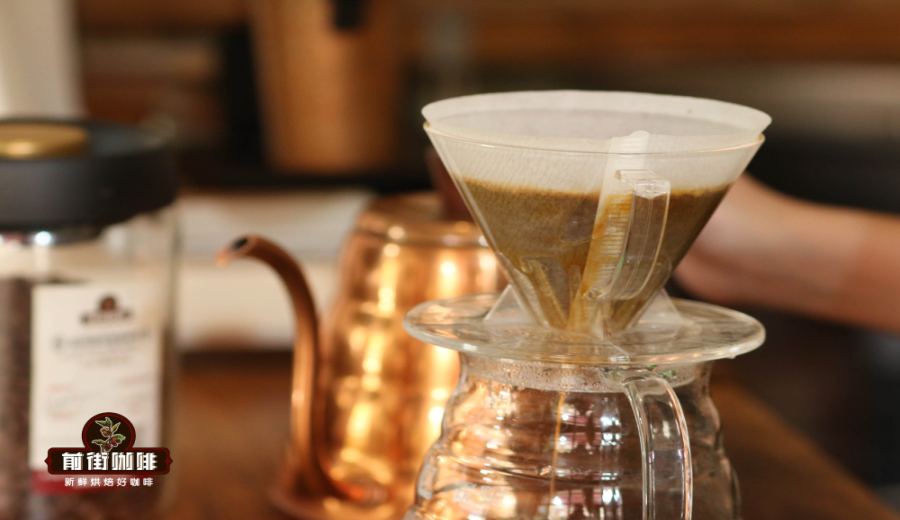
• Pour over using Kono filter: Recommended dose of 15g, brew ratio 1:15, water temperature 88°C, medium-fine grind. Use a step extraction method to bring out plum-like acidity, nutty and creamy aromas, with a finish of rich caramel and genmaicha notes.
• French press: Dose 15g, brew ratio 1:13, water temperature 85°C, coarse grind. Stir and steep slowly for a smooth texture and full body, with flavors centered around fruity acidity, nuts, and chocolate, and a pronounced aftertaste.
• AeroPress: Also 15g dose, water temperature 85°C, inverted method. Highlights creamy and nutty aromas, with a medium body, ideal for those who prefer a mellow mouthfeel.
• Siphon (vacuum pot): Dose 20g, water temperature 84°C, fine grind, short extraction time. Delivers a clean, refreshing cup with mild acidity, hints of chocolate, and genmaicha-like notes, suitable for coffee lovers who prefer a lighter expression.
The above content is compiled by CoffeeHunters, a coffee news website.


