








Introduction:While espresso paired with milk can create a variety of classic coffees, the differences between macchiato, latte, and cappuccino often cause confusion. This article delves into the definitions and compositional differences of these three popular coffees—from the original espresso macchiato to the preparation method of the beloved caramel macchiato—and explains the traditional cappuccino ratio and technical details, helping you understand how to distinguish these coffees at a glance and even replicate professional-grade milk coffee flavors at home.
In the world of espresso-based drinks, the same espresso and milk can yield vastly different flavors and textures depending on ratios and techniques. Drinks like macchiato, latte, and cappuccino, though all based on espresso, differ significantly in the amount of milk used, steaming techniques, and presentation, resulting in unique flavor profiles and layers.
Many people can easily tell the difference between a latte and a cappuccino, but the definition of "macchiato" often remains unclear—some even mistake it for a sweet drink loaded with caramel and whipped cream. In fact, macchiato comes from the Italian word meaning "marked" or "stained," referring to the act of "staining" espresso with a small amount of milk to create a visual contrast, rather than diluting the coffee itself.

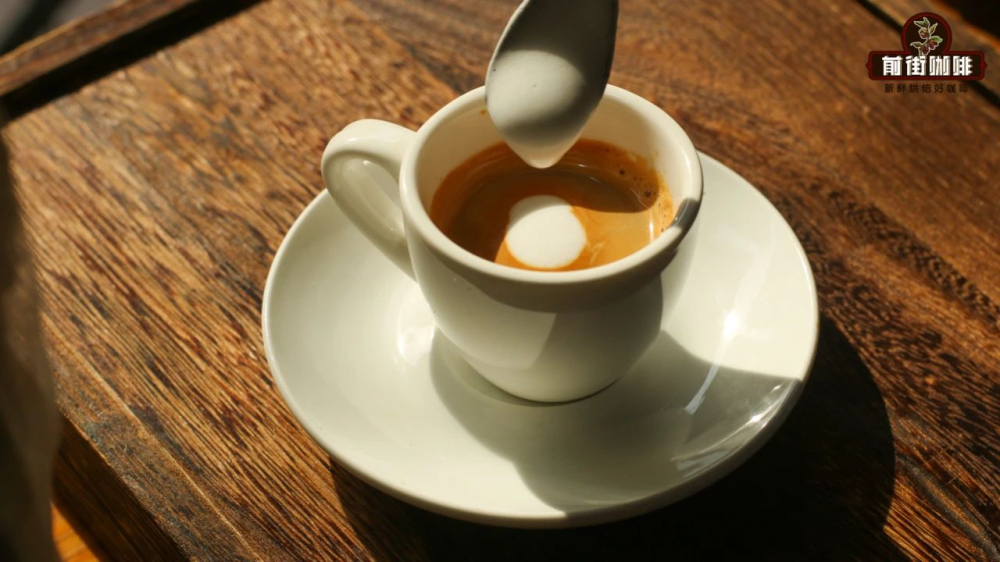
Taking the simplest "espresso macchiato" as an example, it only requires adding a small spoonful (about 1 to 2 teaspoons) of steamed milk foam on top of a shot of extracted espresso. This preserves most of the coffee's original richness and complexity while slightly softening some of the bitterness and acidity with a touch of foam. It’s an ideal choice for coffee lovers who enjoy espresso but want to switch things up occasionally. The process is very simple: pull a shot of espresso, then gently place the foam on top—no additional hot milk is needed.
On the other hand, a latte (Caffè Latte) is the complete opposite: it starts with a shot of espresso, followed by a large amount of steamed milk and a small amount of milk foam, typically in a ratio of 1:3 to 1:5 (espresso:milk). The foam layer is thinner, resulting in a smooth overall texture with prominent milky flavors, making it suitable for those who prefer milder coffee. In comparison, a cappuccino uses less steamed milk than a latte but has a higher proportion of foam—usually about one-third coffee, one-third milk, and one-third foam, with a foam layer around 2.5 cm thick, delivering a richer and denser mouthfeel.
So what exactly is a caramel macchiato? It’s actually an innovative drink that evolved in the American coffee market, inspired by the concept of the traditional macchiato but with added vanilla syrup, a generous amount of milk foam, and a drizzle of caramel sauce. The preparation involves mixing vanilla syrup with espresso, then pouring in steamed milk and foam, and finally topping it off with caramel sauce and a latte art design. It’s a sweet and layered creative coffee.

The four essential components for making a caramel macchiato are: espresso, fresh milk, vanilla syrup, and caramel sauce. It’s recommended to use a well-balanced blend with rich crema, such as a nutty or chocolate-toned bean, which pairs perfectly with the caramel and milk flavors. Additionally, the viscosity of the caramel sauce should be moderate—too thick and it’s hard to pour designs, too thin and it drips, affecting both appearance and taste.
In practice, start by pulling a shot of espresso (e.g., 20g of coffee grounds yielding 40ml of espresso in 30 seconds), then prepare about 200ml of fresh milk and steam it into foam that’s slightly thicker than a typical latte, keeping the temperature between 55–60°C. Next, add 12ml of vanilla syrup to the cup, followed by the steamed milk until full. Then, pour the espresso from the center of the cup to create a better visual layer—though it’s best to stir before drinking. Finally, drizzle the chilled, more fluid caramel sauce on top of the foam and use the back of a spoon or a latte art tool to draw a pattern, completing a classic caramel macchiato.
As for the traditional cappuccino, there’s a long-standing golden ratio. The most widely circulated standard is "1:1:1," meaning coffee, milk, and foam each make up one-third. For example, in an 180ml cup, the espresso is usually two shots (about 60ml), with 60ml each of milk and foam. This combination results in a 2.5cm-thick foam layer, where the first few sips are primarily delicate foam, gradually revealing the bold flavor of the espresso underneath.
In the past, before the advent of steam wands, cappuccinos were simply heated milk without foam. Later, fine foam was created through physical methods, forming what we know today. Back then, the hallmark of a cappuccino was the foam peak resembling a priest’s skullcap, carefully scooped using a spoon. Today, with the prevalence of steam wands, foam production is more efficient, and while the "skullcap" shape is no longer mandatory, the pursuit remains for a dense, velvety texture and a visually satisfying, nearly full cup.

In summary, though macchiato, caramel macchiato, and cappuccino all belong to the family of Italian milk coffees, their roles and flavor expressions are distinctly different. Macchiato accents espresso with minimal milk, preserving its intense original strength—ideal for those who enjoy rich flavors but want slight moderation. Caramel macchiato uses syrups and foam to create a sweet yet not cloying, multi-layered coffee experience. Cappuccino, with its thick foam and balanced proportions, offers a mellow, dense, and coffee-forward taste. Understanding these fundamental differences allows you to more accurately choose or craft your favorite cup—whether ordering at a café or trying to replicate it at home.
The above content is compiled by CoffeeHunters, a coffee news website.


