








Introduction:Is the pour over coffee you brew at home always vastly different from what you taste in cafés? It might be due to issues with water quality, grind size, water temperature, or brewing technique. This article delves into the six key factors that influence coffee extraction, including coffee bean consistency, water TDS and pH levels, grind size variations, ideal water temperature ranges, coffee-to-water ratios, and a practical three-stage pouring method—helping you make step-by-step adjustments to brew professional-grade coffee at home.
Many coffee enthusiasts share a similar experience: after tasting a well-balanced, layered pour over coffee at a café, they excitedly buy the same type of roasted beans and eagerly try to replicate that great experience at home using the same method. Yet, the result is often disappointing—the coffee may turn out too sour, too bitter, or occasionally have noticeable astringency, off-flavors, or even burnt bitterness. This gap is usually not due to poor technique, but rather overlooking many critical variables that affect extraction.
From batch differences in the coffee beans themselves, to home water conditions, grinder details, water temperature control, coffee-to-water ratio, and actual pouring technique, every step can influence the final flavor. This article will break down these variables in detail to help you identify the root cause of issues and gradually adjust to achieve a home-brewed cup you’re satisfied with.

I. Inconsistent Coffee Bean Batches: Same Bean, Different Flavor
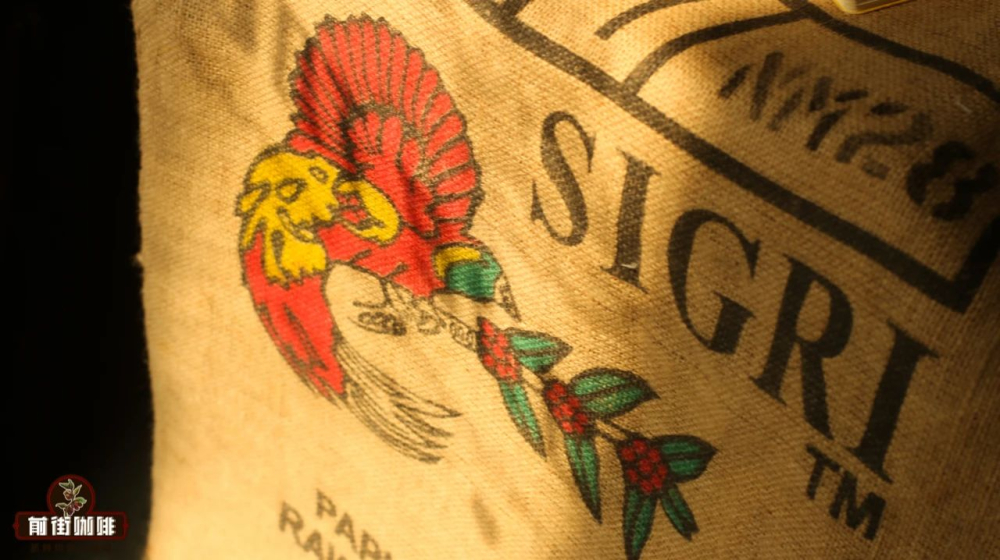
First, confirm whether the coffee beans you’re brewing at home are actually from the same batch as the ones you enjoyed in the café. Even if it’s the same type of bean—such as PWN Golden Mandheling—beans harvested in different seasons or regions may have subtle flavor differences. Agricultural products are inherently influenced by climate, soil, and processing methods, unlike industrial products that can maintain complete consistency across batches. Especially for small farms or emerging producing regions, quality fluctuations may be more pronounced; one batch might have outstanding flavors, while the next could be rather bland.
If you want to recreate the café flavor at home, it’s advisable to check with the shop whether the roasted beans you purchased are from the same season and batch as those used in-store. This is key to ensuring a consistent starting point.
II. Water Quality: The Most Overlooked Key Player
Many people mistakenly believe that just using plain water is enough to brew good coffee, but the composition of the water greatly affects coffee extraction. The pH level of the water is a crucial indicator: alkaline water (high pH) can suppress the acidity of coffee and even bring out undesirable alkaline flavors; conversely, overly acidic water (low pH) can make the acidity overly sharp, affecting overall balance.
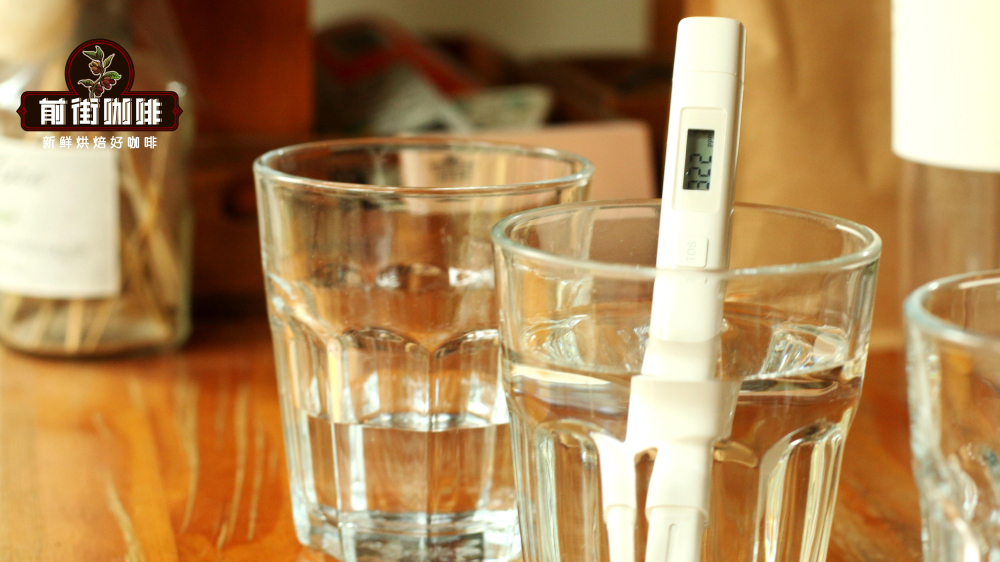
In addition, TDS (Total Dissolved Solids) is another important metric influencing extraction efficiency, usually expressed in PPM (parts per million). According to the SCAA (Specialty Coffee Association of America), the ideal TDS value for extraction water should be between 125–175 ppm. If the water is too hard (TDS too high, above 225 ppm), it may lead to under-extraction of flavor compounds; if the water is too soft (TDS below 75 ppm), it can easily lead to over-extraction, resulting in bitter, astringent, or off flavors. If your home-brewed coffee often seems lacking in vibrancy or too harsh, consider testing the TDS of your tap or filtered water; if possible, use filtered water sources.
III. Grind Size: Details Determine Extraction Performance
Grind coarseness is one of the core factors affecting coffee extraction speed and flavor release. Even if the shop provides a recommended grind size, differences in burr design, grinder type, and machine condition can all affect the uniformity and fines content of the ground coffee. Common burr types include conical and flat (ghost tooth) burrs:
Conical burrs crush beans through a grinding mechanism, producing particles that tend to be irregular chunks. These often form longer water flow paths, making the initial extraction more gentle and helping reduce the release of off-flavors and astringency. However, be aware that cheaper conical burrs may have uneven particle distribution and more fines.
Flat (ghost tooth) burrs grind beans via friction, producing coffee grounds that are closer to spherical, usually with higher particle uniformity. Although they produce more fines, they suit most pour over needs and are especially easier for beginners to achieve stable results.
In practice, it’s recommended to use the Chinese national standard No. 20 sieve (850 microns) as a benchmark: for light roasts, the passing rate is about 75%–80%, and for medium-dark roasts, it falls within the 70%–75% range. This range helps achieve balanced extraction.
IV. Water Temperature: Roast Level Determines the Optimal Range
Water temperature is a key variable controlling coffee extraction efficiency. Generally, light-roasted coffee beans, being denser and firmer in structure, benefit from a higher water temperature (around 90–93°C) to fully extract acidity and aroma; medium-dark roasted beans, which already have more roasted flavors, are better brewed at a lower temperature (86–88°C) to avoid over-extraction and bitterness.
In practice, medium-light roasts can use 90–91°C, while medium-dark roasts are recommended to use 88–89°C. Such temperature settings help balance acidity, sweetness, and body.
V. Coffee-to-Water Ratio: The Golden Balance Between Strength and Lightness
The coffee-to-water ratio directly affects the intensity and flavor expression of the coffee. Commonly recommended ratios are 1:14 to 1:18; the smaller the ratio (e.g., 1:14), the stronger the coffee; the larger the ratio (e.g., 1:18), the lighter it will be. Shops often use a 1:15 ratio—for example, 15 grams of coffee to 225 grams of water—which suits most flavor profiles and makes adjustments convenient.
VI. Three-Stage Pour Over Technique: A Practical Method to Enhance Flavor Layers
Using the commonly applied “three-stage” pouring method can help steadily control the extraction pace and improve overall flavor performance. Here are the steps:
1. Preparation Stage: Preheat the filter cone and server, grind the coffee beans, and measure the water temperature.
2. First Stage (30g of water): Pour water slowly in circles from the center, stopping at around 30g. Let it bloom (sit) for about 30 seconds, during which the coffee grounds will expand to form a “coffee burger” shape.
3. Second Stage (100g of water): Pour water steadily from the center outward, maintaining a vertical water stream to allow bubbles to release, raising the liquid level to the shorter rib position.
4. Third Stage (95g of water): Pour water again slowly from the center. By this stage, the bubbles gradually become less intense, and once the liquid level stabilizes, wait for the dripping to finish.
The advantage of this method is that it balances the completeness and stability of flavor extraction, suitable for most coffee beans and roast levels. It also allows adjustment of each stage’s pouring time and speed according to actual conditions, helping to avoid over- or under-extraction.
The above content is compiled by CoffeeHunters, a coffee news website.


