







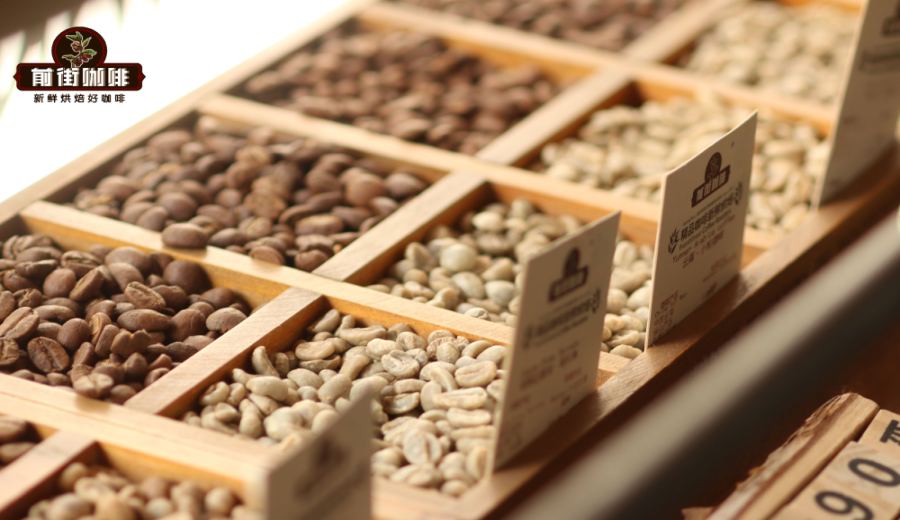
Introduction:In recent years, Yunnan coffee has gradually gained attention in the global specialty coffee market. However, its grading system is diverse and often confusing, making it difficult for consumers to assess quality and flavor. This article provides an in-depth analysis of both official and market-based rating standards for coffee beans from China’s Yunnan region, introduces the varietal evolution of Typica (Arabica) in the area, and explores how to identify high-quality green beans using indicators such as defect rate and bean size. It also shares hands-on pour over parameters and the flavor profiles of two representative Yunnan coffees—Catimor and Typica—to help you make better bean selections and brewing choices.
As a natural agricultural product, coffee beans do not maintain completely uniform standards like industrial products—their size, appearance, and internal flavor can vary significantly. To facilitate trade and classification, each producing region establishes a local grading system for coffee beans, which also serves as an important basis for buyers to evaluate quality. Among the many emerging coffee regions, Yunnan, China, has gradually emerged in recent years, yet its grading system remains plagued by confusion and market-driven standards, leaving many consumers puzzled when making purchases.
So, what standards are currently used to grade Yunnan coffee beans? How do these grades reflect actual flavor performance? This article will guide you through the differences between official regulations and common market classification methods, while also supplementing practical details such as defective bean inspection and the correlation between screen sizes. Additionally, we will explore the varietal evolution of Yunnan’s major cultivars—including the early-introduced Typica and the currently dominant Catimor—as well as their flavor differences and current improvements.
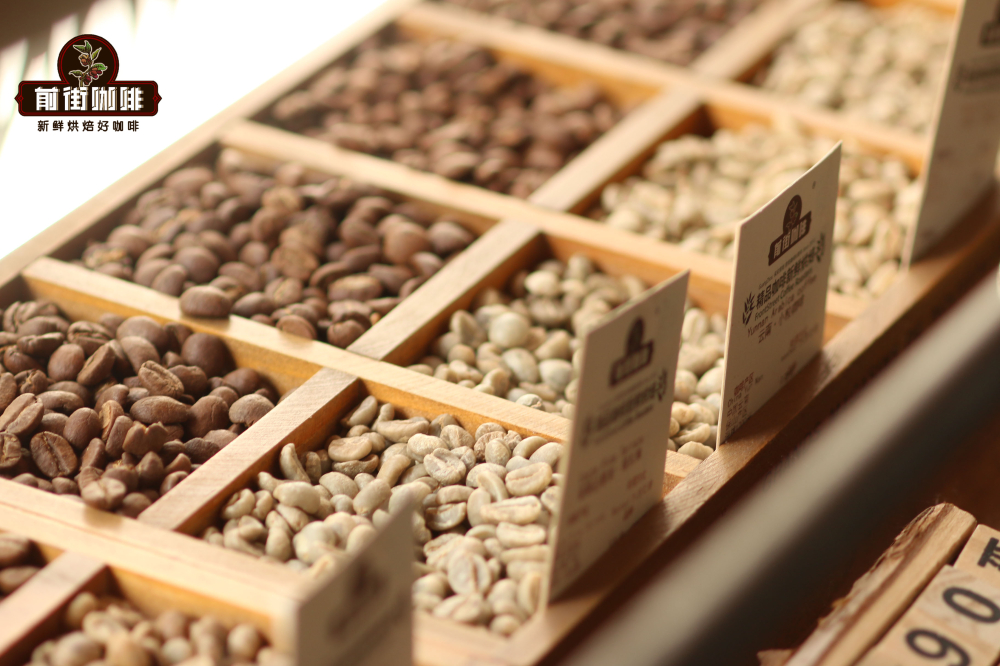
Currently, the grading of Yunnan’s green coffee beans mainly refers to the "Green Coffee Grading Inspection Standard" issued in 2019. However, this official standard has not been fully adopted in the market. Many producers or traders still use self-defined grading methods, commonly based on factors such as bean size, altitude, or even directly adopting grading names from other international regions—like Kenya’s AA, AB system—or creating their own "AAA," "4A" grades, resulting in a serious disconnect between grade and actual flavor. This phenomenon not only makes it hard for consumers to judge quality but also affects the credibility of Yunnan coffee in the international specialty market.
Generally speaking, most Yunnan coffee beans circulating in the market today are still primarily graded based on "bean size" and "defect rate." Among these, bean size refers to the internationally common sieve aperture grading, usually in units of 1/64 of an inch, combined with factors such as the number of defective beans, appearance cleanliness, color uniformity, aroma purity, and moisture content for comprehensive judgment.
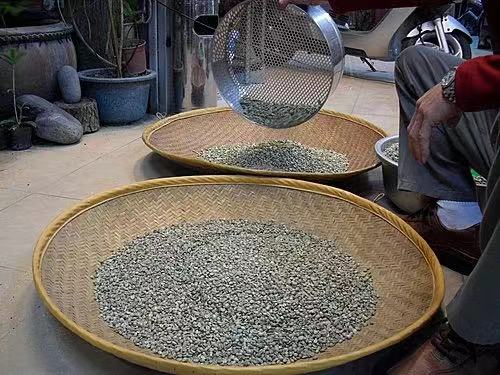
Internationally, the evaluation of coffee bean size typically uses round-hole sieves for classification. The sieve range for small coffee beans (i.e., Arabica) generally falls between grades 10 and 20. These numbers represent the sieve aperture that can be passed, calculated with the number as the numerator and 64 as the denominator, in inches. For example, grade 14 means it can pass through a 14/64-inch aperture sieve, while grade 19 passes through 19/64-inch; the higher the number, the larger the bean. This method helps initially filter out green beans with more consistent appearances and potentially higher density.
As for the domestically commonly used grading standard, it is mostly based on the physical sieve diameter (in millimeters), divided into five grades: Grade 1 is above 6.5 mm, with plump and intact beans; Grade 2 is 6.0 to 6.4 mm, with a relatively symmetrical appearance; Grade 3 ranges from 5.3 to 5.9 mm, with slightly lower integrity; Grade 4 is 5.0 to 5.4 mm, allowing some incomplete beans but requiring at least 75% of the whole to be intact; Grade 5 is below 5.0 mm, with a higher proportion of incomplete beans, usually acceptable if over 30%.
In terms of defective bean and impurity inspection, the international standard involves taking a 300-gram sample and counting the number of defective beans and foreign materials, based on which the grade is determined. This method can more accurately reflect the overall internal quality of a batch of green beans, rather than determining value solely based on appearance size.
When discussing Yunnan’s coffee varieties, one cannot overlook the region’s most representative small-bean type—namely, Arabica. Although the term "small coffee" was historically often used to generally refer to Arabica, in Yunnan, the earliest introduced and well-known variety is actually Typica, a classic Arabica family bean known for its small size and outstanding flavor. However, due to Typica’s weaker disease resistance, in the pursuit of yield, many farmers later switched to planting Catimor, a variety with strong disease resistance and high yield, which has become the main cultivated type in Yunnan today.
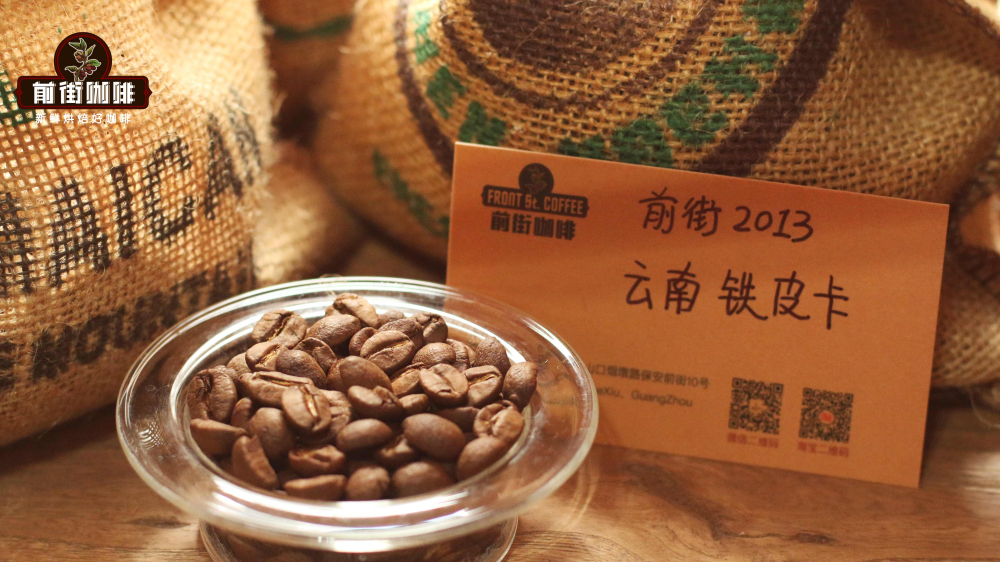
Although Catimor is not as complex in flavor as Typica, with advancements in cultivation techniques and post-harvest processing, many Catimor varieties from Yunnan’s growing regions can now showcase characteristics such as nuttiness, caramel, and even mild fruit acidity. To preserve the original flavor of Typica, a certain coffee brand began trial planting Typica and a small amount of Bourbon in Lincang in 2013. After harvest, they released the "2013 Natural Typica," which features a clean flavor, balanced sweetness and acidity, and a distinct sweet aftertaste—becoming a classic choice for many coffee enthusiasts to experience Yunnan’s native flavors.
Additionally, the Catimor from Baoshan is also a noteworthy item. For example, the "Baoshan Washed Process Catimor" offers a great cost-performance ratio, highlighting nutty tones and caramel aroma, making it suitable for everyday drinking; while the "Baoshan Red Cherry Natural Sun-Dried Catimor" selects 100% ripe red cherries for sun drying, delivering a more pronounced sweetness along with gentle red berry acidity, ideal for consumers who enjoy fruity flavors.
Finally, if you’ve purchased Yunnan coffee beans, here are some practical pour over suggestions for reference: Use a Hario V60 dripper, control the water temperature at 90°C, use about 15 grams of coffee grounds, with a brew ratio of 1:15, and a grind size recommended at 75% passing rate through a Chinese No. 20 sieve. For the brewing steps, start with a 30-second bloom using 30 grams of hot water, then slowly pour water in a circular motion from the center outward up to 125 grams for the first pour, followed by a pause until the water level is about to uncover the coffee bed, then continue pouring up to 225 grams. The total extraction time is about 2 minutes. Additionally, it is recommended to let the coffee beans rest for 4 to 7 days after receipt to achieve optimal flavor development. If you opt for ground coffee service, please note that the rate of flavor volatilization will accelerate after grinding, so brew as soon as possible.
The above content is compiled by CoffeeHunters, a coffee news website.


