







Introduction:Want to understand why Yunnan coffee often gives the impression of having a one-dimensional flavor? The key lies in variety selection. This article provides an in-depth comparison between Yunnan’s dominant Catimor variety and the traditional Typica, examining their actual differences in yield, growing environment, processing method adaptability, and pour over flavor. It also offers expert-level brewing parameter suggestions to help you understand the true potential of Yunnan coffee from the root of its varieties, and find the bean type that best suits your taste.
In Yunnan’s coffee-growing regions, the Catimor variety has almost monopolized the market supply. Many producers attempt to mask its inherent flavor shortcomings through special processing methods (such as anaerobic or honey processing), but such approaches often only create short-term buzz. In reality, as long as traditional processing methods are used along with appropriate brewing techniques, Catimor can still deliver a decent balance of flavors. However, if the goal is to truly change consumers’ stereotypes about Yunnan coffee, reforming from the variety level is the long-term solution.
A certain coffee brand insists on planting the Typica variety at its Baoshan estate in Yunnan, precisely based on this philosophy. This traditional Arabica variety, with a history of over two hundred years, is known for its clean and bright acidity and delicate layers of aroma, and is better able to reflect the unique terroir conditions of Yunnan’s high-altitude growing regions.
Currently, over 90% of Yunnan coffee on the market belongs to the Catimor variety. Producers often use honey processing or dark roasting to mitigate its common grassy or woody notes. But it’s worth considering that what consumers ultimately repurchase are often traditional processed beans that showcase regional characteristics. The key question is: how can traditionally washed or sun-dried Yunnan beans also deliver surprises? The answer starts with variety selection.
The brand chose to plant Typica in Baoshan not only because of its inherently excellent flavor genetics, but also to prove through a real-world example that Yunnan is fully capable of producing high-quality Arabica that can stand shoulder-to-shoulder with premium beans from Central and South America. Although Typica yields only one-third of Catimor’s output, its consistent quality and unique citrus notes are the best foundation for building the region’s reputation.
In terms of planting efficiency, Catimor clearly has the upper hand. Its upright tree structure (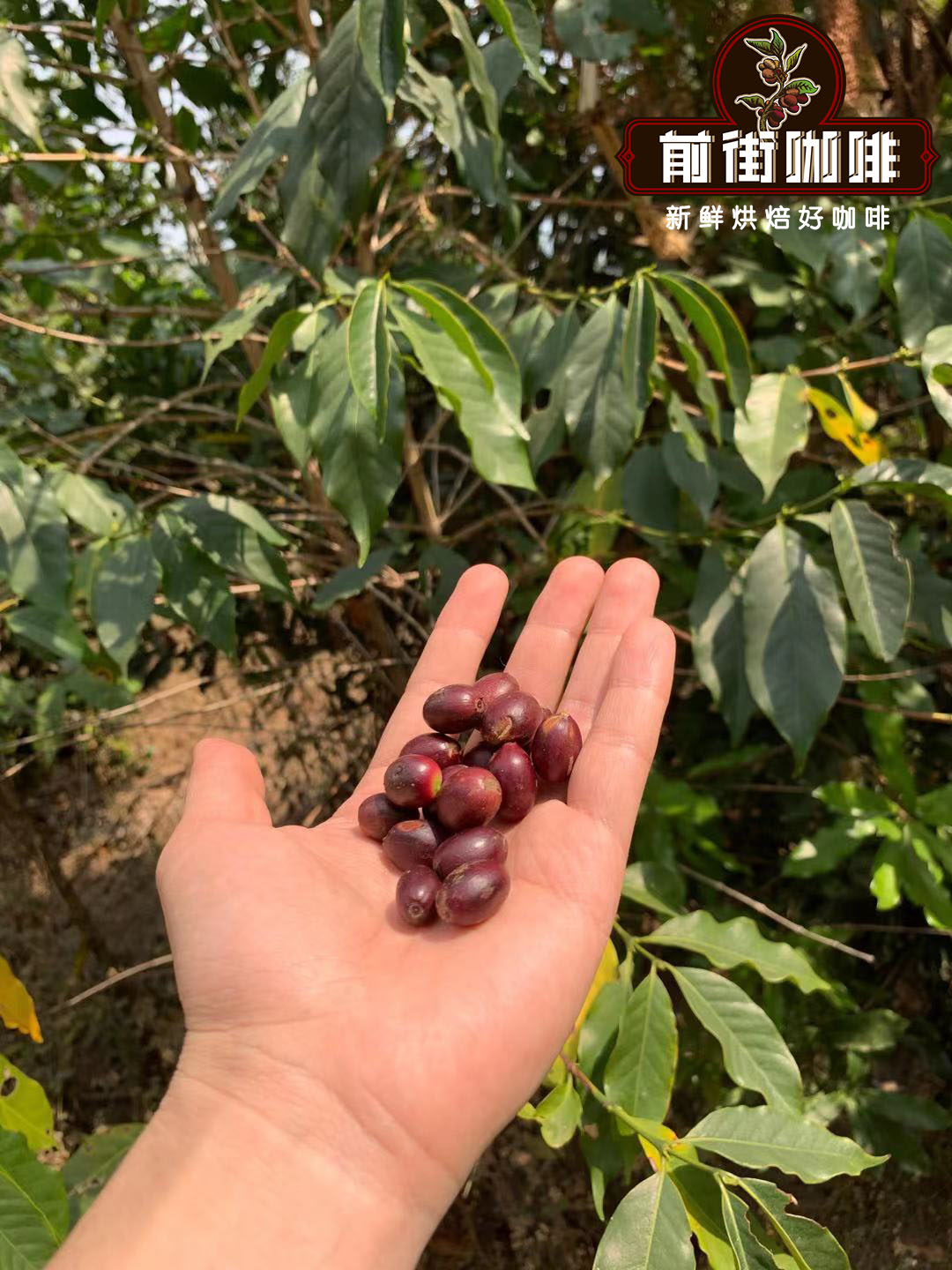
The brand’s Baoshan estate is located in a border area at an altitude of 1200 meters, with nearly perfect climatic conditions: an average annual temperature of 21.5°C, no threat of frost, and evenly distributed rainfall. The Bourbon variety introduced in 2021 is expected to bring more flavor possibilities to the region. Notably, for every 100 meters increase in altitude, the acidity of the coffee becomes brighter, and 1200 meters is the starting point of the golden zone for balanced flavor production.
Even when using the same washed processing method, Typica and Catimor still present distinctly different flavor profiles. During testing, we specifically used the Kono filter (its short rib design extends extraction time by 15–20%), using 15 grams of coffee, a 1:15 coffee-to-water ratio, and 90°C water temperature, conducting a three-stage pour over: the first stage with 30 grams of bloom for 30 seconds, the second stage pouring 125 grams of water in the center (with water flow controlled at 4 grams per second), and the third stage topping up to 225 grams. Total extraction time was approximately 2 minutes and 1 second.
In terms of flavor performance, sun-dried Typica exhibits a distinct tropical fruit profile: the cup opens with melon and herbal aromas, develops into layers of nuts and milk chocolate in the mid-palate, and finishes with a perfect balance of apricot acidity and black tea aftertaste. Meanwhile, washed Catimor presents a typical nutty base, with black chocolate aroma running throughout, paired with a gentle orange peel acidity, delivering an overall steady and easy-drinking profile.
For beginner pour over enthusiasts, it is recommended to start with the Catimor variety—its forgiving extraction window and stable flavor profile make it suitable for practicing the basics. Advanced users can challenge themselves with Typica, and by finely adjusting grind size (recommended 76% extraction through a 0.85mm sieve) and water temperature (fine-tuning within ±2°C), they can coax out more complex layers of aroma. No matter which variety you choose, remember to pay attention to the balance between contact time and agitation—this is the key to extracting a full and complete flavor.
The above content is compiled by CoffeeHunters, a coffee news website.


