







Introduction:Brazilian coffee is often known for its stable and mellow base flavor, but specialty-grade Yellow Bourbon varieties exhibit a distinctly layered profile. This article takes an in-depth look at the Queen Estate Yellow Bourbon from the Mogiana region, analyzing its natural sun-dried processing method and medium-to-dark roast characteristics, and provides detailed practical pour-over parameters and flavor profiles to offer coffee enthusiasts seeking unique single-origin experiences a comprehensive reference.
Brazilian coffee has long been popular for its low acidity and rich notes of nuts and chocolate, making it particularly well-suited as a base bean for espresso blends. However, this does not mean Brazil only produces commercial-grade beans. In fact, within the country’s high-altitude specialty regions, the Yellow Bourbon variety is emerging for its unique flavor potential, with the Queen Estate’s natural processing being the most representative.
Located in the Mogiana region of São Paulo State, the Queen Estate sits at an altitude between 1,400 and 1,950 meters, adjacent to southern Minas and alongside Cerrado and Southern Minas as one of Brazil’s three major specialty coffee regions. The area features distinct topography, with generally higher planting altitudes than other parts of São Paulo, resulting in greater diurnal temperature variations and a slower ripening process for coffee cherries, thereby accumulating richer flavor compounds. The estate primarily cultivates Bourbon-type varieties, with Yellow Bourbon being the most renowned—not only having won accolades in coffee competitions multiple times, but also attracting attention among single-origin enthusiasts due to its special processing methods and roasting style.
Yellow Bourbon is a mutation of the Bourbon variety, named for the orange-yellow hue of its ripe fruits, rather than the more common red. Typical Bourbon cherries transition in color from green to light yellow, then to red, and finally to deep red as they mature from flowering to ripeness; however, due to genetic differences, Yellow Bourbon exhibits a vivid orange-yellow color upon maturity. This trait was first discovered in the 1930s and later confirmed by research from the Campinas Agronomic Institute (IAC), which linked the fruit coloration to genetic combinations such as XcXc (red) and xcxc (yellow). In high-altitude environments, Yellow Bourbon can accumulate higher concentrations of fructose, delivering sweet and juicy flavor profiles. It has ranked in the top three for two consecutive years in Brazil’s Cup of Excellence competition, underscoring its status in the specialty coffee world.
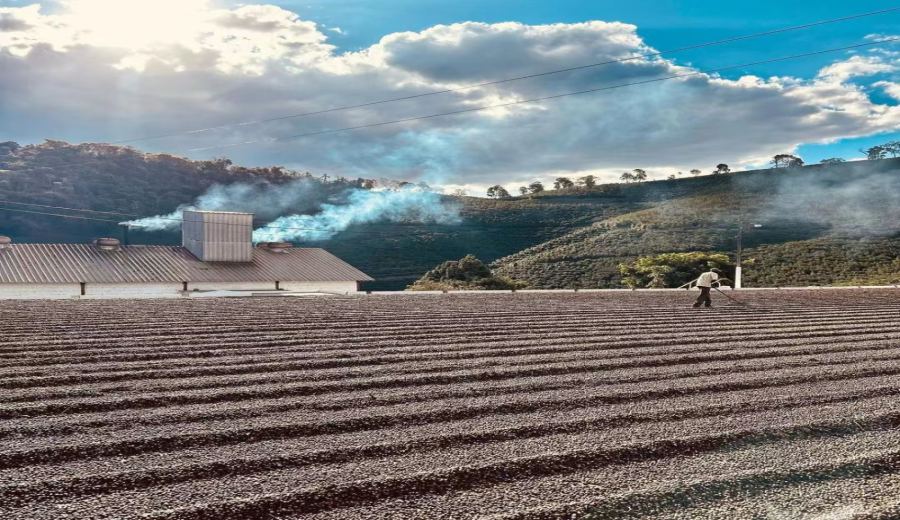
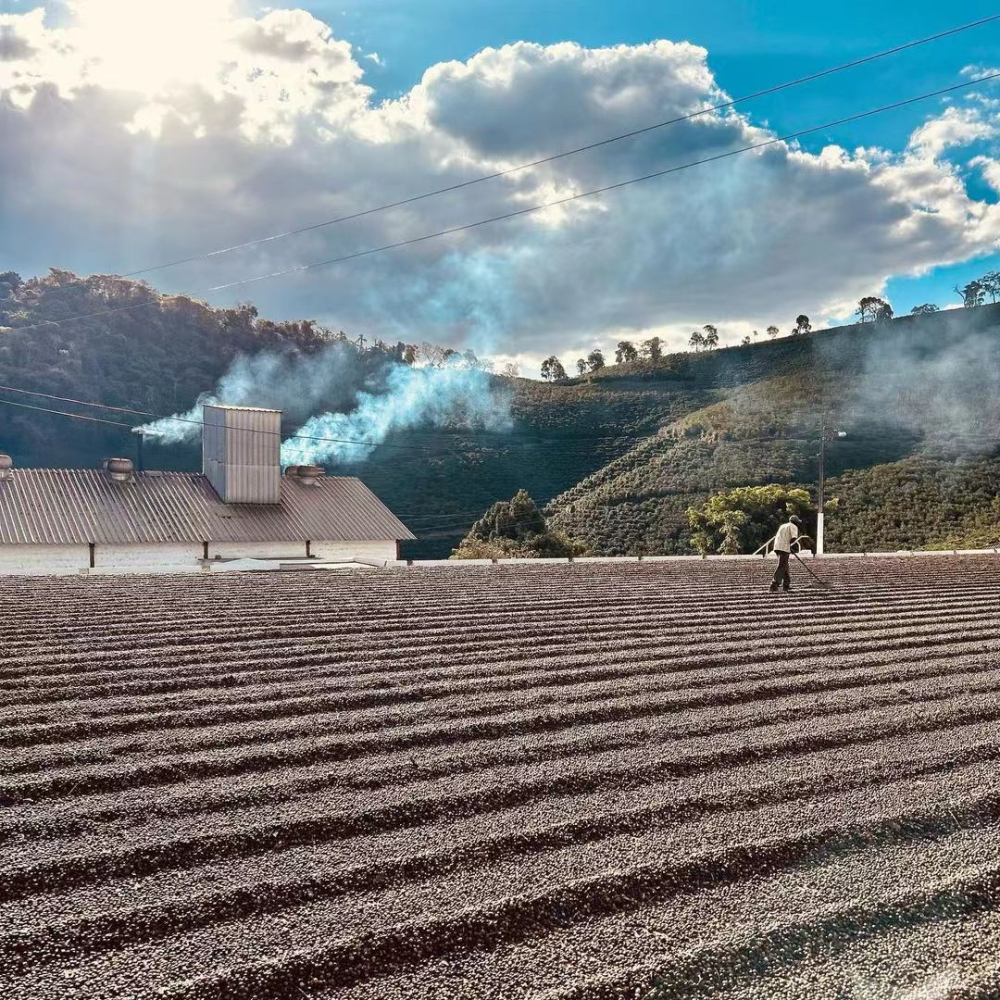
The Queen Estate employs the natural sun-dried method for processing Yellow Bourbon, but in a manner that differs greatly from the traditional and unrefined “overexposure” technique. To avoid issues such as soil contamination and over-fermentation, the estate first floats the harvested coffee cherries in water tanks to remove unripe or defective beans. Then, the cherries are sun-dried in small batches on African raised beds, with regular turning to ensure even drying. This method not only preserves the natural sweetness from the pulp but also imparts a purer flavor profile to the coffee. Since Brazil’s main harvest season coincides with the dry season, the climate is dry and stable—perfectly suited for sun-dried processing.
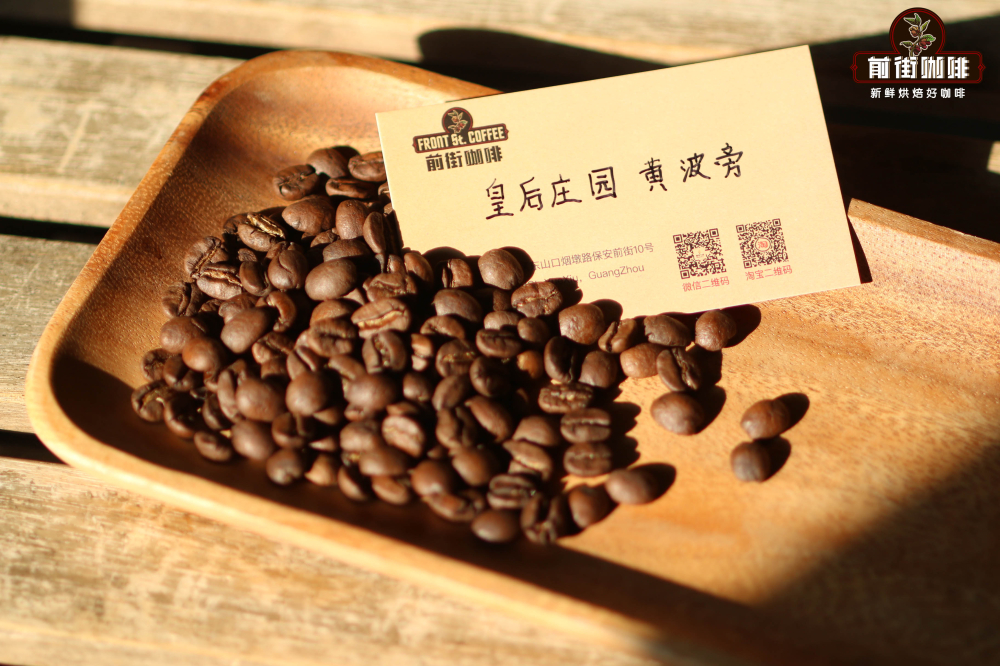
In terms of roasting strategy, specialty coffee roasters (referred to here as general specialty roasters) typically opt for a medium-to-dark roast to highlight the classic traits of Brazilian coffee—low acidity paired with body. This level of roast balances the sweetness and body of Yellow Bourbon while avoiding bitterness caused by over-extraction. Cupping results show that this coffee has notable sweetness and is well-suited for a three-pour pour-over method to fully showcase its layered flavor structure.
It is worth noting that the 4 to 7 days following the roast represent the flavor peak period for the beans. If stored for too long (approximately one and a half months later), the aroma may gradually dissipate and develop woody tones. Therefore, it is recommended that consumers choose freshly roasted beans to achieve the best tasting experience.
Given the characteristics of medium-to-dark roasted beans, it is recommended to use a KONO filter with a slower flow rate for pour-over brewing. The upper part of this filter is a smooth curved surface, while the lower part is equipped with three drainage ribs, which effectively restrict upward airflow and direct hot water to penetrate downward in a concentrated manner, creating an extraction effect similar to that of a siphon, helping to fully release aromatic compounds from the coffee grounds.
Because medium-to-dark roasted beans have a looser structure and strong water absorption, improper parameter settings can easily lead to over-extraction and the release of bitterness. To address this, it is advised to use a slightly lower water temperature and a coarser grind size to control the extraction rate. Specifically, you can use 15 grams of coffee grounds, extracted at a 1:15 coffee-to-water ratio (approximately 225 milliliters total water volume), with water temperature controlled between 87–88°C, and a grind size recommended to be medium-coarse, achieving about a 70% passing rate through a Chinese standard No. 20 sieve.
The suggested pour-over steps are as follows: begin with roughly twice the amount of hot water as coffee grounds (about 30 milliliters) for a 30-second bloom to wet the coffee bed and form a “bloom dome”; then pour with a small stream in circular motions from the inside out until the total water volume reaches 125 grams for the first pour; once the coffee bed drops to about half the height of the filter, continue pouring with the same fine stream for the second pour until the total volume reaches 225 grams. The entire process takes approximately 2 minutes. This approach effectively controls extraction time and flavor balance.
The final brewed Queen Estate Yellow Bourbon coffee emits fresh aromas of lemon, nuts, and peanuts; upon tasting, it reveals rich flavors of nuts, dark chocolate, and caramel, with notable sweetness and a silky-smooth mouthfeel. The overall profile is rounded and layered, making it highly suitable for coffee lovers who enjoy bold and full-bodied flavors.
The above content is compiled by CoffeeHunters, a coffee news website.


