







Introduction:If you want to brew coffee with a rich crema and intense flavor at home, the moka pot is a top choice for many. However, factors such as grind size, water temperature control, and cleaning methods can greatly affect the final taste. This article starts with the basic principles of the moka pot, explaining in detail how to adjust grind size, select the right coffee beans, and properly clean the device after daily use, helping you quickly master the usage tips of this classic Italian-style brewing tool.
Thanks to its affordable price and simple operation, the moka pot has become an entry-level tool for many households or coffee beginners to try making strong coffee. But many users often have one question: can coffee brewed with a moka pot produce a rich crema like that from an espresso machine? The key lies in the grind size of the coffee grounds and the overall extraction method.
For consumers familiar with café-style espresso, that layer of rich golden coffee crema is always captivating. However, the moka pot does not extract coffee under high pressure (such as 9 bar), so although the resulting liquid is strong, it cannot be considered espresso in the strictest sense. It is more akin to a “espresso-style coffee” produced through pressure extraction, albeit at significantly lower pressure.
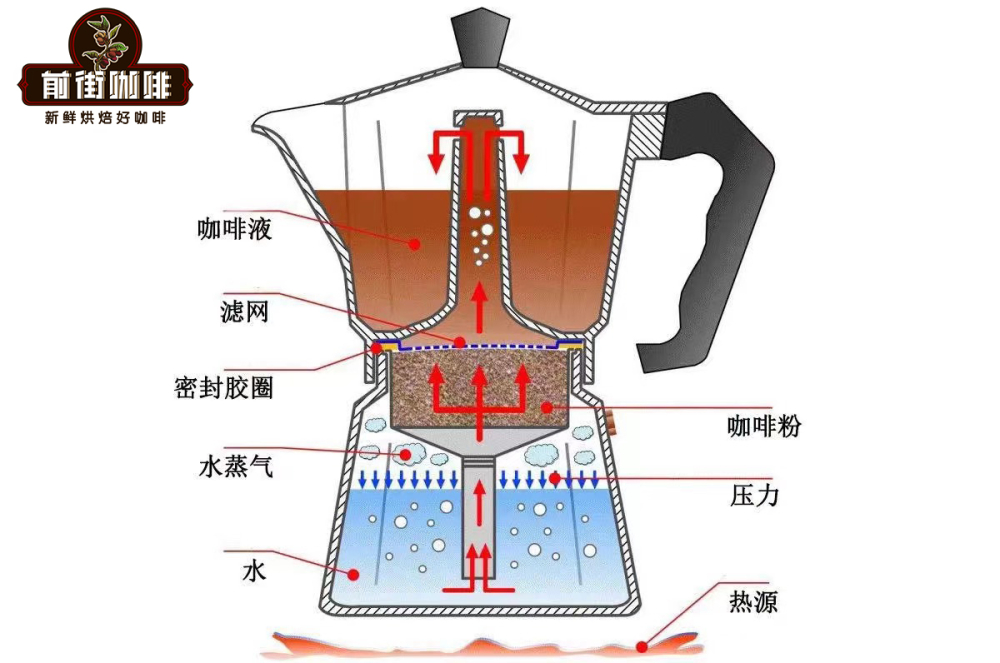
The moka pot consists of three main parts: the bottom chamber, the filter basket, and the top chamber. It uses the steam pressure generated by heating to push water upward through the layer of coffee grounds in the middle, which then drips into the top chamber. Although this method cannot produce the high pressure of professional machines, you can still create layered coffee with a slight crema-like texture by controlling grind size, coffee bed tamping, and heat level.
Generally speaking, the moka pot is recommended to use coffee grounds with a particle size of about0.3 to 0.55 millimeters, which is similar to the grind size used in traditional espresso machines, but can be slightly coarser. If the grind is too fine, water will pass through slowly, easily leading to over-extraction, unusual noises, and prolonged brewing time; if the grind is too coarse, water will pass through too quickly, resulting in under-extraction, weak flavor, or even bumping.
Since it’s difficult to accurately judge grind size with the naked eye, beginners are advised to use two methods for determination: one is to purchase coffee powder labeled “for moka pot” as a reference; the other is to use a sieve or a professional particle size measuring tool. Additionally, you can make adjustments based on actual brewing conditions—for example, if the water flows too quickly, it indicates the grind is too coarse and needs to be finer; if no coffee drips and the pot makes a low humming noise, it means the grind is too fine, and you should immediately turn off the heat and check.

Besides grind size, another important point to note is: the water level in the bottom chamber must never exceed the position of the internal safety valve. During the heating process of the moka pot, water turns into steam, increasing internal pressure. If the water level is too high, hot water or steam may be forced directly into the top chamber, affecting the coffee’s flavor or even causing danger. Therefore, it is recommended to keep the water level at least 0.5 cm below the safety valve when filling to ensure safe and stable extraction.
As for bean selection, since the moka pot tends to produce stronger flavors, it is recommended to use medium-dark to dark roasted coffee beans, which can better showcase caramel, nutty, and chocolatey flavor profiles. For example, Indonesia’s Golden Mandheling or Brazil’s naturally processed Queen Estate Yellow Bourbon beans are excellent choices. These types of beans usually have higher sweetness and body, complementing the moka pot’s extraction style well.
If you prefer fruity or floral notes, you can also choose beans such as Costa Rica honey-processed or Ethiopian natural sun-dried varieties. Even when using a moka pot, these can still exhibit rich fruit characteristics while maintaining a certain level of crema-like texture and flavor layers.
Finally, cleaning the moka pot is also an aspect that many users tend to overlook. Since the pot is mostly made of aluminum alloy, avoid using strong alkaline or acidic cleaners during cleaning to prevent corrosion of the metal surface. It is recommended to rinse the pot with warm water and a neutral detergent while it is still warm after each use, and gently scrub the filter basket and filter screen with a soft brush to avoid coffee grounds residue that might affect the next brew.
In summary, as long as you master the appropriate grind size, suitable beans, and correct cleaning methods, even with an affordable moka pot, you can easily brew strong coffee at home with a flavor profile close to that of a café-style espresso, enjoying the pleasure of rich crema and smooth-tasting coffee.
The above content is compiled by CoffeeHunters, a coffee news website.


