







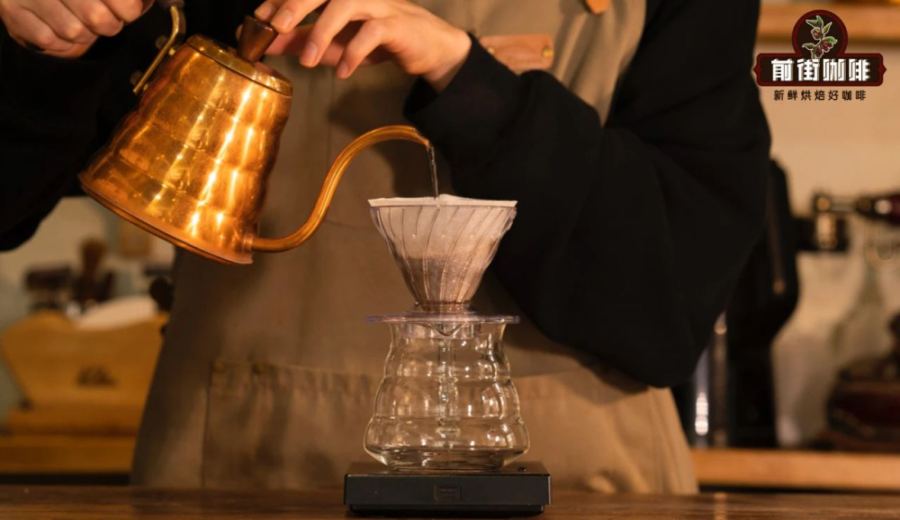
Introduction:Want to brew a refreshing and mellow Japanese-style iced coffee at home? This article dives deep into the characteristics of Japanese iced pour over, helping you understand its key differences from iced americano and cold brew. It also provides practical pour over parameters, including coffee dosage, ice ratio, water temperature, grind size, blooming, and pulse pouring techniques, to help you master the extraction essentials. Whether you're using Yirgacheffe or other light to medium roast beans, you’ll be able to consistently brew bright, fruity, and well-layered iced coffee.
Japanese coffee culture has always emphasized detail and craftsmanship, with a particular preference for the rich and bold flavors brought by medium to dark roasts—Blue Mountain and Mandheling being classic local choices. However, when summer arrives, a refreshing iced coffee becomes a salvation for many coffee enthusiasts. This article will introduce you to the unique charm of Japanese iced coffee, starting with its advantage of quick preparation, comparing it with iced americano and cold brew, and providing a detailed walkthrough of the full iced pour over process, including brew ratio, water temperature control, grind coarseness, blooming time, and pulse pouring techniques. It also offers an expert analysis on the common question of whether “cold brew iced coffee can be served without ice,” reminding you of the impact of low temperature on flavor perception so you can easily brew your own perfect iced coffee.

One of the appeals of Japanese iced coffee is its convenience. Compared to cold brew that often requires over ten hours, Japanese iced pour over only takes just over two minutes to produce a cup of coffee with clear, bright, and vibrant flavors. The biggest advantage of this method is its speed—you can enjoy a layered and nuanced cup instantly, even on impulse, without compromising on the depth you’d expect from cold brew. In fact, some coffee lovers report that using fruit-forward beans like Yirgacheffe for iced pour over can even outperform traditional cold brew, with more pronounced flavors and brighter acidity. Its process is similar to regular hot pour over, except that half of the hot water is replaced with ice, cooling the coffee through the freezing process while preserving the delicate extracted flavors.
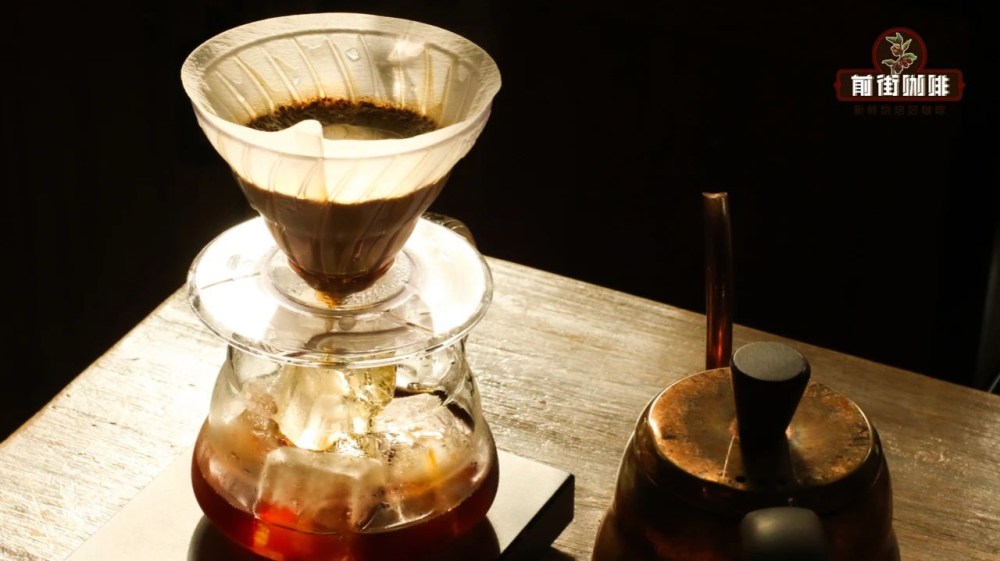
Making Japanese iced pour over isn’t complicated, but every detail affects the final taste. First, it’s recommended to choose medium to light roasted coffee beans with fresh fruit or floral notes—such as washed Yirgacheffe, Kenyan, or Flower Dance (花蝴蝶)—as these varieties can still deliver good acidity and aromatic layers even in a low-temperature environment. It’s suggested to use15 grams of coffee grounds with 100 grams of ice; the amount of ice should be sufficient to ensure the brewed coffee has a suitably chilled feel. Pre-rinse the filter cone and paper with hot water and let them drain—there’s no need for additional warming of the cup or server during the iced pour over process.
Next is setting the water temperature and grind size. It’s recommended to set the water temperature toabout 92°C, slightly higher than the usual pour over recommendation of 91°C, which helps extract enough flavor compounds even in a low-temperature brewing environment. For grind size, if you normally use a fine sugar-like consistency for pour over (e.g., 3.5 on the Hario Mini Mill), then for iced pour over it’s advised to adjust to3 on the Hario Mini Mill, a bit finer, to compensate for the reduced extraction efficiency due to the ice. The overall brew ratio is suggested to be set at1:10, helping maintain flavor balance while controlling overall concentration.
In practice, the first step is blooming. It’s recommended to use40 grams of hot water for about 30 seconds of blooming; during this period, you can gently stir the coffee bed to aid even absorption and degassing, helping subsequent extraction go more smoothly. After blooming, you can begin the small-stream circular pouring. The total pouring volume is recommended to be160 grams, which can be divided into two pours: the first pour of60 grams, and the second pour of40 grams. Use a relatively high and thin stream; while circling, avoid hitting the edge of the filter paper and control the liquid level to prevent overflow.
Due to the finer grind, the overall drawdown speed will be slightly slower, but there’s no need to worry—as this brew ratio makes it unlikely to release excessive off-flavors. Remember, iced pour over mainly highlights the front and mid-palate flavors. If pouring is too concentrated or extended, the bitterness in the later stages might overpower the bright fruitiness and floral notes. It typically takes abouttwo and a half minutesfor all the coffee to fully drip through, which is roughly comparable to the brewing time for a regular 20g pour over. Once all the coffee has dripped out, it’s recommended to gently swirl the server—the ice will have mostly melted by then, maintaining a cool taste without overly diluting the flavor.

During the brewing process, a few key points deserve attention: first is the ice-to-water ratio, which is recommended to be around1:1, though it can be slightly adjusted based on room temperature. Too little ice may lead to insufficient cooling; too much may overly dilute the coffee, affecting overall flavor. Second, regarding extraction yield control—if you find the coffee flavor too thin, it may be under-extracted; if obvious off-flavors appear, it could be over-extracted. Adjustments can be made by tweaking water temperature, grind size, pouring method, and time. Lastly, because a low-temperature environment suppresses our sensitivity to smell and taste and limits the diffusion of aroma molecules, the flavor of iced pour over may not be as intense as that of hot coffee—but it still offers a clean, bright coffee experience, making it highly suitable for summer enjoyment.
The above content is compiled by CoffeeHunters, a coffee news website.


