







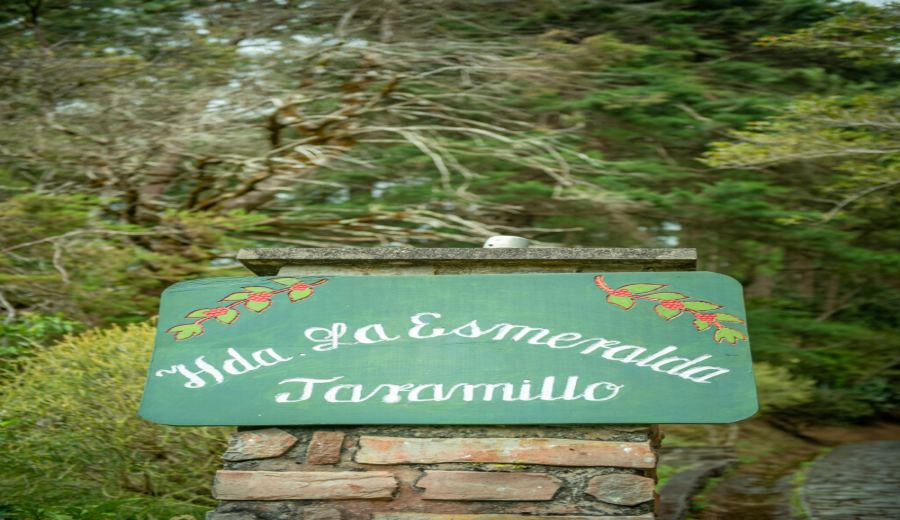
Introduction:In 2021, Panama's Hacienda Esmeralda unexpectedly discontinued its Green Label Geisha, leaving many coffee enthusiasts who enjoyed high-value-for-money Geisha flavors deeply disappointed. However, in the same year, a Geisha coffee from the Boquete region named Las Rocas quietly made its debut. After extensive verification, it was revealed that this coffee is closely related to Hacienda Esmeralda and is regarded as the "spiritual successor" to the Green Label. This article delves into the estate's plot classification system, the grading structure of Geisha, compares the differences between washed and natural processing methods, and provides practical medium-light roasting advice along with a three-stage pour over recommendation, offering a comprehensive interpretation of the unique flavors of the Green Label Geisha and the origins of Las Rocas.
In 2021, Hacienda Esmeralda made a shocking decision for the market—officially discontinuing the Green Label Geisha (Geisha1500) product line. This move surprised and saddened many consumers who had been enjoying the captivating flavors of Geisha at a relatively accessible price point. However, in October of the same year, a Geisha coffee from Panama’s Boquete region, named "Las Rocas," quietly arrived in Hong Kong. After multiple comparisons and verifications by industry experts, it was confirmed that this new product was produced by Hacienda Esmeralda and is seen as a "stand-in" or continuation of the Green Label, successfully filling the gap in the market.
To truly understand the charm of the Green Label Geisha and the connection with Las Rocas, one must first look at Hacienda Esmeralda’s regional distribution and the grading system of Geisha. The estate divides its Geisha cultivation into three core blocks: Jaramillo, Canas Verdes, and El Velo. Each area, due to differences in altitude, climate, and microclimate, is further subdivided into multiple small plots, forming the diverse foundation of Geisha flavors.
Among these, the Jaramillo block receives about 4,000 mm of annual rainfall, with significant day-night temperature variations and an altitude ranging between 1,600 and 1,700 meters. It is subdivided into five small plots: Mario, Noria, Reina, Bosque, and Buenos Aires. The Canas Verdes block has a slightly higher altitude, between 1,600 and 1,800 meters, with an annual rainfall of about 3,500 mm, and includes nine small plots such as Lino, Coronado, and Fundador. As for the newly acquired El Velo block, which sits at an even higher altitude between 1,700 and 1,900 meters, in addition to Geisha and Catuai, it also introduced varieties like Laurina, Pacamara, Mocha, and SL28, divided into seven small plots including Guabo, Portón, and Durazno.
Hacienda Esmeralda classifies its Geisha based on cultivation altitude and cupping scores into three tiers. The highest grade, "Esmeralda Special"—commonly known as the Red Label—is grown at altitudes of 1,600–1,800 meters, with cupping scores above 90 points. It is only produced in the Jaramillo and Canas Verdes regions and is available exclusively through global auctions, offered in both washed and natural processing methods. The next tier, "Private Collection"—commonly called the Green Label—is not auctioned but typically consists of blends from various plots, retaining classic floral and fruity notes similar to the Red Label, and is also available in washed and natural options. The most accessible tier, "Geisha1500," or the Blue Label, is grown at altitudes between 1,400 and 1,500 meters, blending Geisha from all three blocks. Until 2020, it was only available in washed form, but in that year, the natural version was introduced for the first time, making it an entry-level choice for many consumers to experience Geisha flavors.
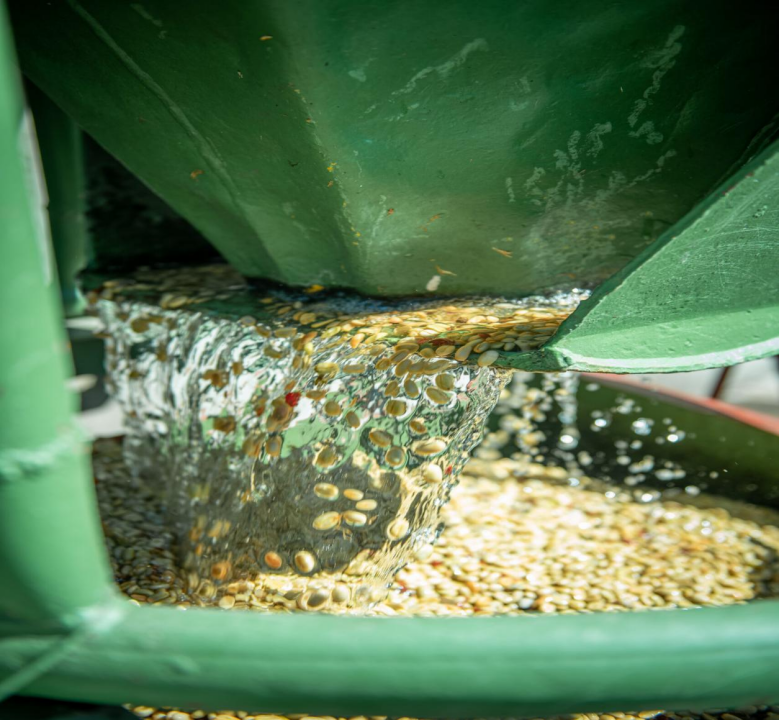
In terms of processing, Hacienda Esmeralda’s washed process is quite meticulous: first, a pulper removes most of the fruit pulp, then the parchment-covered beans are soaked and fermented. Using buoyancy principles, unripe and defective beans are sorted out. Next comes mucilage removal and fermentation, followed by washing with clean water. Finally, the parchmented green beans are dried to a moisture content of 12% before storage. The natural process involves drying the whole coffee cherry in the sun, allowing the beans to fully absorb the fruit’s aromas and flavors while still inside the pulp. This usually requires 3 to 5 days of even drying on concrete patios, followed by 72 hours of rotation in a Guardiola dryer to ensure stable dehydration. Finally, there is a 30 to 45-day “eposo” maturation period to further stabilize the flavors.
For the Blue Label Geisha (both washed and natural versions), one coffee shop presented its refined flavors using a medium-light roast. The medium-light roast parameters are roughly as follows: start with a drum temperature of 180°C, power at 130, and air vent at 3; turning point at 1’32”, and when the temperature drops to 104°C, adjust the air vent to 4; when the bean surface turns yellow and grassy notes fade, enter the drying phase; just before first crack, wrinkles and black speckles appear, at which point attention must be paid to the onset of first crack; first crack begins at 8’30”, air vent opened to 5, development after first crack lasts about 1’28”, and the final drop occurs at 190°C.
For pour over recommendations, use a base of 15 grams of coffee grounds, a 1:15 coffee-to-water ratio, and a fine grind size with 80% passing through a #20 sieve. Water temperature should be controlled at 91°C. Use a three-stage pouring method: the first stage involves pouring 30 grams of water for a 30-second bloom; the second stage is a circular pour of 100 grams, slowing the pour to allow aroma release, until the water level drops halfway; the third stage involves pouring 95 grams of water just as the coffee bed is about to become exposed, totaling 225 grams, with an overall brewing time of about 2 minutes. These parameters help highlight the floral and fruity notes of Geisha along with a clear acidity.
In terms of flavor, the Red Label natural version often exhibits bright rose and citrus aromas, accompanied by berries, apricots, honey, and juicy sensations, with rich layers and a prominent sweetness. The Green Label washed version features jasmine as the main floral note, with high sweetness and complex flavors including citrus, green tea, and citrus peel. The Blue Label washed version excels with gentle acidity from lemon and grapefruit, developing oolong tea and honey aftertastes as it cools. The Blue Label natural version, meanwhile, offers fermentative fruit aromas and tropical fruit sweetness, with intense juiciness and a high level of sweetness.
However, in 2021, Hacienda Esmeralda announced that the Geisha product line for that year would only include the Red Label and Green Label, and the Blue Label disappeared from the official roster, sparking widespread speculation and discussion in the market. Just as many Geisha enthusiasts were feeling disappointed, a volcanic rock Geisha coffee bean from Boquete named Las Rocas appeared on the market in October of the same year. After in-depth investigation, it was found that although this new product was under a new brand name, it actually came from Hacienda Esmeralda and was processed using a washed method similar to the Blue Label. Its flavor profile and accessible positioning were seen as a true continuation of the Blue Label Geisha, successfully taking over the market demand that the Blue Label once fulfilled. For consumers still looking to experience high-quality, high-value Panamanian Geisha, Las Rocas is undoubtedly a choice worth paying attention to.
The above content is compiled by CoffeeHunters, a coffee news website.


