







Introduction:Coffee is many people’s go-to beverage for fighting fatigue, but did you know that the caffeine boost from different types of coffee can vary significantly? This article delves into how caffeine works, compares the caffeine content in common drinks like espresso and Americano, and explores the differences between the two major coffee bean varieties — Robusta and Arabica. Whether you’re a worker needing a quick pick-me-up or a coffee enthusiast chasing flavor, you’ll find the coffee choice that suits you best here.
The reason coffee helps us stay awake lies in its caffeine content. But have you ever wondered why sometimes a single shot of espresso can leave you wide awake, while an Americano might seem less effective? In fact, this directly relates to the caffeine content, which is significantly influenced by both the type of coffee bean and the brewing method.
To understand how coffee provides that wake-up effect, we must first talk about caffeine — a natural central nervous system stimulant. It blocks adenosine receptors in the brain, reducing the transmission of fatigue signals and thereby making you feel more alert. However, the caffeine content in various coffee drinks can differ quite a bit, mainly due to two factors: the type of coffee bean used and the extraction method.
Among the many coffee bean varieties, Robusta generally has a higher caffeine content than Arabica. Typically, Robusta contains about 2% to 2.7% caffeine, while Arabica usually only has about 1% to 1.5%. This means that if you’re looking for a stronger caffeine kick, choosing Robusta beans is the more effective option. On the other hand, if you prefer a coffee with delicate flavors, bright acidity, and want to control your caffeine intake, Arabica beans are more suitable.
In addition, there is also so-called "decaffeinated coffee" on the market. It’s important to note that naturally decaffeinated coffee is still of the Arabica variety, with caffeine content around half that of regular Arabica — approximately 0.6%. For those who are extremely sensitive, it may still have some effect. If you want to avoid caffeine entirely, it’s recommended to choose artificially processed decaf coffee. These products contain almost no caffeine but still retain some of the coffee’s flavor characteristics.
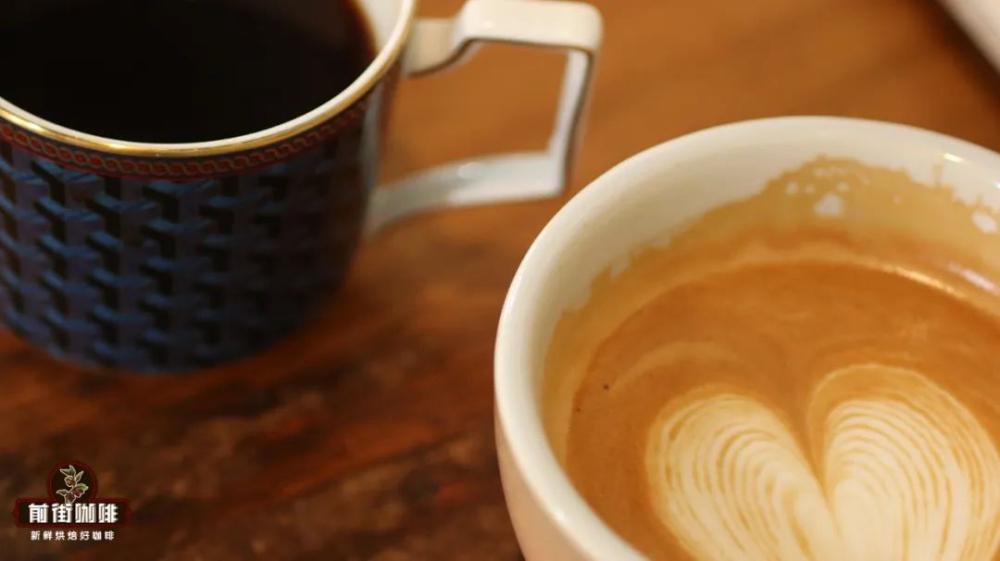
Next, let’s look at which common coffee drinks have higher caffeine content. Taking Arabica beans as an example, a standard shot of espresso (using about 20 grams of coffee grounds and extracting about 40 grams of coffee liquid) contains roughly 100 milligrams of caffeine. This is also the base for many specialty coffee drinks such as lattes, cappuccinos, mochas, and flat whites, so their caffeine content is usually comparable to that of espresso.
As for pour over coffee, the caffeine content varies depending on the amount of coffee grounds and water used. For example, a pour over made with 15 grams of coffee grounds and 195 milliliters of water contains about 90 milligrams of caffeine; whereas using 20 grams of coffee grounds and 260 milliliters of water can result in about 120 milligrams of caffeine. Compared to espresso, pour over coffee has a lower caffeine concentration per unit volume, but due to the larger total volume, the overall intake may not be low.
Instant coffee is another common option, with each packet containing about 50 milligrams of caffeine, making it suitable for those who don’t like strong flavors but still need a caffeine boost. Additionally, cold brew and ice drip coffee have longer extraction times. Based on an 8-hour ice drip or 12-hour cold brew, the caffeine content will vary depending on the coffee-to-water ratio and bean variety, but it is usually similar to hot-brewed coffee under the same conditions.
In summary, if you’re seeking a quick and strong caffeine boost, choosing an espresso made from Robusta beans is the most direct and effective option. If you prefer a coffee with rich flavor layers and soft acidity, an Arabica-based pour over or Americano would be a better choice. With an understanding of the caffeine content and characteristics of various coffees, you can make smarter choices based on your needs and drinking scenarios.
The above content is compiled by CoffeeHunters, a coffee news website.


