







Introduction:Yunnan small-grain coffee is an important representative of domestic coffee in China, but how refined is it? This article starts with its planting origins and variety evolution, explains in detail Yunnan’s five-tier coffee grading standards and emerging evaluation systems, and guides you through unique regional flavors using actual bean offerings such as washed and natural processed beans. It also provides professional pour over brewing parameters to help you deeply experience the charm of Yunnan coffee.
Yunnan small-grain coffee has long been a key topic among China's local coffee varieties. But can it be classified as specialty coffee? To answer this question, we must look back at its long planting history — from early introductions and commercial cultivation to today’s collaborative development with international brands. Although currently dominated by the Catimor variety, which contains some Robusta genetics, resulting in overall flavor that still lags behind traditional purebred Arabica, Yunnan is nonetheless capable of producing high-potential specialty-grade coffee beans.
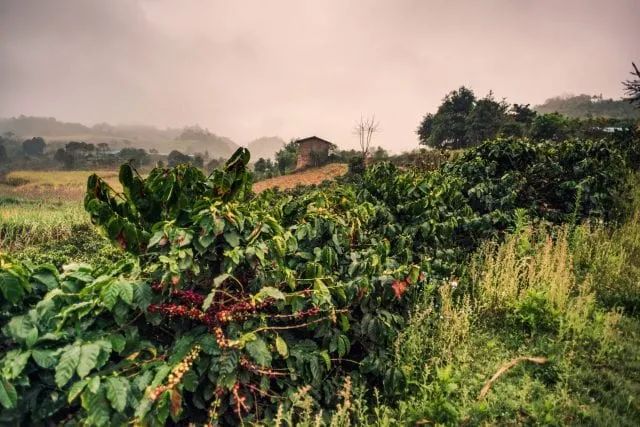
As early as 1904, French missionary Téodore Monnier planted the first coffee tree in Zhugula Village, Binchuan, Yunnan, marking the beginning of coffee cultivation in the region. Subsequently, in 1937, overseas Chinese Liang Jinshan introduced coffee seeds from Myanmar and conducted trial plantings in the Longjiang Dam area of Baoshan. The real push for large-scale coffee planting came in 1952, when experts led by Ma Guojin from the Chinese Academy of Agricultural Sciences systematically developed the industry, primarily supplying the Soviet market. By 1988, with Nestlé establishing a branch in Yunnan and introducing the disease-resistant, high-yield Catimor variety — along with guaranteed market-price purchases — Yunnan coffee truly stepped onto the international stage. Later, brands like Starbucks also entered the region, further driving the expansion of the entire industry.
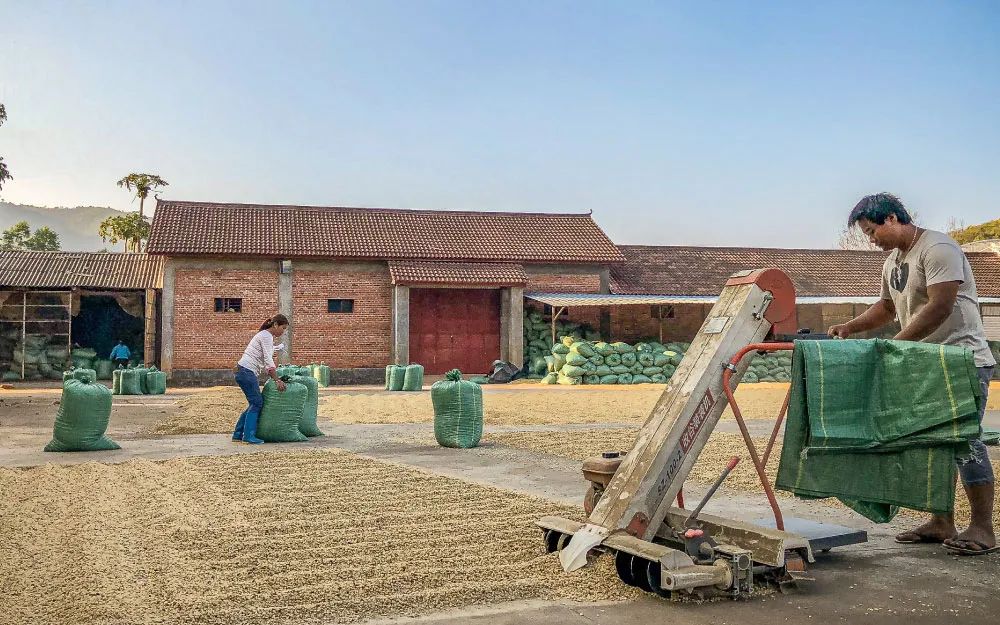
However, because the Catimor variety initially chosen by Nestlé carries one-quarter Robusta heritage, it boasts strong disease resistance and stable yields but relatively sacrifices the delicacy of flavor. Coupled with many farmers using relatively simple processing methods, the majority of Yunnan coffee beans have been categorized as commercial-grade beans, mainly used for instant coffee or low-tier blends. Therefore, although Yunnan produces a small number of specialty coffee beans with outstanding flavor profiles, their overall proportion remains limited. Compared to renowned producing regions like Ethiopia or Panama, there is still a certain gap to bridge.
Currently, Yunnan’s coffee grading system has not yet fully aligned with international standards, but it is still divided based on several specific criteria, including screen size, bean color, cleanliness, aroma, and moisture content, to evaluate the basic quality of the beans. Generally, classification is based on screen sizes of 6.5 mm, 6.0 mm, 5.5 mm, and 5.0 mm, divided into five grades:
Grade 1 beans have a screen size of 6.5 mm or above, with plump and intact beans; Grade 2 ranges from 6.0 to 6.4 mm, being full and relatively uniform; Grade 3 is 5.3 to 5.9 mm, fairly full but slightly less uniform; Grade 4 is 5.0 to 5.4 mm, allowing a small amount of broken beans but requiring over 75% intact beans; Grade 5 is below 5.0 mm, with a higher proportion of broken beans, though intact beans must make up at least 30%. In terms of color, Grade 1 beans are best with light blue, light green, light white, or light yellow hues and even coloration; Grades 2 and 3 also have light tones but slightly inferior overall color; Grade 4 may show yellow or slight brown tones; Grade 5 exhibits obvious color mottling. For cleanliness, Grade 1 requires over 70% silver skin removal and no impurities; Grades 2 and 3 require 65% and 60% cleanliness, respectively. Regarding aroma, those with fermentation off-odors, rancidity, or pungent smells receive lower evaluations. Finally, moisture content must be controlled at no more than 12% to ensure stable storage and consistent quality.
To enhance Yunnan coffee’s international competitiveness and trading transparency, the Yunnan International Coffee Exchange Center (YCE) established in Pu'er City formulated a new grading system in 2019, specifically for the mainstream washed processing method. It references the evaluation frameworks of the Specialty Coffee Association (SCA) and Coffee Quality Institute (CQI), enabling farmers and traders to grade and price beans based on more scientific indicators, further promoting the development of specialty coffee in the producing region.
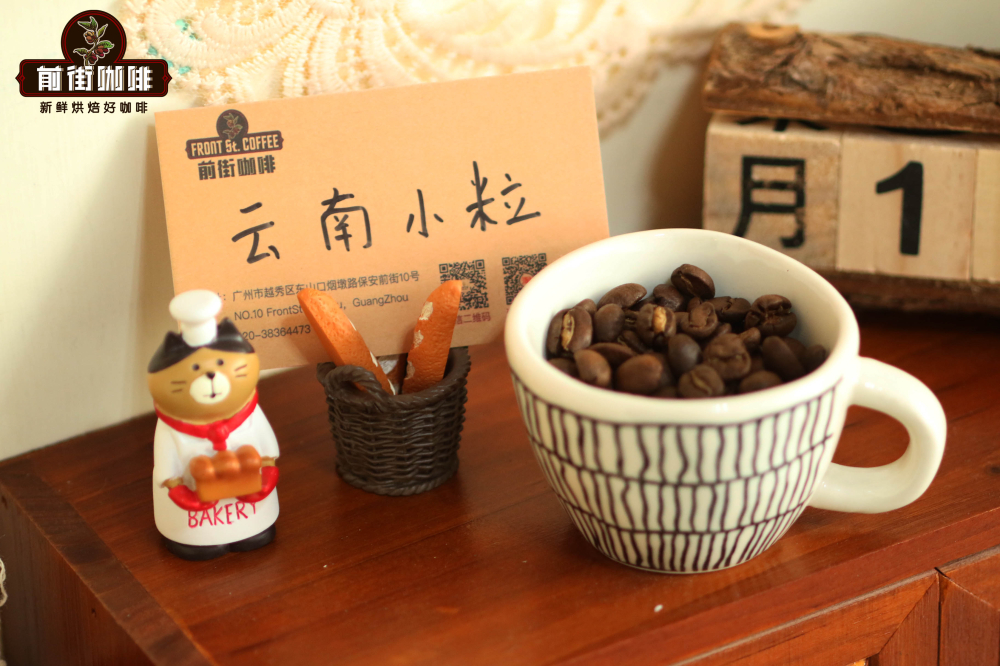
If you want to experience the potential of Yunnan coffee, it is recommended to start with washed beans, as the removal of the fruit flesh layer during processing allows the inherent flavor characteristics of the coffee itself — commonly referred to as the “Yunnan taste” — to be presented more clearly. On the menu of a certain coffee shop, washed Yunnan small-grain coffee serves as a representative entry-level option, allowing people to get a preliminary sense of the region’s unique tonality.
In addition, there is also a naturally processed bean released under a proprietary brand name. These beans come from Typica variety planted in the Lincang region starting in 2013, a traditional and relatively high-maintenance Arabica species, with the first harvest occurring only in 2020. Using the natural processing method, more fruitiness and sweetness are preserved. After cupping, these beans exhibit a complex aroma of plum, dried fruit, chocolate, and nuts, with balanced and layered flavors.
For brewing recommendations, it is advised to use a Hario V60 dripper, with a coffee dosage of 15 grams, water temperature around 90°C, grind size passing 75% through a #20 sieve, and a coffee-to-water ratio set at 1:15. Specifically, a three-stage pouring method can be employed: the first stage involves pouring double the coffee dose in water for blooming for about 30 seconds; the second stage uses a small stream to pour in a circular motion from inside out until reaching 125 grams, then pause for a split pour; after the coffee bed drops to the middle of the dripper, continue with the same fine stream to pour up to 225 grams to complete extraction, with the whole process taking approximately 2 minutes. This helps fully highlight the flavor characteristics of Yunnan beans.
In summary, although Yunnan small-grain coffee is currently dominated by commercial-grade beans, its specialty potential cannot be overlooked. Whether washed or naturally processed, as long as you deeply understand its regional characteristics and processing techniques, and pair them with suitable brewing parameters, you can savor the unique coffee flavors of this land.
The above content is compiled by CoffeeHunters, a coffee news website.


