







Introduction:The coffee-to-water ratio is one of the key factors influencing the flavor of pour over coffee. Different ratios not only alter concentration and extraction yield but also directly affect the complexity of the coffee's profile. This article compares the variations from a 1:14 to 1:18 coffee-to-water ratio through experiments, analyzing in depth their impact on the flavor of Ethiopian Yirgacheffe coffee beans. It also extends the discussion to the limitations of traditional Americano ratios, helping coffee enthusiasts accurately grasp the extraction logic from pour over to espresso.
To brew an outstanding cup of pour over coffee,the coffee-to-water ratiois one of the most critical variables. Through systematic comparative experiments, we observed significant effects of different coffee-to-water ratios on coffee concentration, extraction yield, and overall flavor. We further explored why traditional Americano ratios may not be suitable for all coffee varieties. Starting from pour over brewing and integrating the principles of espresso extraction, this article analyzes the essential differences in taste and flavor layers between the two, while providing practical methods for ratio adjustment. This enables you to more scientifically understand the relationship between extraction parameters and flavor expression.
[Definition of Coffee-to-Water Ratio and Experimental Setup]
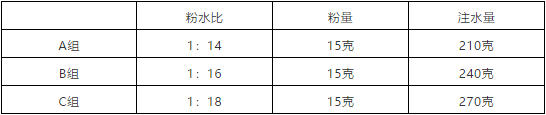
The coffee-to-water ratio refers to the proportion of coffee grounds weight to the total amount of water poured. In this experiment, the range of coffee-to-water ratios used was1:14 to 1:18—the lower the ratio, the stronger and more concentrated the flavor; the higher the ratio, the lighter and more delicate the taste. The recommended ratio for daily shop use is1:151:15, which equates to 15 grams of coffee grounds with 225 grams of water.
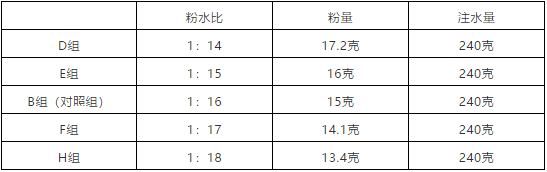
During the experiment, we kept other variables constant—including using a V60 dripper, a water temperature of 90°C, a medium-fine grind (approximately 80% passing through an 0.85mm sieve), and a three-pour technique (30g bloom for 30 seconds). The only variable adjusted was the coffee-to-water ratio, set at1:14, 1:16, and 1:18for three groups, using Ethiopian Yirgacheffe Red Cherry Project natural process beans.
[Impact of Coffee-to-Water Ratio on Flavor and Extraction Yield]
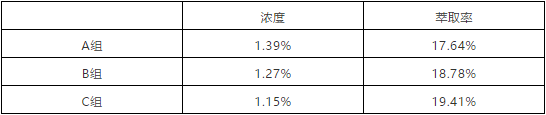
The experimental results showed that as the coffee-to-water ratio increased, theconcentration of the coffee liquid significantly decreased. This is because concentration is the ratio of dissolved substances to the total volume of liquid. Increasing the water volume enlarges the denominator, so even if the total amount of extracted substances increases, the increase does not outweigh the rise in water volume, resulting in lower concentration. At the same time,the extraction yield gradually increased, as more water was able to extract soluble substances from the coffee grounds, and the extended pouring time also contributed to improved overall extraction efficiency.
However, these changes were not caused by a single factor. To eliminate the interference of time and grind size, we conducted four additional experiments where only the coffee dose (not the water volume) was adjusted, observing the effect of changing coffee amounts on flavor under the same water volume.
[Key Findings from Adjusting Coffee Dose]
When the water volume is fixed and only the coffee dose is changed,a greater amount of coffee increases the number of extraction sites, thus within the same extraction time, more flavor compounds are dissolved, resulting in higher coffee concentration. This explains why reducing the coffee-to-water ratio (i.e., increasing the coffee dose) leads to a stronger coffee flavor. However, too much coffee may risk over-extraction, so careful control is needed.

The experiment also found that when water volume continues to increase without a corresponding increase in coffee dose,the extraction yield may decline due to the saturation of extractable substances, as shown in Group H data. This is because the extraction sites in coffee grounds have a limit—once exceeded, it becomes difficult to extract more effective compounds even with extended extraction time.
[Traditional Americano Ratios and Their Applicability]
Turning to Americano coffee, the most common coffee-to-water ratio is1:81:8, typically made by adding 480 ml of water to a double shot of espresso (about 60 ml). But with the rise of specialty coffee, the characteristics of coffee beans from different regions and processing methods vary significantly,and the 1:8 ratio may not be suitable for all bean varieties. Taking our tested Sunflower Warm Sun Blend (a mix of Honduran sherry cask and sun-dried Yirgacheffe) as an example, after trying various ratios such as 1:7.5, 1:7, and 1:6.5, we found that1:6.5 and 1:7 could more fully express the aroma and wine-like notes of the sherry cask, while the flavors at 1:8 and 1:7.5 were overly light, with concentrations only reaching 0.77% to 0.85%.
[How to Find the Right Americano Ratio?]
It is recommended to use a step-by-step water addition tasting method: first extract a double shot of espresso (or adjust the amount as needed), place the espresso on a scale, then gradually add hot water in proportion and taste it in real time. For example, starting with a 1:4 ratio (adding 160 ml of water), gradually adjusting to 1:4.5, 1:5, until the optimal flavor range is found. In actual tests, the Warm Sun Blend performed best at a ratio of1:4 to 1:5, fully showcasing the wine-like notes and cocoa aftertaste while maintaining good body.

[Essential Differences Between Espresso and Americano Coffee]
Espresso is the foundation of all espresso-based drinks, extracted under high temperature (90–93°C) and high pressure (9 bar) with an extremely fine grind, resulting in a strong and concentrated flavor. Americano coffee is diluted espresso, offering a softer taste with more easily discernible flavor layers. Traditional Americano machines use filtered extraction similar to pour over, making a medium-fine grind—closer to that of pour over—more appropriate. This ensures even extraction and helps avoid over-extraction.
If you prefer to purely experience the intrinsic flavors of the coffee bean, choose an appropriately ratioed Americano. If you favor a balance between milk flavor and coffee, you can try milk-based drinks like lattes or cappuccinos, where the perfect integration of milk foam and coffee enhances overall smoothness and complexity.
[Practical Tips and Common Misconceptions]
1. The coffee-to-water ratio is just one of many extraction parameters; water temperature, grind size, and technique are equally crucial.
2. Different coffee varieties and processing methods may suit vastly different coffee-to-water ratios—experimentation is key to finding your optimal balance.
3. Using distilled or filtered water can reduce impurity interference, helping flavors present more clearly.
4. Do not blindly pursue high concentration—moderate extraction is what truly reveals the diverse flavor layers of coffee.
The above content is compiled by CoffeeHunters, a coffee news website.


