







Introduction:As Africa’s “Land of a Thousand Hills,” Rwanda, with its high-altitude volcanic soils and mild climate, produces Arabica coffee with distinctive flavors. This article delves into the development trajectory of its coffee industry, highlights the characteristics of the southern and western growing regions, explains the key techniques of the Red Bourbon variety paired with washed processing, and provides professional roasting profiles, cupping flavor profiles, and step-by-step pour-over parameters to help you fully grasp the essence of this high-quality washed coffee.
Known as the “Land of a Thousand Hills,” Rwanda is characterized by its mountainous terrain and plateaus. Its fertile volcanic soils, abundant rainfall, and moderate temperatures provide an ideal environment for growing Arabica coffee. As a landlocked country, coffee exports are a vital pillar of its economy. The country’s coffee-growing areas are primarily concentrated in the higher-altitude regions of the south and west, where unique processing techniques create coffees with distinct regional characteristics.
Coffee farming in the country is dominated by smallholders. Rwanda has approximately 33,000 hectares of coffee plantations, and over 500,000 people depend on it for their livelihoods. Due to the limited land holdings per farmer—averaging fewer than 200 coffee trees per household—the harvested coffee cherries are typically sent to nearby washing stations for centralized processing. With government support, the number of washing stations increased rapidly from just two in the early 2000s to 220 today. These are now operated by private entities such as exporters or farmers’ cooperatives, ensuring stable and improved coffee quality.
Looking back at the development of Rwanda’s coffee industry, it was deeply influenced by colonial rule in its early stages. In the early 20th century, Germany and Belgium successively introduced coffee to the country. Although coffee planting area and production grew during the colonial period, poor labor conditions, suppressed prices, and high export taxes resulted in generally low coffee quality. Nevertheless, Rwanda’s geographic and climatic conditions laid the foundation for the future revival of its coffee industry.
After gaining independence, Rwanda established the official coffee organization OCIR and gradually began to prioritize improving coffee quality. Production steadily grew from the 1960s to the 1980s, peaking historically in 1986. However, political instability in the early 1990s, particularly the genocide, plunged the entire industry into a downturn. It was not until after 1995, with international aid and government reconstruction efforts, that the coffee industry gradually regained vitality and began to develop recognizable regional flavor profiles.
Although Rwanda’s coffee-growing regions are not large, the south and west exhibit different flavor characteristics due to differences in terrain and microclimates. Areas in the south, such as the Huye Mountains and Nyamagabe, with their higher altitudes, often produce coffee with delicate floral notes and citrus tones. In contrast, the Nyamasheke region in the west, near Lake Kivu, benefits from a humid environment and suitable altitude, yielding beans with rich flavors, intense fruitiness, and juicy mouthfeel.
In terms of variety, over 90% of Rwanda’s coffee consists of Bourbon and its derivative cultivars, which have good adaptability and resilience. The Bourbon variety originated on Réunion Island and was introduced to Brazil in 1860, quickly spreading across Latin America. However, in some regions, Bourbon varieties have lost competitiveness due to reduced disease resistance. In contrast, Rwanda’s Bourbon varieties retain their superior traits, forming the cornerstone of the local coffee industry.
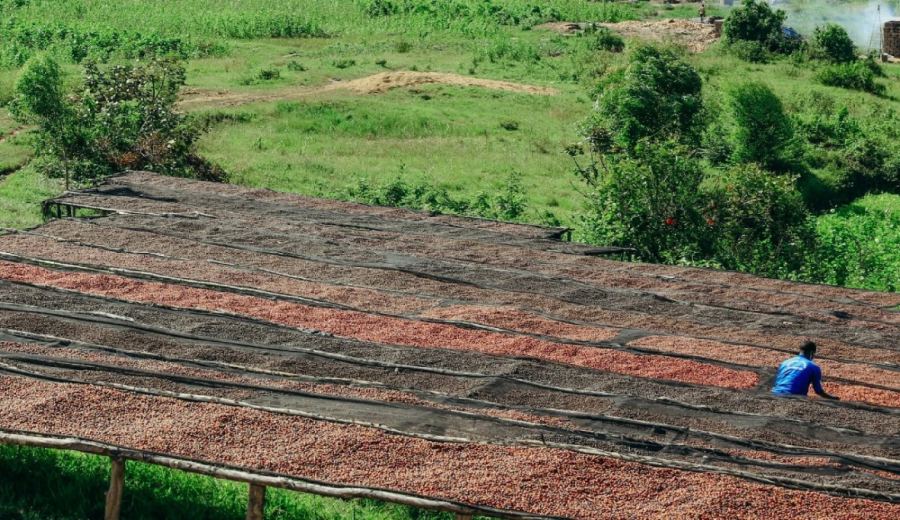
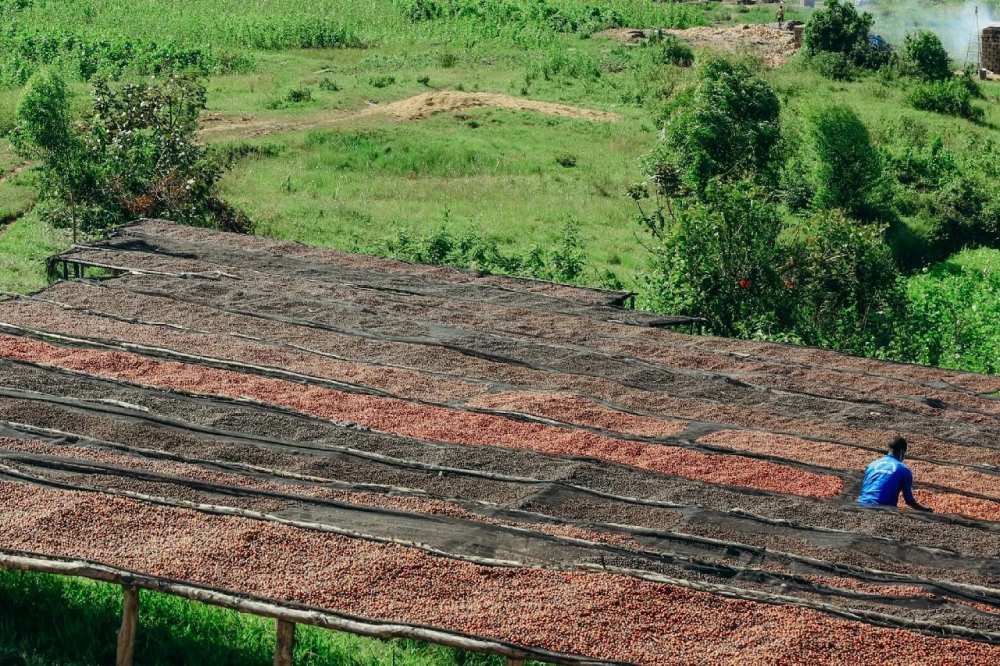
Regarding processing methods, since 2000, with the support of the PEARL and SPREAD programs funded by USAID, Rwanda has vigorously developed washed processing techniques. Forty-six specialized washing stations were built nationwide, significantly improving coffee quality and export capacity. Today, washed processing has become the mainstream method in the country. It involves manually selecting ripe cherries, removing the pulp and skin, followed by 12 to 18 hours of washed fermentation to completely remove the mucilage. Then, through strictly controlled drying processes, the moisture content is reduced to below 14%, ensuring the purity and brightness of the coffee’s flavors.
For coffee enthusiasts who enjoy pour-over brewing, Rwanda’s washed Red Bourbon coffee beans are recommended to be medium-light roasted to fully showcase their bright acidity and layered flavors. The suggested roasting parameters are: bean inlet temperature of 175°C, yellowing point around 5 minutes 55 seconds at 152.1°C, first crack starting at 9 minutes 20 seconds at 183°C, followed by about 2 minutes of roasting after the first crack, and finally dropping the beans at 194.4°C, achieving a balanced expression of acidity, sweetness, and aroma.
When cupping this Rwanda washed Red Bourbon, the dry aroma often features prominent floral and berry notes, while the wet aroma reveals honey-like sweetness and nutty undertones. Upon sipping, the bright acidity leads to citrus, berry, and plum fruit flavors, with a round nuttiness in the mid-palate, and a lingering caramel-like sweet aftertaste. The overall profile is balanced and layered.
For brewing recommendations, use 15 grams of coffee grounds with a 1:15 coffee-to-water ratio, and control the water temperature at 90°C. The grind size is recommended to be fine (80% passing through a standard 20-mesh sieve). Employ a step brewing technique: start with a 30-second bloom using 30 grams of water, then pour in a circular motion with a small stream of water up to 125 grams for the first pour. When the water level drops and is about to expose the coffee bed, continue pouring to 225 grams before stopping. Wait for the water level in the filter to drop before removing the filter. The total brew time is about 2 minutes, helping to fully highlight the delicate flavors of this coffee.
In summary, Rwanda’s washed Red Bourbon coffee, with its unique growing environment, traditional washed processing, and the characteristics of the Red Bourbon variety, presents a complex flavor profile that combines floral, fruity, and nutty notes. Whether for coffee beginners or seasoned enthusiasts, this coffee is an excellent entry point for exploring African coffee flavors.
The above content is compiled by CoffeeHunters, a coffee news website.


