







Introduction:Yirgacheffe in Ethiopia is globally renowned for its unique flavor profile, with its sun-dried and washed processing methods offering distinctly different taste experiences. This article will delve into the craftsmanship characteristics of the two processing methods, their cupping flavor profiles, and provide practical V60 pour-over recommendations and parameter settings to help coffee enthusiasts better grasp the potential of this classic origin and find their optimal extraction flavors.
As one of Ethiopia’s most representative specialty coffee regions, Yirgacheffe presents vastly different flavor profiles between its sun-dried and washed processing methods. Sun-dried Yirgacheffe, which retains the sugars from the fruit pulp and undergoes complete fermentation, often exhibits intense tropical fruit and wine-like notes with a pronounced sweetness. In contrast, the washed process emphasizes a clean and bright acidity paired with citrus and lemon tones along with elegant white floral notes, resulting in a more refreshing and delicate mouthfeel. This article provides a comprehensive comparison of the two processing methods—from the production process and cupping flavors to practical pour-over suggestions and parameter settings—to give you an in-depth understanding of the diverse charm of Yirgacheffe.
Image caption: Illustration of sun-dried and washed processing
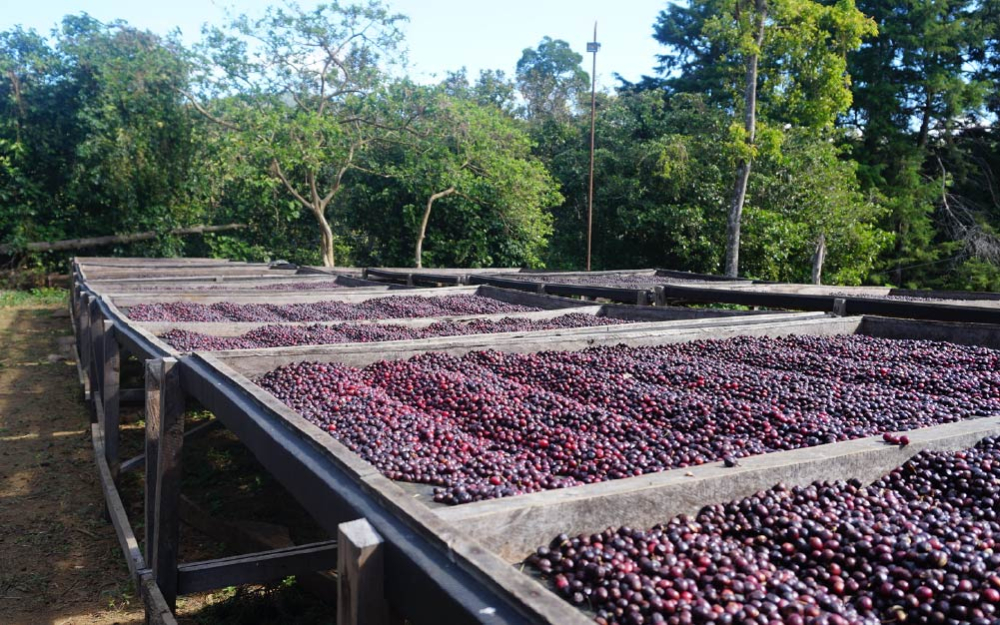
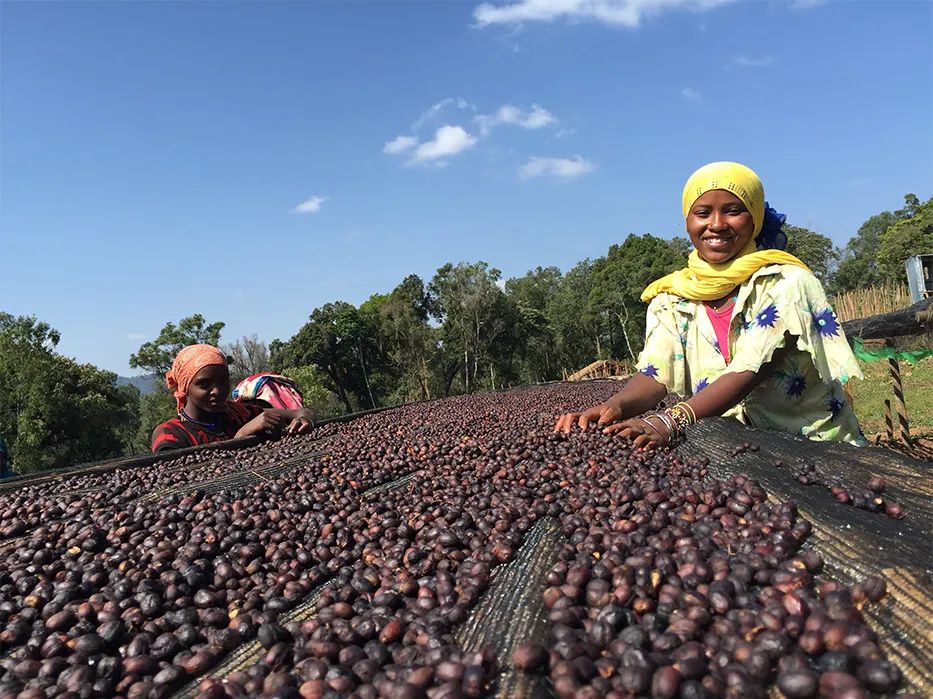
The high-altitude region of Ethiopia where Yirgacheffe is located features a dry climate and abundant sunshine, providing ideal conditions for sun-dried processing. The traditional sun-drying method involves spreading freshly harvested ripe coffee cherries directly on African or raised beds to dry naturally, typically taking about 27 to 30 days until the moisture content stabilizes at around 11%, and the fruit color turns dark purple. During this process, the sugars and aromas from the pulp gradually seep into the bean core, leading to deeper fermentation and consequently producing rich fruit, wine, and enticing sweetness. However, in the early days, due to rudimentary equipment and insufficient management, issues such as cherries getting muddy or uneven fermentation sometimes affected the final quality. Nowadays, with the introduction of professional techniques and sorting systems, sun-dried Yirgacheffe can deliver intense flavors while maintaining a high level of purity and complexity.
In contrast, the washed process, though more complex, is known for its clean and bright acidity and delicate mouthfeel. Originating from technology introduced from Central and South America in 1972, it involves flotation to remove unripe cherries, depulping, fermenting to break down the mucilage, and then rinsing and drying with clean water—a time-consuming and water-intensive process overall. But precisely because the pulp is removed, the intrinsic aromas of Yirgacheffe can be released more fully, often presenting refreshing citrus and lemon acidity along with elegant white floral notes, resulting in a clean and bright overall flavor profile. Although the washed process is more costly, it has been a key factor in establishing Yirgacheffe as a representative of world-class specialty coffee.
Image caption: Differences in processing workflows
From a cupping perspective, the flavor differences of Yirgacheffe roasted to medium-light levels become even more pronounced. Take a lightly roasted washed batch as an example: its dry aroma often carries the fresh acidity of passion fruit, citrus, and berries, and upon tasting, it reveals bright citrus acidity, berry sweetness, and soft almond notes, with a honey-like sweetness and tea-like finish. The overall mouthfeel is refreshing, with low body and exceptional clarity. In contrast, a medium-light roasted sun-dried batch emits a rich aroma of pulpy berries, with fermentation notes in its dry scent. When sipped, one can perceive soft berry acidity, the fermentation character of ripe fruit, and a distinct honey-like sweetness, with an oolong tea-like roundness and layering in the finish. The overall mouthfeel is rounder and fuller, with intense and multi-layered flavors.
Overall, washed Yirgacheffe boasts brighter and livelier acidity, a refreshing and delicate mouthfeel, and a honey-like aftertaste, while the sun-dried version showcases intense tropical fruit and fermentation aromas with a silky, creamy-like mouthfeel and prominent sweetness. Both can reveal subtle differences in flavor evolution when tasted at varying temperatures.
For pour-over enthusiasts, appropriate extraction parameters are crucial to fully express the potential of Yirgacheffe. Taking the commonly used V60 dripper as an example, it is recommended to use a medium-fine grind (approximately 78% passing through a #20 sieve, similar in coarseness to coarse sugar). A grind that is too coarse may lead to under-extraction and a thin flavor, while one that is too fine may over-extract at high water temperatures, resulting in bitterness and off-flavors.
Image caption: Design features of the V60 dripper
The V60 dripper, with its unique conical structure and 60° angle design, directs water to spread from the center outward before dripping down, extending the contact time between coffee grounds and water and helping to fully release aromas and flavor compounds. Its single large central drainage hole allows users to more intuitively control flow rate through pouring speed, thereby adjusting extraction flavors. Additionally, the inner wall of the dripper features multiple spiral ribs of varying lengths, which prevent the filter paper from completely adhering to the dripper—avoiding uneven blooming—and extend the water path to enhance extraction layers. However, if the pouring speed is too fast or the water volume is too large, some flavor compounds may be filtered out before being fully released, affecting overall performance. Therefore, it is advised to steadily control the water flow and pouring rhythm.
Practical pour-over recommendations are as follows: set the water temperature to 92–93°C, ideal for highlighting Yirgacheffe’s floral-fruity aromas and acidity; the suggested coffee dosage is 15 grams, with a coffee-to-water ratio ranging between 1:15 to 1:16. For a richer taste, opt for 1:15; for a cleaner and more expansive flavor, use a 1:16 ratio. Employ the three-pour method: the first pour involves blooming with twice the coffee dosage in water (about 30 grams) for approximately 30 seconds; the second pour uses a small stream in a circular motion from the inside out to reach 125 grams , then pause until the coffee bed descends to the middle of the dripper; the final pour continues until 225 grams, with the total extraction time controlled at around 2 minutes. After completion, gently swirl the coffee in the server to enjoy the full range of flavor changes starting from a high temperature.
When actually pour-over brewing washed Yirgacheffe, you may notice honey and jasmine notes in the dry aroma, with berry aromas gradually emerging as hot water is added. Upon tasting, the cup is dominated by bright lemon, citrus, and green tea tones. As the temperature drops, berry, cream, and sugarcane aftertastes emerge, with a pronounced lingering sweetness. The mouthfeel is refreshing yet layered, showcasing the refinement and clarity of the washed process.
Image caption: Pour-over brewing reference
The above content is compiled by CoffeeHunters, a coffee news website.


