







Introduction:The Dorothy coffee beans from the Ansolra Estate in Ethiopia’s Guji region are crafted using a unique enzyme-washed process, delivering a honey peach and oolong tea profile. These G1 grade heirloom coffee beans, grown at elevations between 1900-2350 meters, showcase a fresh fruity-tea character through meticulous processing and medium-light roasting. This article delves into the estate’s background, processing technique, roasting strategy, and provides practical pour over recommendations along with flavor characteristics to help coffee enthusiasts fully appreciate the appeal of this popular honey peach oolong-flavored bean.
As the birthplace of coffee, Ethiopia boasts countless exceptional specialty coffee regions and processing methods. From traditional natural and washed processes to the increasingly popular enzyme wash, each method imparts a distinctly different flavor profile to the beans. Among them, the Dorothy beans from the Ansolra Estate in the Guji region use an enzyme-washed process to bring out subtle floral notes, rich honey peach aromas, and delicate oolong-like aftertastes, delivering an overall experience akin to a refreshing white peach oolong tea—making it a new favorite among many pour over enthusiasts.
 The Guji region was originally part of Sidamo until it was officially designated as an independent region by the Ethiopian Commodity Exchange (ECX) in 2010, with the goal of cultivating high-quality specialty coffees akin to those from Yirgacheffe. The area generally features high altitudes, fertile mineral-rich soil, and exceptionally favorable climate conditions, all of which contribute to producing beans with distinct and layered flavors. The Ansolra Estate is located in the high-altitude mountains of Guji and stands out as one of the region’s top producers.
The Ansolra Estate sits at an elevation between 1900 and 2350 meters, spanning approximately 250 hectares, of which about 150 hectares are dedicated to coffee cultivation. Managed by the second-generation owner Israel Degfa, who inherited his parents’ experience in the coffee industry, the estate has been developed into an integrated private production and processing base. Shade trees such as acacia and banana are planted throughout the farm, not only providing an optimal growing environment for the coffee trees but also naturally decomposing their fallen leaves into organic nutrients. These environmental conditions result in coffee beans from Ansolra with pronounced fruit acidity and richly layered aromas.
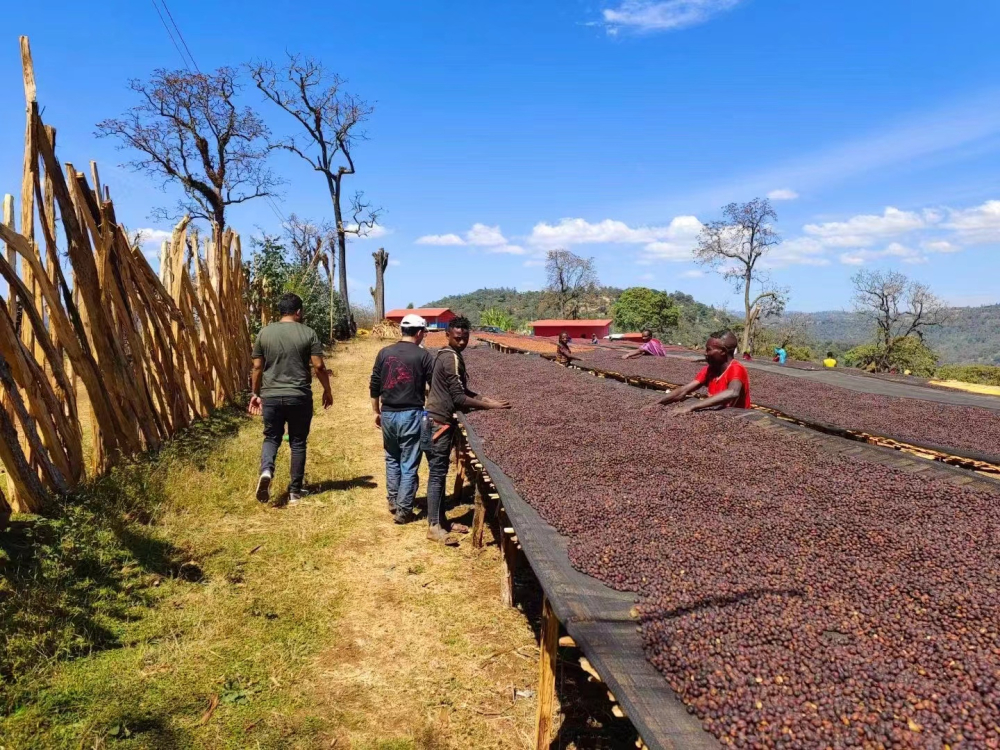 The processing method used for Dorothy beans is enzyme washing—a refined technique that combines enzyme fermentation with the washed process. First, the coffee cherries are carefully sorted to remove impurities and unripe fruits, then the pulp and skin are removed, leaving the mucilage-covered beans placed in a container with specific enzymes for a 24-hour sealed fermentation. This step helps soften the mucilage layer and enhances the purity of the fruity and floral notes. After fermentation, the beans are transferred to a large water tank and soaked for 48 hours with gentle stirring. The friction between the water flow and the beans helps thoroughly remove the sticky mucilage. Finally, the clean green beans are evenly spread on raised drying beds to ensure stable moisture content, laying a solid foundation for subsequent roasting.
The roasting strategy for these Dorothy beans is equally meticulous. To highlight their bright acidity, rich honey peach aroma, and tea-like delicate mouthfeel, the roasters employ a medium-light roast while slowing down the roasting pace to ensure even heat distribution across the various sizes of heirloom beans, thus fully unlocking their flavor potential. This roasting approach not only preserves the freshness of the fruit and floral notes but also endows the beans with a soft aftertaste and excellent balance.
For brewing recommendations, it is advised to use a Hario V60 filter cone with a water temperature of 91°C and a 1:15 coffee-to-water ratio. The grind size is suggested to be medium-fine, achieving an 80% pass rate through a Chinese standard No. 20 sieve. Specifically, you can use a three-stage pouring method: start with a 30-gram bloom for 30 seconds, then slowly pour in circles from the center outward to reach 125 grams, wait for the water level to drop, continue pouring to 225 grams, and finally allow the drip to finish, with a total extraction time of around 2 minutes. This brewing method effectively highlights the coffee’s fruity and tea notes while showcasing a clear layering.
 Once brewed, the Dorothy coffee immediately reveals subtle floral aromas, followed by intense honey peach scents. Upon tasting, it presents bright citrus acidity, a refreshing and well-layered mouthfeel, and a lingering aftertaste as mellow and sustained as oolong tea. The overall flavor profile is like sipping an elegant white peach oolong tea—offering both the refreshing sweetness of fruit and the delicate aftertaste of tea. It is highly recommended for coffee lovers who enjoy fruity-tea style brews.
In summary, the Dorothy coffee beans from the Ansolra Estate, with their unique enzyme-washed process, high-altitude growing environment, and refined roasting and brewing strategies, showcase the utmost potential of Ethiopia’s Guji region. Whether as a daily pour over choice or an entry point into exploring fruity-tea flavored coffees, these beans promise a delightful and surprising cupping experience.
The above content is compiled by CoffeeHunters, a coffee news website.


