







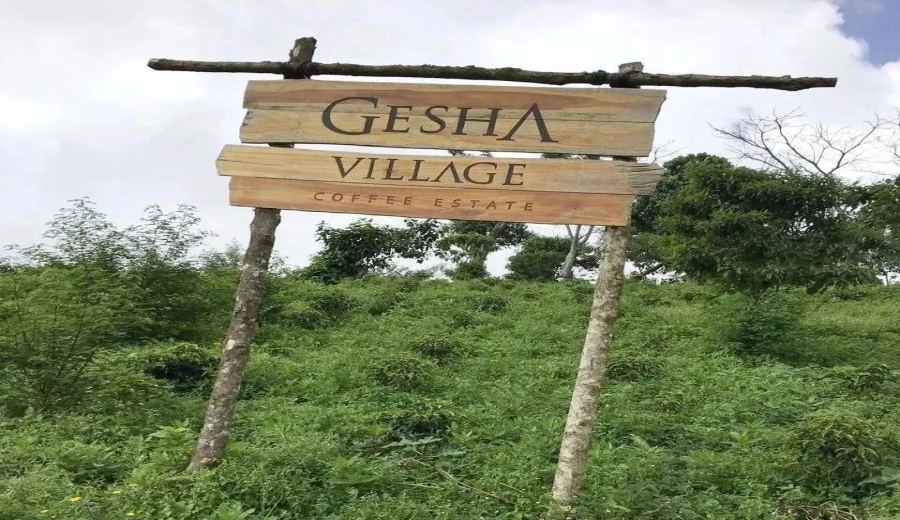
Introduction:Ethiopia’s Gesha Village is one of the key birthplaces of the Gesha variety. Its Gold Label Gesha coffee is primarily composed of the Gori Gesha and Gesha 1931 varieties, processed through a 32-day natural sun-drying method, showcasing unique floral and fruity aromas alongside a rich mouthfeel. This article details the Gesha Village grading system, highlights the characteristics of its main growing blocks, and provides expert pour over parameters and flavor profiles to help you better understand the brewing essentials of this highly sought-after auction-grade coffee bean.
Although the international fame of Gesha coffee originates from Panama’s Hacienda Esmeralda, the variety actually traces back to the Gesha forest in southwestern Ethiopia. Gesha Village Estate is one of the few fine coffee producers in Ethiopia operating as an estate and adopting a grading model similar to Panama’s. Its Gesha offerings are divided into five grades: Auction, Gold Label, Red Label, Green Label, and Chaka. This article will take you through the background of Gesha Village, the flavor characteristics of each growing area, and provide an in-depth look at the source of this year’s new crop Gold Label Gesha — the Gesha 1931 variety from the Oma block, along with the unique flavors resulting from its 32-day extended natural processing.
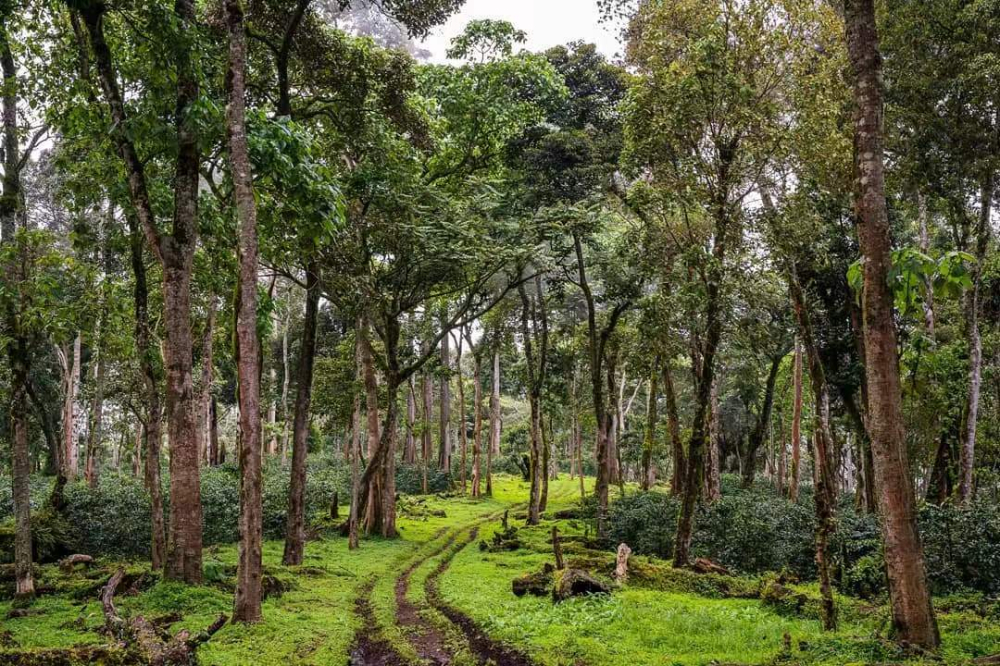
The Gesha variety first gained international acclaim through Panama’s Hacienda Esmeralda, but it actually originates from the Gesha highlands in southern Ethiopia, near the Sudanese border, at an altitude of approximately 1700 to 2100 meters. This variety naturally has slender beans, is not well-suited to low-altitude cultivation and yields are relatively low, yet it possesses good resistance to leaf rust. It was often used as a parent plant for hybrid breeding in the past. Interestingly, the variety did not exhibit outstanding flavors in its place of origin, but rather released intense floral and fruity notes in Panama’s unique environment, demonstrating the significant impact of terroir on flavor.
Although they share the same name, Gesha coffee from Ethiopia and Panama differ in variety and flavor profile. Ethiopia is the genetic origin of coffee, home to numerous unnamed wild varieties, hence often referred to collectively as “Ethiopian heirlooms.” Many global coffee varieties originate here, including Panamanian Gesha, whose original strain was also discovered in Ethiopia’s Gesha forest before spreading through Kenya, Uganda, Tanzania, and eventually being introduced to Panama by Costa Rica.
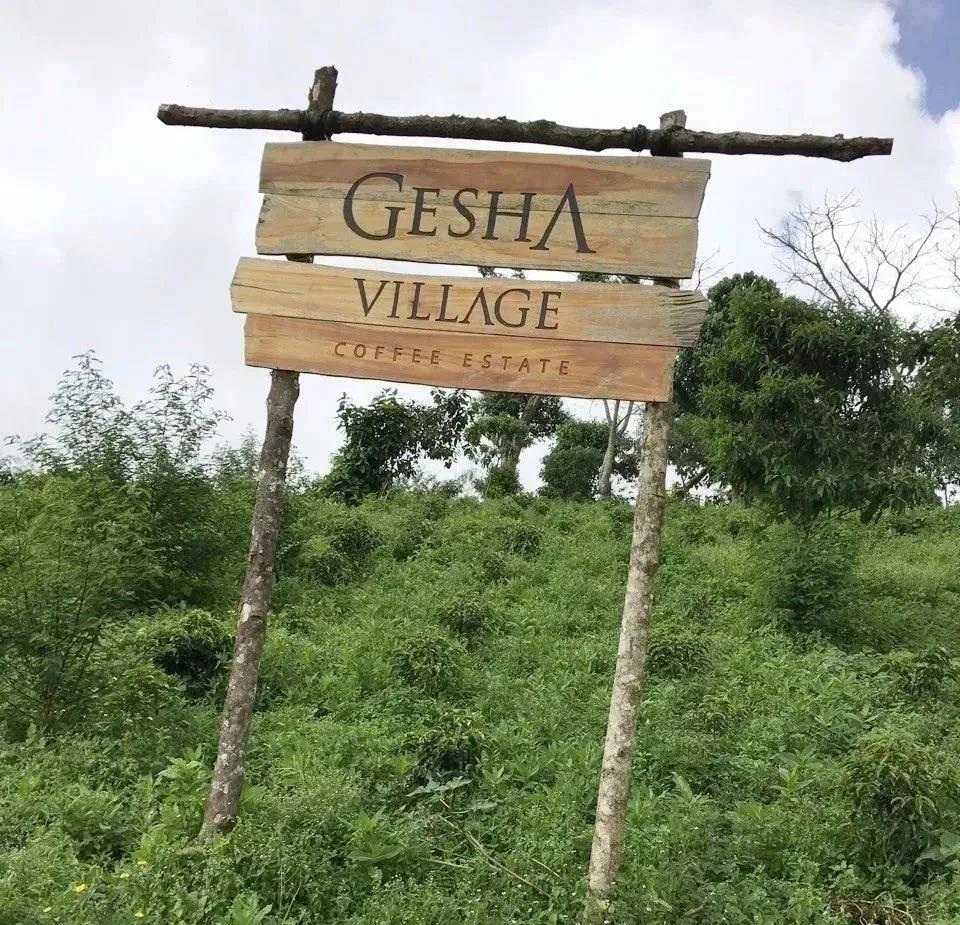
The true Gesha heirloom originates from Ethiopia’s Gori Gesha forest. Due to the prevalence of cooperative production in the region, estates like Gesha Village that focus on a single variety and operate to high standards are extremely rare. In 2007, director Adam Overton and photographer Rachel Samuel, while filming a documentary about Ethiopian coffee, discovered the Gera Coffee Forest in the Bangi Mazghi area. In 2009, inspired by renowned mule estate owner Willem Boot, they decided to establish Gesha Village Estate there, introducing Panamanian commercial operations and grading systems to create a boutique production model dedicated to Gesha.
Gesha Village had its first harvest in 2015 to great acclaim, and held its first international auction in 2017, offering 21 micro-lots, including 19 premium lots of 120 kg each. The estate spans 500 hectares, has its own washed processing facility and laboratory, and grows only the Gesha variety, unlike typical cooperatives whose coffee can only be labeled as “Ethiopian heirloom.”
A well-known specialty coffee brand’s grading system is clear and rigorous, divided into five tiers: Auction, Gold Label RARITIES, Red Label RESERVE, Green Label SINGLE-TERRAIN, and Chaka CHAKA. Auction lots account for only 3.7% of annual production and consist of carefully selected top-tier micro-lots, available only through global auctions. Gold Label makes up about 10%, featuring complex and rare flavors, and is often chosen by competitive roasters and high-end cafés. This brand’s new crop Gold Label this year comes from the Gesha 1931 variety of the Oma block, processed with a 32-day natural drying method.
Red Label RESERVE accounts for about 15%, consisting of high-quality batches that score over 88 points in cupping, with clear flavors and good value, mainly of the Gori Gesha variety. Green Label comes from single blocks and single varieties, with each batch providing detailed information on the growing area, variety, and processing methods. Chaka CHAKA is a blend, currently focused on natural processing, showcasing a diverse range of flavor characteristics.
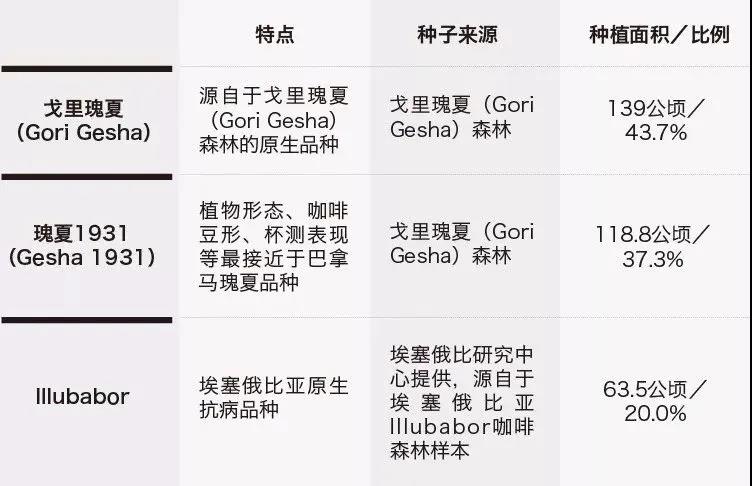
The main growing blocks of Gesha Village include Bangi, Dimma, Gaylee, Oma, and Narsha. The Bangi block, at an altitude of 1911 to 2001 meters, primarily grows Gori Gesha, with flavors of honeysuckle, spices, dark chocolate, and black tea; Dimma and Gaylee grow the Illubabor variety, with the former featuring stone fruits and citrus, and the latter offering lemongrass and jasmine aromas; the Oma block, at 1931 to 2040 meters, grows Gesha 1931, with flavors dominated by jasmine, peach, apricot, and honey; the small Narsha block, only 5.3 hectares in size, delivers rich floral and fruity notes with a bergamot finish.
Gesha 1931 is not a genetically identified variety, but the Gesha Village team determined it to be highly similar to Panamanian Gesha based on plant morphology, bean characteristics, and cupping results, speculating it to be the original variety discovered in Ethiopia’s Gesha Mountain (Geisha Mountain) in 1931. Although named 1931, it represents the year of discovery, not a breeding code, but it is considered the closest variety to the mother plant of Panamanian Gesha.
In terms of processing, most of this brand’s offerings — including Gold Label, Red Label, and Chaka — use extended natural drying methods, typically lasting 18 to 30 days. The brand’s Gold Label Gesha undergoes 32 days of drying to fully develop sweetness and complex aromas. During processing, floaters and impurities are first removed, then the coffee beans are spread thinly on African raised beds, covered with protective materials for sun drying, with multiple screenings to avoid defective beans affecting flavor.
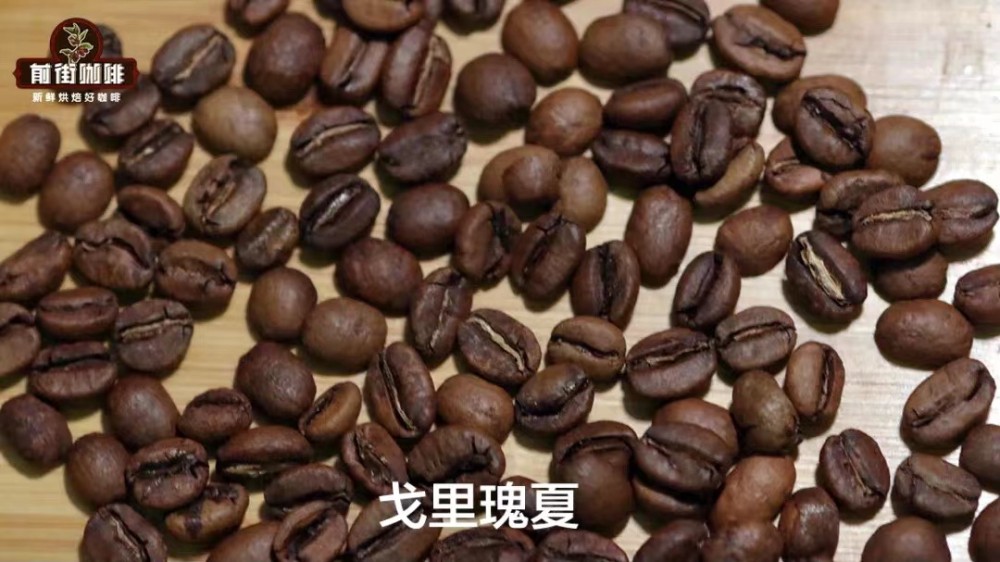
To fully showcase the flavors of this Gold Label Gesha, it is recommended to use a medium-light roast to preserve bright acidity and delicate layers. Due to the lower density of high-altitude beans, roasting time is shorter and internal compounds are not easily released, so a medium-fine grind (such as 80% passing through a Chinese No. 20 sieve) is advised, using a V60 filter, with a brew ratio of 1:15 and water temperature controlled at 91°C, extracted via a three-pour method.
Specifically, start with a 30-second bloom using 30 grams of water to help release gases, then pour in stages up to 125 grams and 225 grams, with total extraction time around 2 minutes. Let the coffee rest briefly after brewing to allow the liquid to drip evenly before drinking. These parameters help balance acidity and sweetness with body, highlighting the distinctive floral, fruity, and honey notes of the Gesha beans.
The flavor profile of this brand’s Gold Label Gesha is dominated by berry sweetness, with layers of chamomile, red berries, melon, and tea leaves; the Red Label offers a complex aroma of coconut, licorice, cream, citrus, and almonds, with a full and balanced mouthfeel. These flavor characteristics may vary slightly depending on processing method, roast level, and brewing style, so it’s recommended to fine-tune parameters according to personal taste.
The freshness of coffee beans greatly impacts flavor. It is recommended to choose beans roasted within 5 days to fully enjoy their fresh aromas. After receiving the coffee, let it rest for 4 to 7 days to degas before consumption. If purchasing pre-ground coffee, consume it promptly to avoid oxidation affecting the flavor. The best experience still comes from grinding fresh and brewing immediately to fully release the unique character of each Gesha bean.
The above content is compiled by CoffeeHunters, a coffee news website.


