







Introduction:The Hua Kui coffee beans have emerged as a standout in the specialty coffee scene with their unique flavor profile, often being compared to Geisha. But where does its name come from? Is it truly from the Sidamo region? And what are the differences between its various versions? This article delves into the naming background, regional classification, processing methods of Hua Kui, as well as its evolution from version 1.0 to 6.0, and shares actual cupping experiences to help you fully understand this highly acclaimed Ethiopian natural-processed bean.
In recent years, Hua Kui coffee beans have made a remarkable splash in the specialty coffee market, with some even suggesting it can rival Geisha. However, many coffee enthusiasts remain unclear about its name origin, regional classification, and the differences between versions from Hua Kui 2.0 to 6.0. This piece will comprehensively outline the historical background, regional characteristics, processing methods, and the evolution of each version of Hua Kui, along with insights from actual cupping sessions, to take you deeper into this star natural-processed bean from Ethiopia.
When it comes to specialty coffee from Ethiopia, Geisha is undoubtedly the most prominent representative—its name means "geisha" in Japanese, and it boasts delicate and layered flavors. Rivaling Geisha in fame is the Hua Kui coffee beans from the Guji Kochere region. In 2017, a natural-processed Hua Kui from this region won second place in the China leg of the World Brewers Cup, instantly gaining widespread recognition and gradually becoming a popular choice on par with Geisha.
It’s worth noting that the Guji region was previously often considered part of either Yirgacheffe or Sidamo, but with the development of the market and coffee culture, it has now been recognized as an independent region, celebrated internationally for its unique flavors and processing methods. Hua Kui stands out as one of its finest representatives.
The name “Hua Kui” actually originates from ancient China, where it referred to the top courtesan in a brothel—symbolizing exceptional talent and beauty. The Chinese and English names of these coffee beans differ: in Chinese, it's called “花魁” (Hua Kui), while in English, it's often labeled as “Hambella,” referring to the Hambella region. In fact, Hua Kui coffee beans come from the Hambella area in Ethiopia’s Guji region, more precisely from the Buku Abel farm. In 2017, this farm gained attention by winning the TOH (Tiny Owls Hunt) natural category championship, and due to its outstanding performance, after being introduced to China by a green bean importer, it was given the distinctly Eastern-flavored name “Hua Kui.”
It’s important to clarify that not all natural-processed beans from the Guji region can be called Hua Kui. Only the natural-processed beans produced by the Buku Abel farm are entitled to bear the “Hua Kui” name, which is why some in the coffee industry affectionately call this farm the “Hua Kui farm.” The elevation and microclimate conditions here are excellent, surrounded by sugarcane and banana plantations, contributing to the smooth mouthfeel, bright passion fruit acidity, and unique fermented aromas brought by the natural process of Hua Kui coffee.
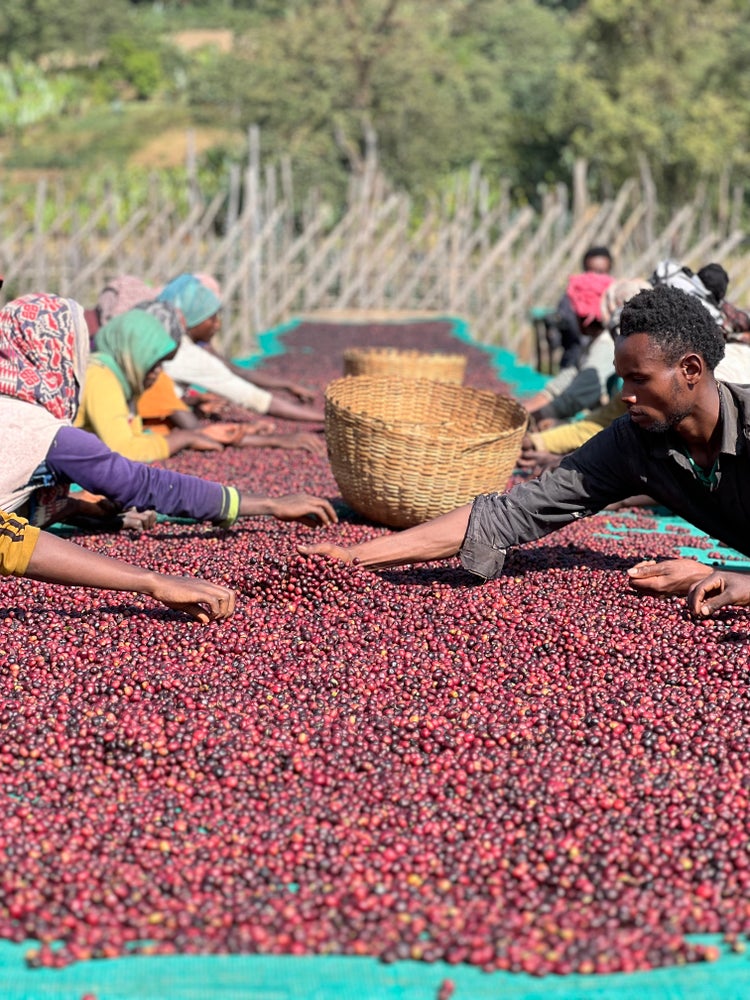
The unique flavor of Hua Kui is inseparable from its rigorous natural processing method. It’s understood that local farmers typically harvest the coffee cherries between December and January each year, selecting only red ripe cherries with a sugar content of over 30% for sun-drying. During the first two days of sun-drying, appropriate humidity must be maintained to facilitate the fermentation of fruit sugars; shade must be provided during midday high temperatures to avoid scorching, and sudden evening rains must be guarded against, usually with thick plastic sheeting for protection. The entire fermentation and dehydration process is kept at low temperatures, taking about eighteen days in total, after which the moisture content of the green beans drops to around 13%. They are then transferred to jute sacks for about fifty more days to further reduce the moisture level to approximately 11%, before finally undergoing hulling and other subsequent processes. This intricate workflow is the key to Hua Kui’s distinctive flavor.
Speaking of Hua Kui versions, many consumers may notice various numbered versions such as Hua Kui 2.0, 3.0, 3.1, 4.0, 5.0, etc. This is because only beans processed by the Buku Abel washing station are considered the orthodox “Hua Kui,” while similar series beans from other washing stations are referred to by version numbers. The DW company operates five drying stations in Guji Hambella, including Buku Abel, Tirtiro Goye, Seke Bokosa, Haro Soresa, and Buku Saysay. Since the debut of the first Hua Kui in 2017, a new Hua Kui X.0 has been released each year—for example, 2018 was Hua Kui 2.0, 2021 was Hua Kui 5.0, and the 2022 new crop was named Hua Kui 6.0. However, due to the pandemic, the 2022 new crop Hua Kui didn’t arrive until June.
These Hua Kui series mostly use Ethiopian native varieties. As there are numerous coffee varieties in the region and the government hasn’t publicly disclosed detailed information, unnamed varieties are collectively referred to as “native varieties.” However, based on actual cupping experiences, the flavor of Hua Kui 3.1 differs significantly from traditional Hua Kui and is closer to Panamanian Geisha; Hua Kui 4.0 is closer to the original style, though slightly less full-bodied; Hua Kui 5.0 showcases the typical characteristics of the Guji region, with vibrant berry acidity, pronounced floral notes, and a strong juice-like mouthfeel.
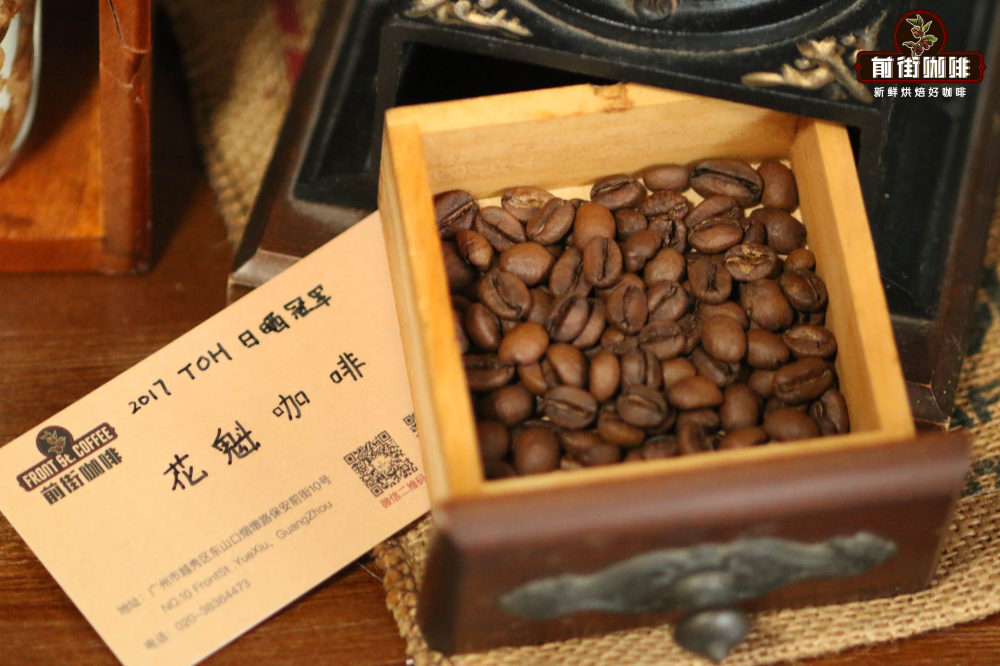
It’s also worth mentioning that the flavor of Hua Kui fluctuates from year to year, which is inherent to coffee as an agricultural product—natural factors such as weather and rainfall can all influence the final flavor expression. For instance, when the 2022 new crop Hua Kui 6.0 arrived, the green beans contained a number of flat beans and broken beans, resulting in a relatively high defect rate. Roasters had to first remove 20%–30% of defective beans before roasting. Even so, the roasted beans still exhibited a number of irregularly shaped beans. Upon cupping, this batch primarily featured notes of berries, honey, and passion fruit, with a prominent sweetness. However, due to the higher defect rate, another Hua Kui bean from the same region’s Buku washing station was selected for cupping. This bean had plump appearance and clear flavors, showcasing orange blossom, citrus, honey, and grapefruit notes, with a rich juice-like mouthfeel.
For brewing, it’s recommended to use a HARIO V60 filter, with around 15 grams of coffee, a 1:15 coffee-to-water ratio, water temperature controlled at 90°C, and a medium-coarse grind (about 80% through a 20-number Chinese standard sieve). Start with a 30-gram bloom for 30 seconds, then pour water at a rate of 4 grams per second in a circular motion from the center outward to 125 grams, then pause. Once the coffee bed sinks, continue pouring to 225 grams, with a total brew time of about 2 minutes and 10 seconds. These parameters are ideal for highlighting the tropical fruit acidity and fermented aromas of Hua Kui, especially in the natural version, which brings out a distinct sweetness and fruity notes such as passion fruit, mango, and peach.
The above content is compiled by CoffeeHunters, a coffee news website.


