








Introduction:This article provides an in-depth analysis of the Lion King Natural G1 coffee beans from Ethiopia’s Sidamo Guji region. From the growing environment and processing methods to green bean characteristics, roasting strategies, and optimal pour over brewing techniques, it offers a comprehensive guide to this high-end specialty coffee with vibrant floral and fruity notes. Whether you’re a beginner or a seasoned coffee enthusiast, you’ll find practical insights for selecting beans and brewing.
Sidamo, a renowned specialty coffee region in southern Ethiopia, is celebrated for its diverse terrain and fertile volcanic soils, which produce coffees with complex and captivating flavor profiles. Among its many offerings, the Sidamo Lion King Natural G1 stands out as a highly regarded high-altitude heirloom variety. It boasts bright acidity, tropical fruit and floral notes, and a clean, layered taste—perfect for those who enjoy fresh and vibrant coffees.

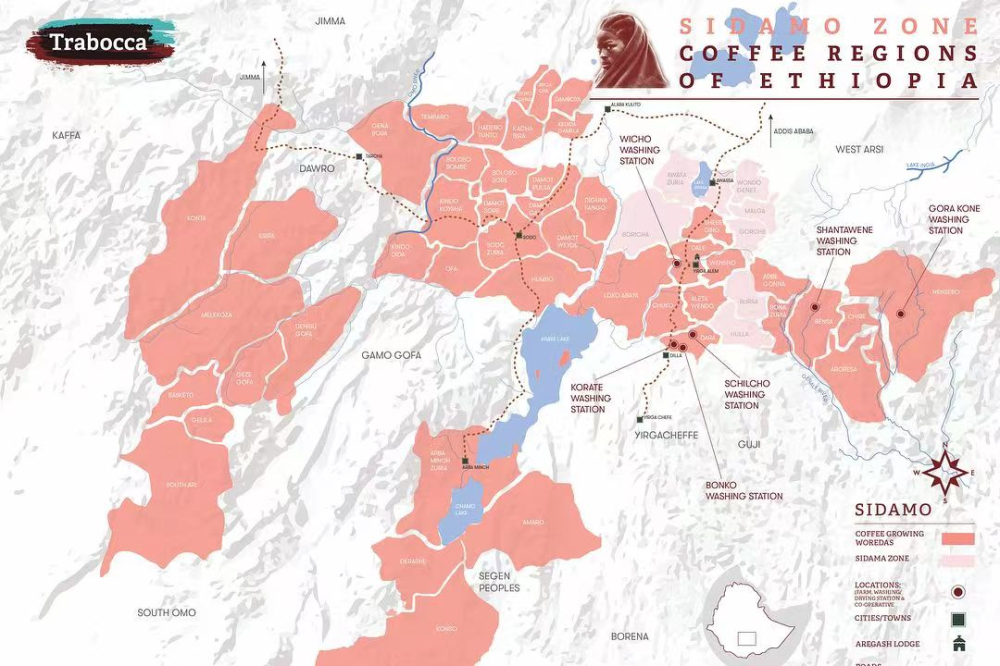
These beans come from the Dara area in Ethiopia’s Sidamo region, within the Guji sub-region. They are produced by smallholder farmers from the Shilcho Cooperative, which is part of Ethiopia’s second-largest coffee cooperative union, SCFCU. The growing altitude ranges between 1,800 and 2,000 meters, with cool temperatures, significant day-night temperature variation, and deep, well-drained volcanic soils that provide ideal conditions for coffee cherries.
Regional Features: Geography and Microclimate of Sidamo and Guji
The Sidamo region features diverse landscapes, including mountains, plateaus, valleys, and plains. This varied topography contributes to a rich diversity of microclimates, which in turn influence the flavor expression of the coffee. The soils are mostly mineral-rich volcanic types with deep layers and high organic content. Thanks to natural vegetation cycles, even neighboring areas may produce coffee beans with distinct characteristics.
The Guji region is located southeast of Sidamo and was originally considered part of the broader Sidamo area. However, due to its unique product profile, it has gradually come to be recognized as a separate region. Guji coffees are often known for their intense berry, citrus, and floral notes, along with excellent sweetness and body, making them one of the popular sources in today’s specialty coffee market.
Processing Method: The Charm of Traditional Natural Drying
This Lion King coffee is processed using the “natural (sun-dried)” method, one of the most traditional techniques that best preserves fruit flavors. In this process, ripe coffee cherries are not depulped by washing but are instead dried directly in the sun, allowing the sugars and flavor compounds in the fruit pulp to gradually infuse into the seeds (the coffee beans we brew).
The processing steps generally include: selecting ripe red cherries, removing impurities and underripe beans, and using water flotation to separate defective ones. The qualified cherries are then spread out on drying beds and left to dry for approximately two to four weeks. During this time, they are frequently turned to ensure even drying and covered at night to prevent moisture absorption. Once the moisture content drops to 10–12%, the outer pulp and parchment layers are removed using a hulling machine, leaving behind the green coffee beans inside.
Green Bean Overview: Genetic Diversity of Heirloom Varieties
Ethiopia is home to the world’s largest coffee genetic diversity, with nearly 2,000 recorded varieties, most of which remain uncategorized and are commonly referred to as “local heirloom varieties.” The Lion King is no exception. Its beans are mainly medium-sized, with occasional smaller dwarf varieties. The plants are generally tall, healthy, though somewhat less resistant to disease. Due to the mixed planting of heirloom varieties, bean appearance may vary slightly by field, but overall uniformity remains at an acceptable level, making it suitable as a base for specialty coffee roasting.
Roasting Curve Design: Highlighting Floral, Fruity Aromas and Vibrant Acidity
For this high-altitude, dense bean, the roasting goal is set at a light-to-medium roast to fully showcase its bright acidity and rich tropical fruit and floral notes. During initial roasting trials, adjustments were made to the drying phase duration and heat settings due to uneven bean size. A strategy of “extended drying, gradual heat reduction, and stable temperature rise” was adopted to ensure consistent roast development.
The charge temperature was set at 200°C, with higher initial heat, but the power was gradually reduced at the yellowing point, post-drying stage, and just before first crack to avoid scorching the bean surface. The beans were dropped during the period from the start of first crack to its peak, effectively preserving floral and fruity aromas while controlling caramelization for a clean and bright flavor profile.
The roaster used was a Yangjia 600g semi-direct-fire machine, with continuous monitoring of temperature and air damper adjustments—fine detail control was crucial.
Pour Over Recommendation: Unleashing Layered Juicy Notes
A pour over method is recommended to more precisely control water temperature, coffee-to-water ratio, and extraction time—bringing out the coffee’s delicate fruitiness and balanced sweet-acid profile. A grind size similar to fine sugar (approximately 80% through a Chinese No. 20 sieve) is suggested, using a V60 filter, with around 15 grams of coffee, water temperature at 91–92°C, and a 1:15 coffee-to-water ratio.
The specific steps are: start with a 30-second bloom using 30 grams of hot water; then proceed with pulsed pouring—first circle-pour up to 125 grams, pause briefly, then continue slowly until reaching 225 grams. Total brew time is about 2 minutes and 3 seconds. This parameter setup helps balance acidity and sweetness while highlighting the coffee’s layered flavors.
The above content is compiled by CoffeeHunters, a coffee news website.


