








Introduction:As China’s largest coffee-producing region, Yunnan boasts unique geographical and climatic conditions that allow it to grow Arabica Typica coffee beans with distinctive flavors. However, many people still associate Yunnan coffee with being “bitter.” What is its actual flavor profile? Is pour over brewing suitable? This article delves into the main varieties of Yunnan coffee, explores the characteristics of its four core growing regions, and provides practical pour over parameters and a three-stage pouring technique for Yunnan Catimor beans, helping coffee enthusiasts better understand the potential of the coffee grown in this land.
Located around 25°N, within the "world's golden coffee belt," Yunnan enjoys a mild climate with an average annual temperature of about 16 to 21°C. Coupled with altitudes ranging from 1,000 to 2,000 meters, abundant sunlight, and ample rainfall, the region provides an ideal environment for coffee trees. The small-bean Arabica coffee grown here generally offers rich aromas, full-bodied flavors, refreshing acidity without harshness, along with unique fruity acidity and tea-like qualities.
Many first-time tasters of Yunnan coffee wonder: is its taste particularly bitter? In fact, Yunnan coffee isn’t known for strong bitterness, but those unfamiliar with its flavor might perceive a certain degree of bitterness. This type of coffee typically emits aromas of pine, nuts, and herbs, blended with a uniquely local brown sugar sweetness, subtle plum-like acidity, and even a tea-like aftertaste.

In terms of variety, Catimor currently dominates the Yunnan coffee market. A hybrid of Arabica and Robusta, Catimor contains about 25% Robusta genetics. Although classified as Arabica, compared to pure varieties such as Typica or Bourbon, its flavor complexity is slightly lower, yet it offers stronger disease resistance and higher yields. There are also small amounts of Typica, Bourbon, and trial plantings of native varieties like Caturra and Geisha, but their proportion is minimal.
Typica is one of the earliest Arabica varieties introduced to Yunnan. Its characteristic copper-colored young leaves make it very easy to identify. However, Typica yields only one-third of what Catimor does and is prone to rust diseases, which is why its planted area is far smaller than that of Catimor. Many specialty coffee farms or estates still choose to retain small amounts of Typica to produce high-flavor, low-yield specialty-grade coffee.
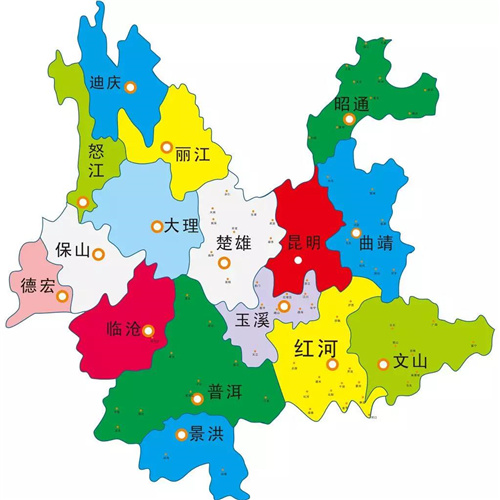
Yunnan’s coffee-growing areas are mainly concentrated in the southwest, encompassing four major regions: Baoshan, Dehong, Pu’er, and Lincang. Each area produces slightly different coffee flavors due to differences in terrain, altitude, and microclimate. For example, one area is the country’s largest and highest-yielding main coffee production base, with over 760,000 mu of coffee plantations, and it is also an important coffee trade hub; Lincang, located near the Tropic of Cancer, has distinct dry and wet seasons and stable temperatures. One brand has even established an exclusive estate there to grow the precious Typica variety; Baoshan is known for its warm climate and absence of frost, making it the most suitable region for planting small-bean coffee, with its coffee being famous for its rich, full-bodied flavors and pleasant fruity notes; Dehong, with its diverse ethnic cultural background, has also gradually developed its own unique coffee flavor profile.
Regarding processing methods, due to Yunnan’s long rainy season and variable climate, most coffee beans are processed using the washed method, although some farms also produce natural sun-dried beans. The washed process highlights clean acidity and a clear flavor profile, while sun-drying imparts richer sweetness and fruitiness. For instance, a brand’s washed Yunnan small-bean coffee features herbal, nutty, and chocolatey aromas; sun-dried Catimor offers a complex flavor of spices, plums, and caramel; while the estate-grown sun-dried Typica showcases a unique combination of citrus, berries, fermented wine notes, and black tea flavors.
If choosing the pour over method to brew Yunnan coffee, it is recommended to adjust the parameters based on the bean variety and processing method. Taking commonly medium-roasted Yunnan Catimor as an example, since its flavor is primarily nutty, it is suggested to use medium-fine grinding (approximately 75% passing through a Chinese No. 20 sieve), a 1:15 coffee-to-water ratio, paired with a V60 filter, and water temperature controlled at around 88°C. This setup can fully showcase the balance of herbal, nutty, and soft acidity.
The key to pour over brewing isn’t just the beans themselves, but also four main elements: water temperature, grind size, coffee-to-water ratio, and extraction technique. Water temperature should be adjusted according to roast level—light to medium roasts suit 90–91°C, while medium to dark roasts are recommended at 88°C. Grind size should aim for a 70–75% sieve pass rate; too fine may lead to over-extraction, while too coarse may result in under-extraction. The recommended coffee-to-water ratio is 1:15, suitable for most palates, though it can be fine-tuned to 1:14 or 1:16 based on preference. As for technique, the three-stage pouring method is suitable for most coffee beans and helps clearly present flavor transitions in the early, middle, and late stages.
Below are the recommended three-stage pouring steps for Yunnan Catimor by a certain brand:
1. Bloom: Use 30 grams of hot water to evenly bloom 15 grams of coffee grounds for about 30 seconds. This helps release carbon dioxide from the beans, enhancing the stability and uniformity of subsequent extraction.
2. Second pour: Starting from the center, pour in a small circular motion until the total water volume reaches 125 grams, keeping the circle about the size of a one-yuan coin. Be careful not to make the water stream too thick to avoid excessive channeling.
3. Third pour: When the coffee bed drops to the middle of the filter, pour again until reaching 225 grams in total. The entire extraction process should ideally be completed in about 2 minutes. Pay attention to the pouring rhythm and water level changes to prevent over-extending extraction time, which could lead to astringency in the final stage.
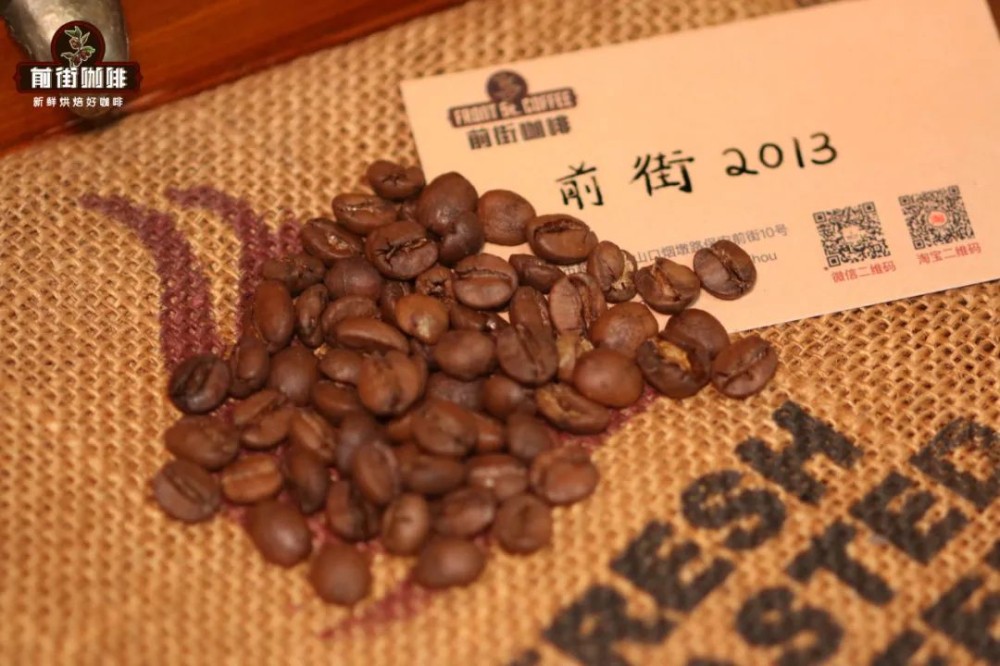
In summary, Yunnan coffee offers a diverse and layered flavor profile, ranging from nuts and chocolate to fruity acidity and tea-like notes. With appropriate roast levels and pour over parameter adjustments, its unique charm can be fully revealed. Whether it’s Catimor or Typica, mastering the key points of extraction can yield a surprisingly delightful coffee experience.
A quick reminder: The freshness of coffee beans greatly impacts flavor. It is recommended to choose beans roasted within 5 days prior and to consume them within 4–7 days of receipt for optimal flavor. If grinding, it is best to use the coffee immediately to avoid oxidation affecting aroma and taste. Whole bean storage preserves the essence of the coffee better—grinding and brewing fresh is the best way to enjoy Yunnan coffee.
The above content is compiled by CoffeeHunters, a coffee news website.


